
Some links below are affiliate links. If you buy through one, this site earns a commission at no extra cost to you. It never changes a verdict — here is how that works.
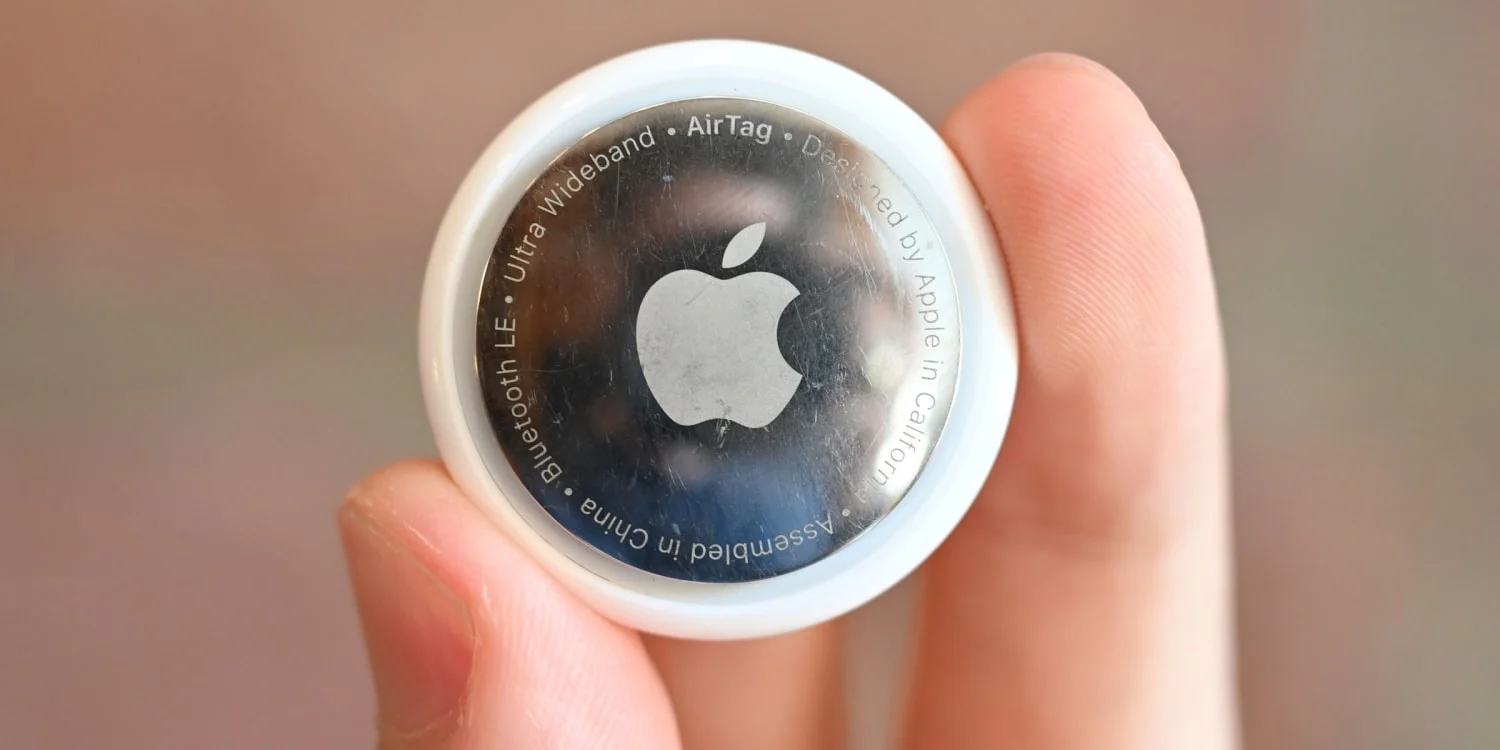
Apple has reportedly received more than 40,000 stalking reports tied to AirTags between April 2021 and April 2024 [1]. Sit with that number for a second. That’s not a hypothetical risk buried in a terms-of-service document. That’s tens of thousands of people who believed, enough to file a report, that someone had used a $29 tracking disc to follow them. The AirTag stalking problem is real, and the data says it’s not slowing down. Let’s look at what’s actually happening, not what a press release says is happening.
Gear Mentioned in This Post
- AirTagView on Amazon
What’s Actually in the Lawsuits
Apple is currently named in more than 30 lawsuits alleging that AirTag’s design makes stalking easier, up from roughly 22 just a couple years ago. That’s a fast climb for a product category that barely existed five years ago. And the legal strategy just shifted in a way that matters: after a judge declined to certify a class action, at least 16 plaintiffs filed individual product-liability suits against Apple in May 2026 [2].
Individual suits are a different animal than a class action. They mean plaintiffs’ attorneys think they have strong enough facts to win one-on-one, not just strength in numbers. More than 20 individual AirTag stalking cases are now pending across at least 17 federal districts, and lawyers have filed a petition to centralize them into a single multidistrict litigation. If that petition succeeds, it consolidates discovery and pretrial rulings, which usually speeds things up and raises the stakes for Apple considerably.
Here’s the part I find most damning as someone who covers product design for a living: court filings allege that Apple’s own internal documents show the company knew its safeguards would only “deter” malicious use, not prevent it, and that Apple acknowledged it should have consulted domestic abuse organizations before AirTag ever shipped [3]. If that allegation holds up, this isn’t a story about unintended consequences. It’s a story about a known risk that got low priority against a ship date.
The Case That’s Already Cleared a Legal Hurdle
In March 2024, a federal judge granted Apple’s motion to dismiss in part, but let negligence and strict product-liability claims from three California plaintiffs move forward. That’s a meaningful signal. Courts don’t let claims proceed just because someone’s upset. The judge found enough substance in the argument that AirTag’s design itself, not just how a stalker misused it, could be a legal problem worth litigating.
That distinction matters more than it might seem. A “user misused the product” defense is a lot easier for Apple to make than a “the product itself was negligently designed” claim. Once a court says the design question deserves a trial, the conversation shifts from isolated bad actors to whether Apple built a tool that made bad acts easier by default.
 From the shopPermanently in BETA$18.45Shop →
Real Cases, Real Victims
Numbers get abstract fast. Individual cases don’t. In New York, a complaint known as Doe NG-1 v. Apple alleges negligence and a violation of state consumer protection law after AirTags were allegedly used to track a woman and her minor children [4]. In Florida, a stalking victim filed suit in August 2026, alleging her former partner used an AirTag to secretly monitor her movements for months, and that Apple’s safeguards weren’t enough to stop it [5].
Then there’s the Michigan case, which cites that same 40,000-report figure directly in its complaint, arguing Apple failed to adequately protect people once it had that scale of evidence in hand [1]. And these aren’t isolated to the US. A U.K. police officer was recently sentenced for using a tracking device to stalk his partner, a case that made national news and put tracker misuse squarely in front of British regulators [6].
You’ll notice a pattern across every one of these: the alleged misuse follows the same basic script. Small device, easy to hide in a purse, sewn into a lining, tucked under a bumper. That’s not an edge case. That’s the product working exactly as designed, just aimed at a person instead of a suitcase.
Why AirTag’s Best Feature Is Also the Problem
Here’s the honest take: AirTag is genuinely good at what it’s built to do. Its precision comes from deep integration with Apple’s Find My network and ultra-wideband tech, and in my own hands-on testing that network density is what makes AirTag better at real-world recovery than most competitors. You lose your keys in a crowded apartment building, and there’s a decent chance someone else’s iPhone quietly pings your AirTag’s location without them ever knowing.
That same density is exactly what makes covert tracking so effective. A tracker only works for stalking if it can piggyback on other people’s phones to report a location without anyone noticing, and that’s the literal design goal of Find My. Apple didn’t build a stalking tool. Apple built a phenomenal location network, and it turns out a phenomenal location network is dual-use whether you want it to be or not.
Compare that to Tile, which lacks anything close to Apple’s device density since it doesn’t have hundreds of millions of iPhones acting as anonymous relay points. Tile’s tradeoff is worse recovery odds in the wild, but also a smaller surface area for covert misuse. There’s no clean answer here. Better tracking network, better stalking tool. That’s the tension the industry has to sit with.
Battery, Range, and the Numbers Nobody Talks About
Since we’re comparing trackers anyway, let’s talk specs, because they matter for both the “is this useful” question and the “how detectable is this” question. AirTag runs on a user-replaceable CR2032 battery rated for roughly one year, while Tile advertises battery life of up to three years depending on model [7]. That’s a real gap. A tracker a stalker installs and forgets about is more dangerous if it keeps working for three years instead of needing a swap every twelve months.
Range tells a similar story. Tile publishes actual range figures by model: the Tile Pro reaches up to 500 feet, the Mate and Slim around 350 feet, and the Sticker around 250 feet. Apple doesn’t publish an official range figure for AirTag at all, which is frustrating if you’re trying to make an informed buying decision, and also relevant if you’re trying to understand detection range for unwanted tracking alerts.
One more number worth knowing: independent testing measured AirTag’s built-in speaker at roughly 80 decibels, compared to over 100 decibels for Tile. That’s a big gap in practical terms. An 80 dB alert is closer to a loud alarm clock. A 100+ dB alert is closer to a smoke detector three feet from your head. If the anti-stalking alert sound is your last line of defense, louder is safer, full stop.

- AirTag battery: roughly 1 year (CR2032, replaceable)
- Tile battery: up to 3 years depending on model
- AirTag range: no official published figure
- Tile range: 250 to 500 feet depending on model
- AirTag speaker volume: roughly 80 dB
- Tile speaker volume: over 100 dB
This Isn’t Just an Apple Problem, and It’s Getting Worse Globally
If you think this is a uniquely American legal phenomenon, the international data says otherwise. This is a category-wide, worldwide trend, and it’s accelerating fast in places you might not expect.
Italian tech press has covered the same pattern taking hold in Europe, reporting that devices built to find lost objects are increasingly showing up in court as tools for stalking and unwanted tracking [3]. Combine that with the U.K. police officer conviction [6] and you’ve got a pattern spanning three continents in the span of a few years, not a one-country legal quirk.
What strikes me most is the timeline. This entire wave of litigation, from the first class action filings to the current push for multidistrict consolidation, has unfolded in roughly four years [8][2]. Consumer tech usually takes a decade to generate this kind of legal scrutiny. AirTag did it in four, which tells you something about how fast the underlying harm scaled once the hardware became cheap and ubiquitous.
What This Means If You Own One (or You’re Thinking About It)
I’m not going to tell you AirTags are useless or that you need to throw yours in a drawer. I use trackers on luggage and on a bike that’s been stolen once already, and the peace of mind is real. But “useful” and “safe by design” aren’t the same claim, and the lawsuit data makes that gap hard to ignore.
If you’re an iPhone user, know that Apple’s unwanted tracking alerts are your primary defense, and they’re worth actually understanding rather than dismissing the notification when it pops up. If you’re on Android, the built-in detection is weaker and slower, which is worth knowing before you assume you’re covered. And if someone in your life has access to your bag, car, or coat and you start getting a tracking alert you didn’t expect, don’t brush it off as a glitch. Given what’s now sitting in federal court across 17 districts, that instinct to take it seriously is backed by more evidence than most people realize.
Frequently Asked Questions
How many stalking reports has Apple received related to AirTags?
Apple allegedly received more than 40,000 stalking reports connected to AirTag devices between April 2021 and April 2024, according to lawsuit filings and reporting on the Michigan case [1].
Can Apple be held legally responsible for AirTag stalking?
That question is actively being tested in court. A federal judge already allowed negligence and strict product-liability claims from three California plaintiffs to proceed past a motion to dismiss in March 2024, meaning courts see enough substance in the design-liability argument to let it go to trial.
How do I know if someone put an AirTag on me or my car?
iPhones automatically alert you if an unfamiliar AirTag is traveling with you over time. Android users need Apple’s separate “Tracker Detect” app, since there’s no automatic background alert built into Android. If you get an alert, don’t ignore it, given how many real cases now involve exactly this scenario [5][4].
Is Tile safer than AirTag for stalking concerns?
Tile has fewer publicly documented stalking lawsuits, but it also lacks Apple’s massive Find My network density, meaning it’s simply a less powerful tracker overall. Tile’s louder speaker (over 100 dB versus AirTag’s roughly 80 dB) does make covert use somewhat easier to detect by sound alone.
Where This Leaves You
The honest take here is that AirTag’s problem isn’t a defective battery or a cracked case. It’s a design tradeoff between recovery performance and covert trackability, and the lawsuits piling up in federal court are forcing that tradeoff into the open. If you want to dig deeper into how AirTag actually holds up against Tile and Samsung’s SmartTag in day-to-day use, battery life, range, and detection alerts included, that’s the next logical read on this site.
Sources
- Michigan lawsuit alleges Apple has failed to "adequately protect" people from being stalked with AirTags (cbsnews.com)
- Apple AirTag lawsuit: Did an AirTag put your safety at risk? (topclassactions.com)
- AirTag nel mirino: nuove cause contro Apple per stalking (telefonino.net)
- Doe, NG 1 v. Apple, Inc. – Midpage (app.midpage.ai)
- Fla. Stalking Victim Sues Apple Over AirTags (law360.com)
- Surrey Police officer who stalked partner sentenced (bbc.co.uk)
- Tile vs AirTag Battery Life Compared: Total Cost Over 5 Years | Techwalla (techwalla.com)
- MDL Sought for Apple Lawsuits Over AirTag Stalking Problems and … (aboutlawsuits.com)
Researched from 12 sources.