
Some links below are affiliate links. If you buy through one, this site earns a commission at no extra cost to you. It never changes a verdict — here is how that works.
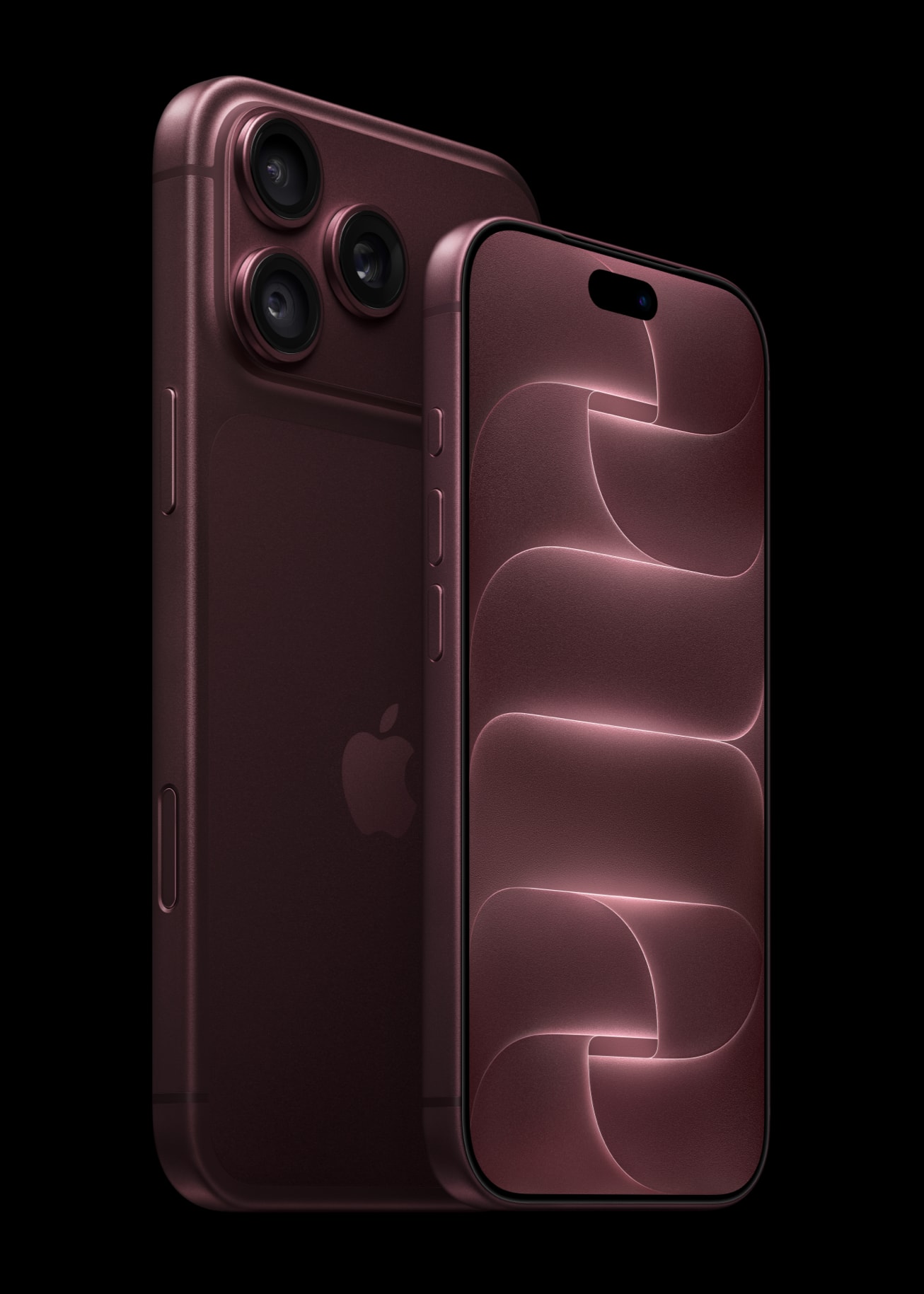
Apple launched the iPhone 18 Pro and iPhone 18 Pro Max on September 9, 2026, with preorders starting September 12 and availability September 18. This pillar guide is the researched overview I wish existed on day one: what actually changed versus the 17 Pro, who should buy which size, how the new variable-aperture camera works on paper and in early reviews, and where the $100 price bump lands relative to real upgrades.
Who this is for: anyone deciding between Pro and Pro Max in 2026, anyone jumping from a 15/16/17 Pro, and anyone who wants specs and early review consensus without marketing fluff. If you want the Siri AI / iOS 27 deep dive, I already wrote that separately — linked in the software section below.
I wrote this as a single bookmarkable page: tables for the quick skim, then deeper sections for camera, battery, silicon, and upgrade math. Every hard number below is either Apple’s published spec or clearly labeled as a third-party review finding.
Quick verdict: Pro vs Pro Max
Buy the iPhone 18 Pro if you want the full 2026 Pro camera and A20 Pro stack in a phone you can use one-handed most of the day. Apple lists it at 6.3 inches, 211 grams, up to 24 hours typical use / 36 hours video playback, starting at $1,199 for 256GB.
Buy the iPhone 18 Pro Max if you want battery life and screen size as the priority. Same cameras, same chip, same ports. Apple lists 6.9 inches, 249 grams, up to 30 hours typical use / 45 hours video playback, starting at $1,299 for 256GB. Early third-party battery tests (Tom’s Guide, cited via MacRumors) put the Max roughly half an hour ahead of last year’s Max in their lab run — not a miracle, but consistent with Apple’s bigger claim.
Skip a same-generation upgrade if you already own an iPhone 17 Pro or 17 Pro Max and you are happy with the camera. The Verge’s Allison Johnson called the 18 Pro “excellent and utterly iterative.” That matches the newsroom story: variable aperture, faster charge, A20 Pro + larger vapor chamber, smaller Dynamic Island, $100 more. Meaningful if you care about manual camera controls. Mild if you just want “a new phone.”
Primary buy path right now: Apple’s store — configure iPhone 18 Pro / Pro Max. As of September 19, 2026 (ET), I could not verify clean Amazon ASINs for new unlocked 18 Pro / Pro Max phones (search mostly returns cases). Verified Amazon accessory links with tag robertsutton-20 are in the accessories section.
What’s new vs iPhone 17 Pro
Design stays on the aluminum unibody + Ceramic Shield path Apple introduced with the 17 Pro. The headline hardware change is the 48MP Fusion Main with variable aperture. Everything else is refinement: chip, cooling, battery claims, charge speed, modem/wireless, and software (iOS 27 + Siri AI).
| Area | iPhone 17 Pro (prior) | iPhone 18 Pro / Pro Max |
|---|---|---|
| Starting price | $1,099 / $1,199 (Verge) | $1,199 / $1,299 (+$100) |
| Chip | A19 Pro | A20 Pro (2nm, Dual 16-core Neural Engine) |
| Cooling | Vapor chamber | Next-gen vapor chamber (Apple: 3× surface area) |
| Main camera | 48MP Fusion | 48MP Fusion + variable aperture (ƒ/1.48–ƒ/4.0) |
| Pro camera controls | Limited | Aperture, shutter, WB, histogram (Apple) |
| Video playback claim | Up to 33h / 39h (Verge) | Up to 36h / 45h (Apple specs) |
| Fast charge claim | ~50% in 20 min (Verge) | ~50% in ~15 min with 60W+ USB-C (Apple) |
| Storage max | 1TB | 2TB |
| Dynamic Island | Larger | Smaller; up to 3 Live Activities (Apple / reviews) |
| Colors | Cosmic Orange, Deep Blue, Silver | Black, Silver, Glacier, Burgundy |
| OS at launch | iOS 26 | iOS 27 |
One practical note from early reviews: because the chassis barely moved, 17 Pro cases often still fit the 18 Pro. That is not a reason to upgrade — it is a reason the upgrade feels familiar in the hand.
Specs at a glance — Pro vs Pro Max
| Spec | iPhone 18 Pro | iPhone 18 Pro Max |
|---|---|---|
| Display | 6.3″ Super Retina XDR OLED, 2622×1206, 460 ppi | 6.9″ Super Retina XDR OLED, 2868×1320, 460 ppi |
| Refresh / brightness | ProMotion up to 120Hz; 1000 nits typical, 1600 HDR, 3000 outdoor | Same brightness stack |
| Size (H×W×D) | 150.0 × 71.9 × 8.75 mm | 163.4 × 78.0 × 8.75 mm |
| Weight | 211 g (7.44 oz) | 249 g (8.78 oz) |
| Chip | A20 Pro (6-core CPU, 7-core GPU, Dual 16-core Neural Engine) | Same |
| Battery (Apple) | Up to 24h typical; 36h video; 33h streamed | Up to 30h typical; 45h video; 40h streamed |
| Storage | 256GB / 512GB / 1TB / 2TB | Same tiers |
| Rear cameras | 48MP Fusion Main (variable aperture) + 48MP UW + 48MP tetraprism tele | Same system |
| Front | 18MP Center Stage | Same |
| Port / wireless charge | USB-C (USB 3 up to 10Gb/s); MagSafe / Qi2 up to 25W | Same |
| SIM (US eSIM-only) | Dual eSIM (no physical SIM) | Same |
| Starting price (Apple) | $1,199 (256GB) | $1,299 (256GB) |
Design, colors, and durability

Apple kept the aluminum unibody with Ceramic Shield 2 on the front and Ceramic Shield on the back. IP68 rating is unchanged (6 meters up to 30 minutes, IEC 60529). Colors for both sizes: Black, Silver, Glacier, Burgundy.
If you owned a 17 Pro, cases should still fit — The Verge noted that compatibility. Weight ticked up slightly on the smaller Pro (211 g vs 206 g on 17 Pro per Verge’s table). The Max is still a two-hand phone for most people at 249 g.
Buttons are familiar: Action button, Camera Control, volume, side button, USB-C. Face ID moves under more of the display so the Dynamic Island can shrink and show up to three Live Activities — a small quality-of-life change early reviewers mentioned more than the absolute size difference.
Apple’s newsroom also pushes new Silicone and TechWoven cases, Crossbody Strap, Wrist Strap, and FineWoven Wallet options. Those are nice if you want first-party accessories that match Burgundy or Glacier; they are not required for the phone to make sense.
 From the shopPermanently in BETA$18.45Shop →
Displays
Both panels are all-screen OLED with Dynamic Island, Always-On, ProMotion (adaptive up to 120Hz), HDR, True Tone, and the same brightness ceiling Apple quotes: 1000 nits typical, 1600 peak HDR, 3000 peak outdoor, 1 nit minimum. Contrast is listed at 2,000,000:1 typical.
The choice is still size vs pocketability. 6.3″ vs 6.9″ (Apple’s diagonal marketing sizes; viewable area is slightly less because of the rounded corners). Resolution scales with size at the same 460 ppi. If you edit photos or watch a lot of video on-device, Max is the easier sell. If you hate large phones, Pro is the better daily driver — PCMag’s early framing called out the smaller Pro as a “hand-friendly” battery beast, with the Max taking Editors’ Choice for endurance.
Outdoor readability should feel continuous with recent Pro panels given the shared 3000-nit outdoor peak claim. Always-On remains part of the package; if you hated Always-On on prior Pros, the setting still turns it off.
A20 Pro, vapor chamber, performance, and on-device AI

Apple’s newsroom pitch for A20 Pro: built on a 2-nanometer process, 6-core CPU with Neural Accelerators, 7-core GPU, Dual 16-core Neural Engine (32 cores total — double A19 Pro’s AI cores per Apple), and about 50% more memory bandwidth than A19 Pro. Apple claims up to ~40% faster graphics vs A19 Pro and positions the chip for sustained pro workloads plus on-device AI.
The thermal story matters more than the peak score. Apple redesigned packaging so memory sits beside the die (M-series-style), letting the chip sit on a larger vapor chamber — three times the surface area of the 17 Pro’s, per Apple. Third-party notes: Gizmodo’s Raymond Wong (via MacRumors) reported Geekbench 7 scores around 4,027 single-core / 11,540 multi-core on an 18 Pro vs roughly 3,258 / 9,167 on a 17 Pro in his run, and said the phone stayed cool during 4K60 shooting in heat. Treat that as one reviewer’s benches, not a lab average.
Wireless silicon: Apple N1 (Wi‑Fi 7, Bluetooth 6, Thread) and, on Pro models, Apple’s C2 cellular modem. Apple says C2 improves upload speed vs C1X with ~15% less energy and adds mmWave in the U.S. MacRumors notes reporting that U.S. Pro Max units may still ship with a Qualcomm modem for contractual reasons — worth confirming on the box/settings if modem pedigree matters to you.
For day-to-day use, expect the same “already fast” feel as recent Pros, with the gains showing up when you stack AI features, long 4K recording, or games that used to thermal-throttle sooner. That is the sustained-performance story Apple is selling — and what early thermal anecdotes are starting to back up.
Camera deep dive

48MP Fusion Main — variable aperture
This is the feature Apple led with. Specs: 48MP Fusion Main, 24 mm, second-gen sensor-shift OIS, 100% Focus Pixels, with a mechanical aperture using six laser-cut blades. Stops Apple lists: ƒ/1.48, ƒ/1.8, ƒ/2.8, ƒ/4.0. The same sensor still crops to a 12MP optical-quality 2× (48 mm).
Apple’s claim: automatic aperture for light and depth of field, better low light when opened up, more of a group in focus when stopped down, plus manual control for people who want it. Default is Auto.

Third-party camera notes (not my hands-on):
- The Verge (Allison Johnson): calls image-quality gains “marginal” in many scenes; biggest practical win may be slightly shorter Night mode captures at ƒ/1.48; ƒ/4 helps when subjects are close and you need more depth of field. Manual shutter can force single-frame capture (less multi-frame processing).
- WIRED: likes real optical bokeh at ƒ/1.48 and prefers it to Portrait mode for some shots; notes Auto defaults and that ƒ/4 keeps backgrounds sharper.
- PetaPixel (via MacRumors roundup): sharpness ranking they reported was roughly ƒ/2.8 best, then ƒ/1.8, then ƒ/4, with ƒ/1.48 softest at the edges — normal for shooting wide open.
Bottom line from the early consensus: the aperture hardware is real and useful on the margins, especially if you will touch Pro controls. It is not a night-and-day jump for point-and-shoot users who never leave Auto.
Ultra Wide, telephoto, and zoom range
Apple specs for both Pro sizes:
- 48MP Fusion Ultra Wide — 13 mm, ƒ/2.2, 120° FOV, Hybrid Focus Pixels; also 48MP macro
- 48MP Fusion Telephoto — tetraprism, 100 mm (4×), ƒ/2.8, 3D sensor-shift OIS; also enables 12MP optical-quality 8× (200 mm)
- Optical-quality zoom range — 8× in / 2× out (16× range); digital zoom up to 40×
That 8× optical-quality story carried over from the 17 Pro generation (per Verge’s comparison). The new work is mostly on the Main camera and software controls, not a brand-new telephoto module.
Front camera
18MP Center Stage front camera, ƒ/1.9, Focus Pixels, Center Stage for photos and calls, Dual Capture, and Pro controls for shutter / white balance / histogram. Video: up to 4K Dolby Vision at 60 fps on the front, ProRes with external recording up to 4K60, per Apple’s specs sheet.

Video and Reference Image
Rear video highlights from Apple: 4K Dolby Vision up to 120 fps on Fusion Main, Cinematic mode up to 4K60, Action mode up to 2.8K60, ProRes up to 4K120 with external recording, ProRes RAW, Apple Log 2, Genlock support, Dual Capture, and post-capture Cinematic effects on Main-camera clips (Apple newsroom). Smart focus tracking is improved with AI subject sticking — The Verge found it useful but not perfect if a subject leaves frame for several seconds.
Apple Reference Image is new: Main-camera mode that signs sensor data so Private Cloud Compute can later produce an unalterable reference “negative.” Files are larger; you have to enable the mode. Aimed at authenticity / journalism use cases, not daily snaps. Apple is also moving toward SynthID tagging for AI-edited images — complementary, not identical.
Photographic Styles pick up texture and grain controls this generation (Apple). That is creative preference territory, not a resolution upgrade — useful if you want less “perfect phone look” and more film-inspired texture.
Battery and charging

Apple’s published numbers (eSIM-only models):
| Metric (Apple) | 18 Pro | 18 Pro Max |
|---|---|---|
| Typical use | Up to 24 hours | Up to 30 hours |
| Video playback | Up to 36 hours | Up to 45 hours |
| Streamed video | Up to 33 hours | Up to 40 hours |
| Wired fast charge | Up to 50% in ~15 min with 60W+ AVS adapter + USB-C cable | Same claim |
| MagSafe to 50% | Up to 50% in 30 min with 35W+ adapter + MagSafe | Same claim |
| Wireless | MagSafe / Qi2 up to 25W | Same |
Apple also says five minutes of wired charging on Pro Max yields around seven hours of video playback (newsroom). In-box: phone + 1 m USB-C Charge Cable — no power brick.
Third-party battery notes: Tom’s Guide (via MacRumors) measured about 16h 17m for 18 Pro and 18h 27m for 18 Pro Max in their standard test, versus 15h 21m / 17h 54m for the 17 Pro / 17 Pro Max. PCMag reported very long streaming endurance on the Max in early testing (their Pro numbers were still filling in at time of writing). The Verge’s Max testing anecdotally lasted “more than a day” for Nilay Patel, with the usual caveat that the first week of setup is not a normal week.
If you are choosing purely on battery anxiety, Max is still the answer inside Apple’s lineup. If you already make it through a day on a 17 Pro, the 18 Pro’s incremental claim is nice, not transformative.
Connectivity
- 5G — sub-6 and mmWave with 4×4 MIMO (U.S. models); Apple C2 modem on Pro (see modem note above for Max)
- Wi‑Fi 7 (802.11be) 2×2 MIMO via Apple N1
- Bluetooth 6, Thread, 2nd-gen Ultra Wideband, NFC
- USB-C — charging, DisplayPort, USB 3 up to 10Gb/s
- eSIM — dual active eSIMs; stores eight or more; U.S. models are eSIM-only (no physical SIM)
- Satellite features continue: Emergency SOS, Roadside Assistance, Messages, Find My via satellite
eSIM-only is not new for U.S. Pros, but Apple still ties it to a larger battery than SIM-tray regional variants. If you travel with physical SIMs from smaller carriers, plan your eSIM workflow before you buy.
iOS 27, Apple Intelligence, and Siri AI
Both phones ship with iOS 27. Apple Intelligence and the rebuilt Siri AI are the software half of the pitch: personal context across apps, onscreen awareness, Camera app Siri mode, writing help, and privacy via on-device processing plus Private Cloud Compute. Apple’s newsroom also calls out Spatial Reframing / Extend / Clean Up in Photos and photorealistic Image Playground.
I covered the practical Siri AI questions — waitlist, language limits, hardware tiers, and whether it is worth enabling — in a separate post: Siri AI on iOS 27: What It Does and Is It Worth It. Read that for software; this pillar stays focused on the 18 Pro hardware.
Short version for shoppers: if Siri AI is a reason you are upgrading from older non-Pro silicon, confirm your current phone’s eligibility first — the feature has stricter hardware requirements than “installs iOS 27.” The 18 Pro obviously qualifies.
Pricing and storage configs
Disclosure: This post contains Amazon affiliate links (tag robertsutton-20). If you buy through those links, I may earn a commission at no extra cost to you. Specs come from Apple; third-party review notes are labeled. Product photos: Apple Newsroom. Phone prices below are Apple’s U.S. unlocked MSRP as of research day.
| Storage | iPhone 18 Pro | iPhone 18 Pro Max |
|---|---|---|
| 256GB | $1,199 | $1,299 |
| 512GB | $1,399 | $1,499 |
| 1TB | $1,799 | $1,899 |
| 2TB | $2,399 | $2,499 |
Storage advice: 256GB is fine if you offload photos/video and do not shoot ProRes daily. Jump to 512GB if you keep a large local photo/video library. 1TB and 2TB are for heavy ProRes / ProRes RAW shooters or people who refuse cloud — the dollar jumps are steep ($400 from 512→1TB, $600 from 1TB→2TB on both sizes).
Buy CTA (phones): Configure at Apple — iPhone 18 Pro / Pro Max. Amazon unlocked phone ASINs were not verified on 2026-09-19; I will not invent them. When Amazon lists them, links should use ?tag=robertsutton-20.
Accessories worth buying (Amazon-verified)
Apple does not include a wall charger. If you want MagSafe on the nightstand and a spare cable in the bag, these are the listings I verified by loading the Amazon product pages (titles/prices seen 2026-09-19 ET):
- Apple MagSafe Charger (1 m) — ASIN B0FQFKMMYB; ~$34.99 seen. Supports MagSafe fast wireless up to 25W with a suitable USB-C adapter (adapter sold separately).
- Apple MagSafe Charger (2 m) — ASIN B0FQFTXT7K; ~$39.99 seen. Same charger, longer cable.
- Apple 60W USB-C to USB-C Woven Charge Cable (1 m) — ASIN B0DWVLWXLX; ~$14.99 seen. Spare for the in-box cable.
- Apple 240W USB-C to USB-C Woven Charge Cable (2 m) — ASIN B0DCH5B2HF; ~$24.00 seen. Longer run for desk / car.
For Apple’s ~15-minute wired 50% claim you need a 60W-capable USB-C adapter with Adjustable Voltage Supply (sold separately) plus a USB-C cable. MagSafe to 50% in 30 minutes needs a 35W+ adapter with the MagSafe Charger. AppleCare+ for iPhone 18 Pro did not show a clean standalone Amazon ASIN during verification — buy that through Apple if you want it.
Upgrade advice: from 15 / 16 / 17 Pro
| Coming from | Worth upgrading? | Why |
|---|---|---|
| iPhone 17 Pro / Pro Max | Usually no | Same design language; camera gains are real but incremental per early reviews; you pay $100 more for aperture blades, A20 Pro, battery bump, faster charge. |
| iPhone 16 Pro / Pro Max | Maybe | You pick up aluminum unibody era design (if you skipped 17), all-48MP rear set with variable aperture, 18MP front, A20 Pro, better battery claims, iOS 27 / Siri AI on current silicon. |
| iPhone 15 Pro / Pro Max | Yes, if budget allows | Two+ generations of camera, display brightness, battery, modem/wireless, and Apple Intelligence features. MacRumors’ roundup explicitly calls 14 Pro and older a clearer upgrade case; 15 Pro still benefits a lot. |
| iPhone 14 Pro or older | Strong yes | USB-C, modern camera stack, Always-On / ProMotion generation gaps, and Siri AI hardware requirements all stack up. |
Also factor the foldable iPhone Duo (Apple’s October $1,999 story per Verge) if you were waiting for something shape-changing. The 18 Pro is the conventional flagship; Duo is the experiment.
Trade-in math matters more this year because MSRP moved up $100. Run Apple’s trade-in estimate and your carrier’s promo before you assume “Pro Max at $1,299” is what you pay. Financing and carrier credits often matter more than the storage tier you pick.
FAQ
What is the difference between iPhone 18 Pro and 18 Pro Max?
Size, weight, display resolution, and battery. Cameras, chip, ports, and features are the same per Apple’s specs.
Does iPhone 18 Pro have a physical SIM?
U.S. and several other markets are eSIM-only (dual eSIM). Apple says eSIM-only models also get a larger battery (extra video-playback hours vs SIM-tray markets).
What is variable aperture on iPhone 18 Pro?
Mechanical blades on the Main camera that move between ƒ/1.48, ƒ/1.8, ƒ/2.8, and ƒ/4.0 — automatically or manually — to trade light gathering vs depth of field.
How bright is the iPhone 18 Pro display?
Apple lists 1000 nits typical, 1600 nits peak HDR, 3000 nits peak outdoor, 1 nit minimum, with ProMotion up to 120Hz.
How long does the battery last?
Apple: up to 24h typical / 36h video on Pro; up to 30h typical / 45h video on Pro Max. Third-party lab runs (Tom’s Guide via MacRumors) showed mid-teens to high-teens hours in their scripted test — useful for relative comparison, not a promise for your usage.
Does it support Wi‑Fi 7 and Bluetooth 6?
Yes, via Apple’s N1 chip, per specs.
Is the A20 Pro noticeably faster than A19 Pro?
Apple claims material CPU/GPU/AI gains and better sustained performance from the larger vapor chamber. Early Geekbench numbers from Gizmodo (via MacRumors) showed ~24–26% multi/single-core lifts in one comparison — expect “snappier under load,” not a new UI.
Should I buy MagSafe or a USB-C charger?
USB-C is faster to 50% on Apple’s chart (~15 min with 60W+ AVS). MagSafe is convenient overnight (~50% in 30 min with 35W+).
When can I buy one?
Preorders began September 12, 2026; availability September 18, 2026 (Apple / Verge).
Is 2TB worth it?
Only if you know you fill 1TB today with ProRes / RAW workflows. For most people, 256GB or 512GB plus iCloud/Photos optimization is the rational buy.
Bottom line
The iPhone 18 Pro pair is a camera-and-silicon refinement year on the 17 Pro body language, not a redesign year. You pay $100 more for variable aperture, Pro controls, A20 Pro with a bigger vapor chamber, better battery claims, faster wired charging, a smaller Dynamic Island, and iOS 27 with Siri AI. Early reviews agree the phones are excellent and mostly iterative.
Get the Pro if you want the 2026 camera stack without living with a Max-sized slab. Get the Pro Max if battery and screen are why you buy Pro phones at all. Stay put on a 17 Pro unless the aperture controls or 2TB storage are specifically what you were missing.
Sources
- Apple — iPhone 18 Pro
- Apple — iPhone 18 Pro technical specifications
- Apple Newsroom — Apple debuts iPhone 18 Pro and iPhone 18 Pro Max
- Apple — Buy iPhone 18 Pro (pricing)
- The Verge — iPhone 18 Pro spec comparison (Cameron Faulkner)
- The Verge — iPhone 18 Pro review (Allison Johnson)
- MacRumors — iPhone 18 Pro reviews roundup (Joe Rossignol)
- WIRED — iPhone 18 Pro and Pro Max review
- PCMag — iPhone 18 Pro review
- Robb Sutton — Siri AI on iOS 27