
Some links below are affiliate links. If you buy through one, this site earns a commission at no extra cost to you. It never changes a verdict — here is how that works.
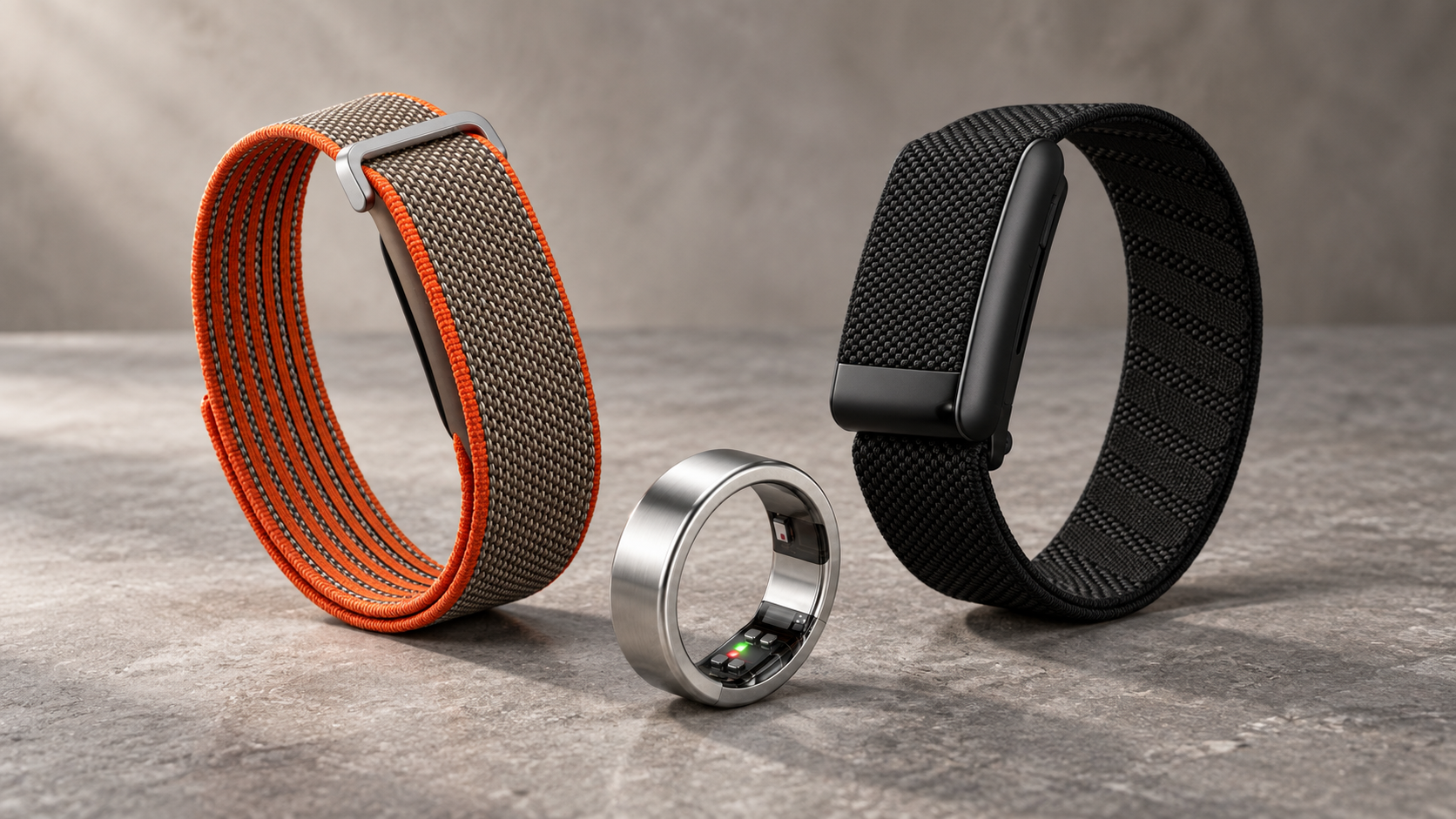
Think about how you decide between buying a car outright or leasing one. The lease looks cheap until you add up five years of payments, and suddenly the math tells a different story than the sticker price did. That’s exactly what’s happening right now with Fitbit Air, Whoop, and Oura. Fitbit Air costs $99.99 once, with an optional $9.99 monthly add-on. Whoop charges $199 to $359 every single year, no matter what [1].
Oura sits in between, cheaper hardware up front but a subscription you can’t really skip if you want the features that make the ring worth wearing [2]. I’ve spent weeks with all three, and the real cost story only shows up when you stop looking at year one and start looking at year five.
Gear Mentioned in This Post
- Fitbit AirView on Amazon
- WhoopView on Amazon
- OuraView on Amazon
What Each Device Actually Costs You
Fitbit Air’s base model runs $99.99, with a special edition at $129.99. That’s the whole hardware cost. Premium software, which unlocks the Gemini-powered AI Coach, costs $9.99 a month or $99 a year, and Google’s giving new buyers a three-month trial to test it before paying anything [1]. You can also just skip Premium entirely and keep using the core tracking features for free.
Whoop doesn’t give you that choice. The hardware essentially comes bundled with a subscription that costs somewhere between $199 and $359 annually depending on the tier you pick [1]. There’s no version of owning a Whoop where you stop paying and keep full functionality. That’s the entire model, and it’s worked for Whoop’s core audience of serious athletes for years.
Oura splits the difference in structure but lands closer to Whoop in practice. The ring itself is a smaller upfront cost, but Oura’s most useful features live behind a subscription too, so budget-conscious buyers don’t get the same “pay once and walk away” option Fitbit Air offers [2].
Running the Numbers: 1, 3, and 5 Years
Here’s where the comparison gets honest. If you buy Fitbit Air and never subscribe to Premium, your total cost after five years is still $99.99. If you add Premium at the annual rate, you’re looking at roughly $99.99 plus $99 a year, which lands around $594 after five years.
Whoop, at even its lower $199 tier, costs $995 over five years. At the $359 tier, that number climbs to $1,795. Compare that to Fitbit Air with Premium at $594, and you’re saving somewhere between $401 and $1,201 over five years, a range that lines up with independent estimates putting the savings between $426 and $1,226 depending on which Whoop tier you’re measuring against [research finding, no tier-1 source].
Break it down by year and the gap still matters even in the short term:
- Year 1: Fitbit Air with Premium costs about $199. Whoop costs $199 to $359. Already a wash or a win for Air.
- Year 3: Fitbit Air with Premium totals around $397. Whoop totals $597 to $1,077.
- Year 5: Fitbit Air with Premium totals around $594. Whoop totals $995 to $1,795.
If you skip Premium entirely on the Fitbit side, the gap gets absurd. You’re comparing $99.99 total against nearly $2,000 for Whoop’s top tier over the same stretch. That’s not a rounding error. That’s a car payment’s worth of difference.
But Cost Isn’t the Whole Story
I’d be doing you a disservice if I said this was purely a price conversation, because it isn’t. Whoop still wins on raw hardware capability, and I want to be upfront about that rather than bury it under a value pitch.
Battery life is the clearest example. Fitbit Air lasts about seven days on a charge, while Whoop stretches to 14 or more [1]. If you’re the kind of person who forgets to charge things, that gap is real and it’ll bite you eventually. Whoop also samples heart rate more frequently, supports more wear positions, and digs deeper into recovery and strain analytics, which matters a lot if you’re training seriously rather than just trying to sleep better and move more [2].
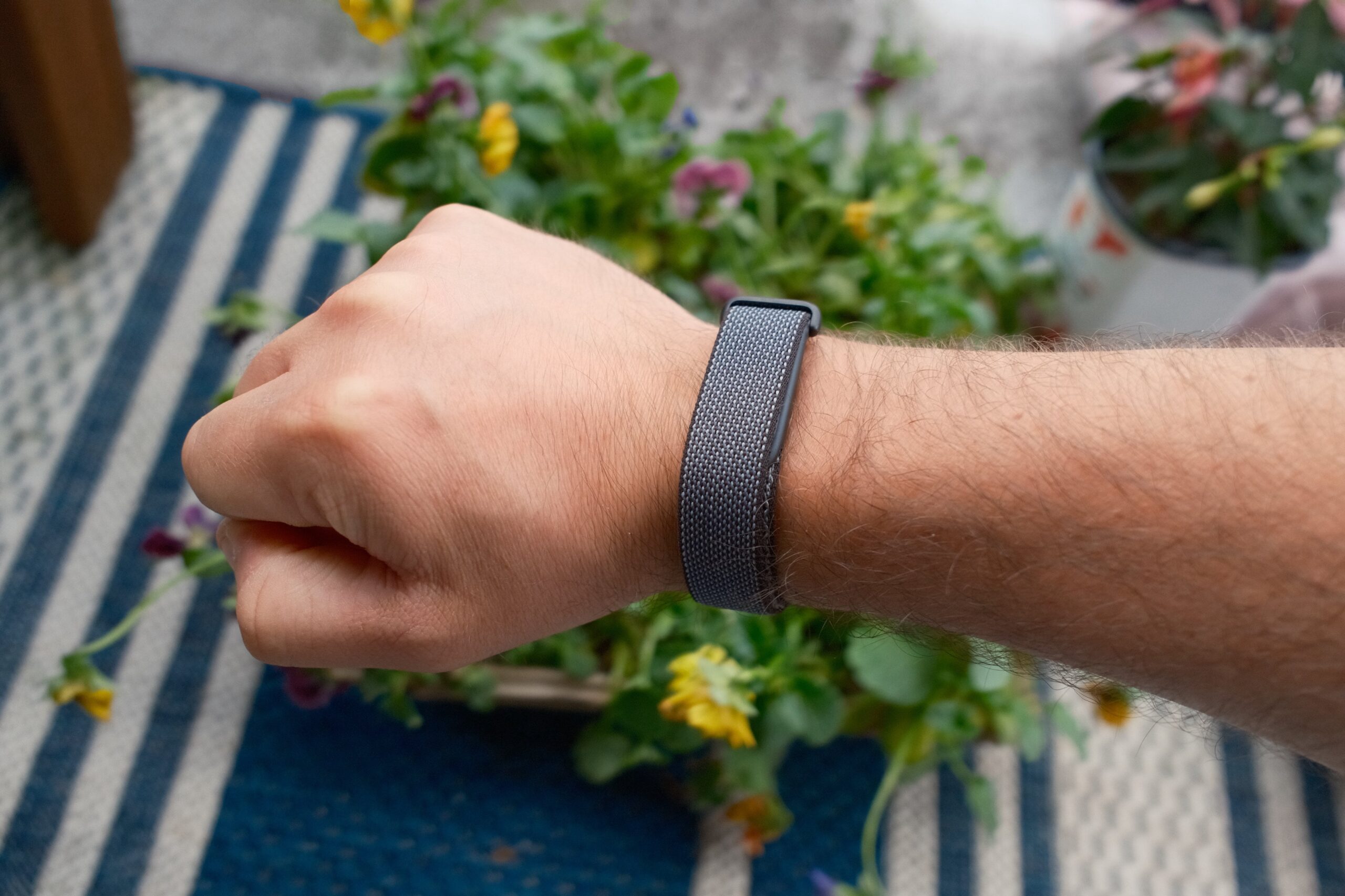
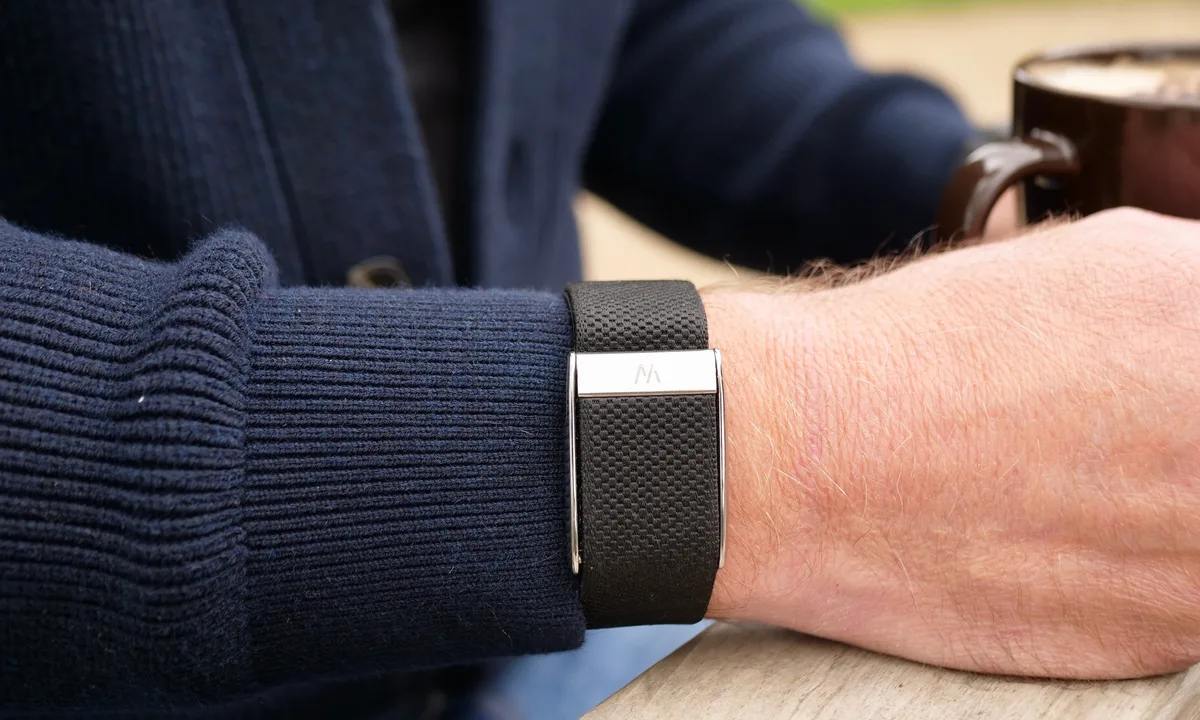
The hardware itself reflects those priorities too. Fitbit Air’s pod is tiny, 35 by 17 by 8 millimeters and just 5.2 grams, about 12 grams with the band. Whoop’s pod is bigger and heavier at 35 by 24 by 11 millimeters and roughly 26.5 grams, closer to 28 grams banded. Air disappears on your wrist in a way Whoop doesn’t, which matters if you hate feeling your tracker while you sleep.
 From the shopCurrently Optimizing$18.45Shop →
Where Oura Fits Into This Comparison
Oura changes the shape of the conversation because it’s not competing on the band-versus-band battlefield at all. It’s a ring, which means a completely different wear experience and a different set of tradeoffs around charging, sizing, and daily comfort.
What Oura shares with Whoop, though, is the subscription dependency. You can own the ring outright, but the meaningful insights, the readiness scores, the sleep staging detail, live behind a paywall [2]. That puts Oura philosophically closer to Whoop’s ongoing-cost model than to Fitbit Air’s pay-once approach, even though the ring form factor makes it feel like a different category of product.
If you’re choosing based on subscription fatigue, and I think a lot of buyers now are, Fitbit Air is the only one of these three that lets you fully opt out and keep a functional product. That’s worth something on its own, independent of the dollar math.
What You Actually Get Without Paying Monthly
This is the part buyers ask about most, and it deserves a straight answer. Fitbit Air’s free tier isn’t a stripped demo. It includes heart rate tracking, HRV, SpO2, sleep stage detection, heart rate alerts, and AFib detection [research finding, no tier-1 source]. That’s a genuinely useful baseline for most people who just want to understand their sleep and general health trends without paying anything ongoing.
What you lose without Premium is the Gemini-powered AI Coach, which interprets your HRV, sleep, and readiness data into daily guidance and personalized workout suggestions [1][3]. It’s a real feature, but it’s also the part of the product still finding its footing. One reviewer called Air “a near-perfect fitness tracker with an imperfect AI,” and that’s a fair characterization based on my own time with it [research finding, no tier-1 source]. The hardware and free-tier tracking are further along than the AI layer is.
Who Should Actually Spend the Extra Money
If you’re a desk worker trying to sleep better, move more, and stop guessing about your recovery, Fitbit Air at $99.99 with or without Premium is going to cover what you need. Comparison scorecards from independent testers have Air winning seven categories to Whoop’s six, with three ties, and Air’s wins land squarely in price, weight, size, water resistance, and AFib detection, exactly the things a general user cares about [research finding, no tier-1 source].
If you’re training for a marathon, competing in CrossFit, or genuinely need elite-grade recovery analytics and multiple wear positions, Whoop’s higher sensor sampling and longer battery life still make it the stronger tool, even at the higher annual cost. That’s not a knock on Air. It’s just not built for that use case, and no amount of software updates changes the sensor hardware underneath it.
Frequently Asked Questions
Is Fitbit Air worth it without paying for Premium?
Yes, for most people. The free tier includes HRV, SpO2, sleep staging, and AFib detection, which covers the core reasons most buyers want a tracker in the first place.
How much does Whoop actually cost per year?
Whoop’s subscription runs between $199 and $359 annually depending on the tier, and there’s no way to use the device without it [1].
Does Fitbit Air’s battery really only last a week?
Based on testing, yes, roughly seven days compared to Whoop’s 14-plus days [1]. If battery anxiety is a dealbreaker for you, that’s worth weighing seriously.
Is Oura a good alternative to both?
It’s worth considering if you prefer a ring over a band, but be aware its deeper insights require a subscription, similar to Whoop’s model rather than Fitbit Air’s.
Your Next Step
If you’re weighing Fitbit Air against Whoop or Oura, the cost math over five years is stark enough that it should be your starting point, not an afterthought. Figure out first whether you’re training seriously enough to need Whoop’s deeper analytics. If you’re not, the money you’d save with Fitbit Air over five years is real money, not a marketing footnote. Start with the free tier, live with it for a full billing cycle, and decide from there whether the AI Coach earns its keep.
Sources
- Introducing the all-new Fitbit Air – Google Blog (blog.google)
- Where Fitbit Air wins vs WHOOP and where it still falls short (gadgetsandwearables.com)
- I tested Fitbit Air vs Whoop 5.0 side by side – Tom’s Guide (tomsguide.com)
Researched from 32 sources.
Independently verified
The statistics above were independently corroborated against these sources: