
Some links below are affiliate links. If you buy through one, this site earns a commission at no extra cost to you. It never changes a verdict — here is how that works.
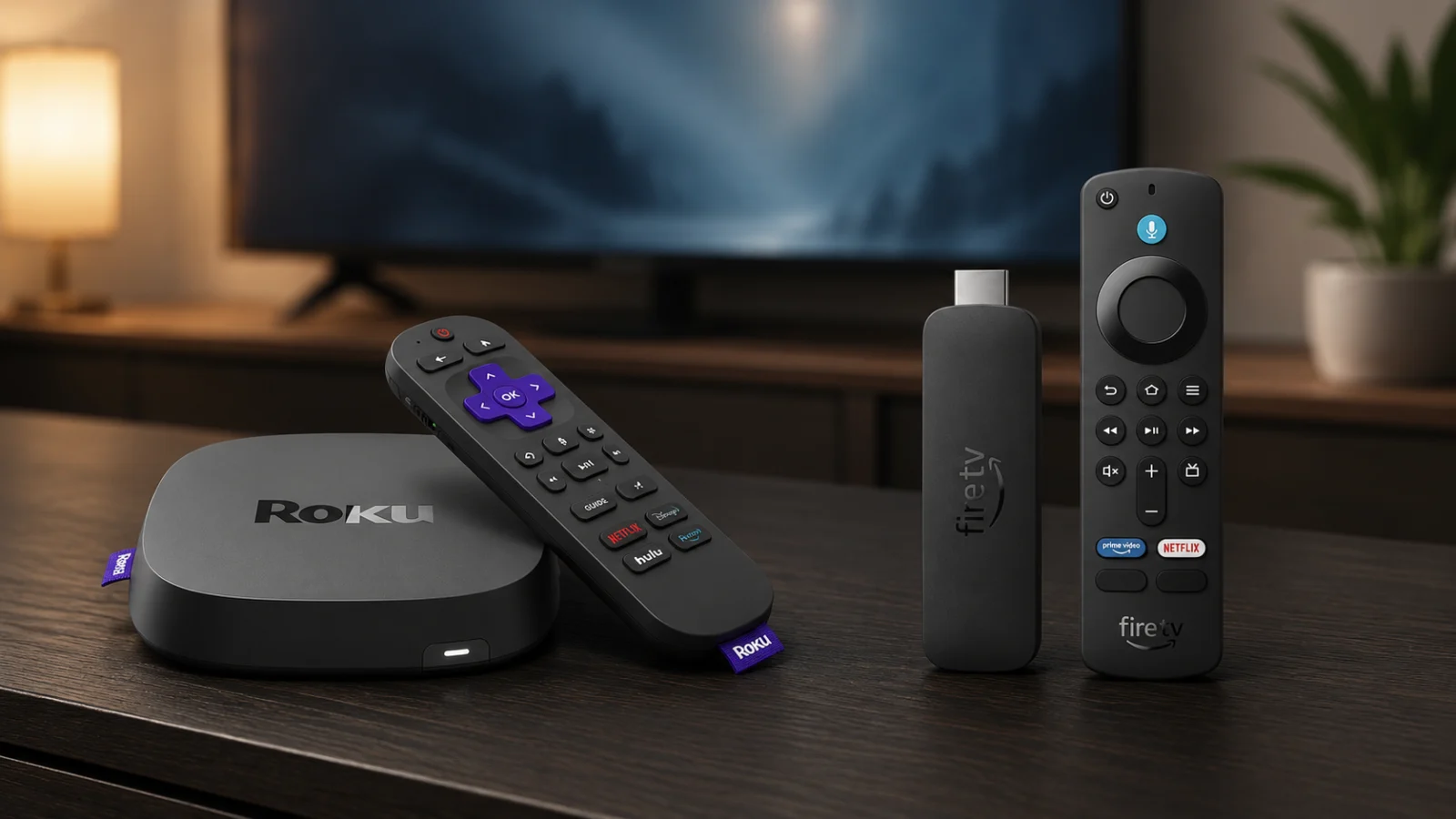
Here’s a number that surprised me when I first dug into it: Roku and Fire TV together control more than half of all primary streaming setups in the U.S [1]. That’s not a niche rivalry. That’s most of the country choosing between two boxes, and most people picking based on whatever came bundled with their TV rather than actually thinking it through. I’ve spent real time running both platforms side by side in my own setup, and the honest take is that market share tells you almost nothing about which one you should buy. It tells you which one won last year’s shelf space war at Best Buy.
Gear Mentioned in This Post
- RokuView on Amazon
The Market Gap Is Real, But It’s Narrower Than the Headlines Suggest
Roku holds roughly 37% of primary U.S. streaming TV setups, with Fire TV trailing at 17% [2]. That’s a real lead, not a rounding error. But Pocket-lint’s own framing is worth sitting with: Roku still dominates, but its lead could start shrinking [2]. That’s not me being dramatic. That’s the actual headline from the people tracking this data.
Zoom out to the global picture and the story flips hard. Roku TV holds only around 11% share worldwide as of the latest available data from 2024, while Android TV commands roughly 40%, with Tizen at 19% and WebOS at 16% [3]. If you’re reading this from outside the U.S., the calculus in this article barely applies to you. This is a domestic story, built on domestic habits, domestic hardware deals, and domestic ad markets.
Fire TV still ranks ahead of Samsung’s Tizen OS, which sits around 8% of the U.S. smart TV and streaming device market [4]. So the real hierarchy in America looks like Roku on top, Fire TV second, then everyone else fighting over what’s left. Google TV has been pushing to claim the third spot [5], which tells you this market isn’t static even if the top two names haven’t changed in years.
Why Roku Wins the Neutral Ground (For Now)
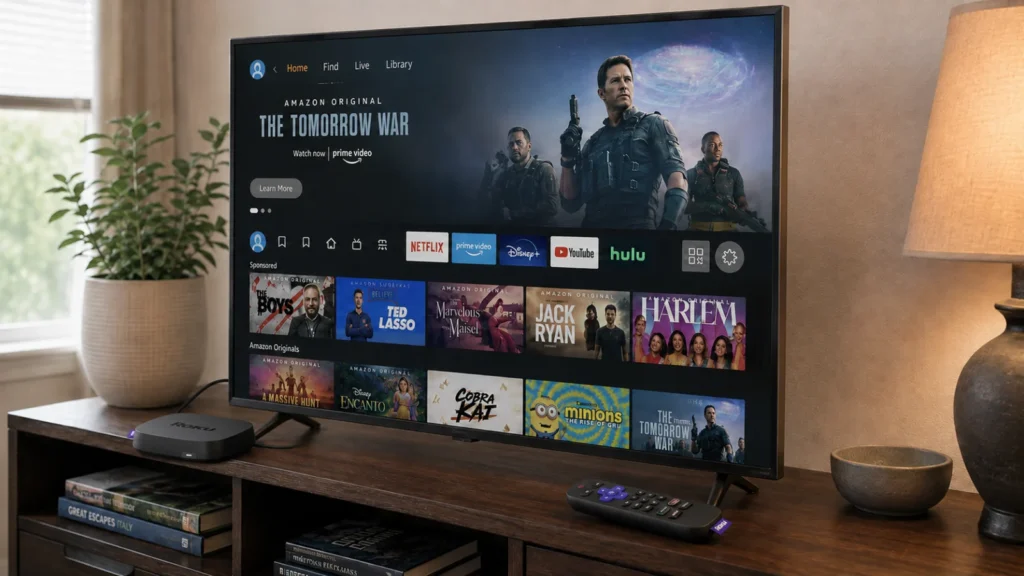
Streaming executives surveyed by Looper Insights called Roku the most important CTV platform for home screen visibility, ahead of every other option, including Fire TV [6]. That matches what I’ve seen in daily use. Roku’s interface doesn’t try to sell you on anything else. It’s a grid. You open an app, you watch your show, you leave. No smart speaker pitch, no ecosystem nagging.
That neutrality is exactly why Roku ended up embedded in TCL and Hisense television sets as the default operating system for budget and mid-range cord-cutter TVs. It didn’t need to win on hardware. It won on being the least annoying option preinstalled on the most TVs people were already buying.
Hub Entertainment Research’s own framing backs this up too: TV operating systems function as gateways to streaming video, and Roku leads that gateway role [7]. If your household is not deep into Alexa, not tied to Prime, and just wants a fast path from power-on to Netflix, Roku is still the safer default. I don’t think that’s controversial. It’s the practical reality for a huge chunk of cord-cutters.
 From the shopPermanently in BETA$18.45Shop →
Why Fire TV Makes Sense If You’re Already Alexa-Deep
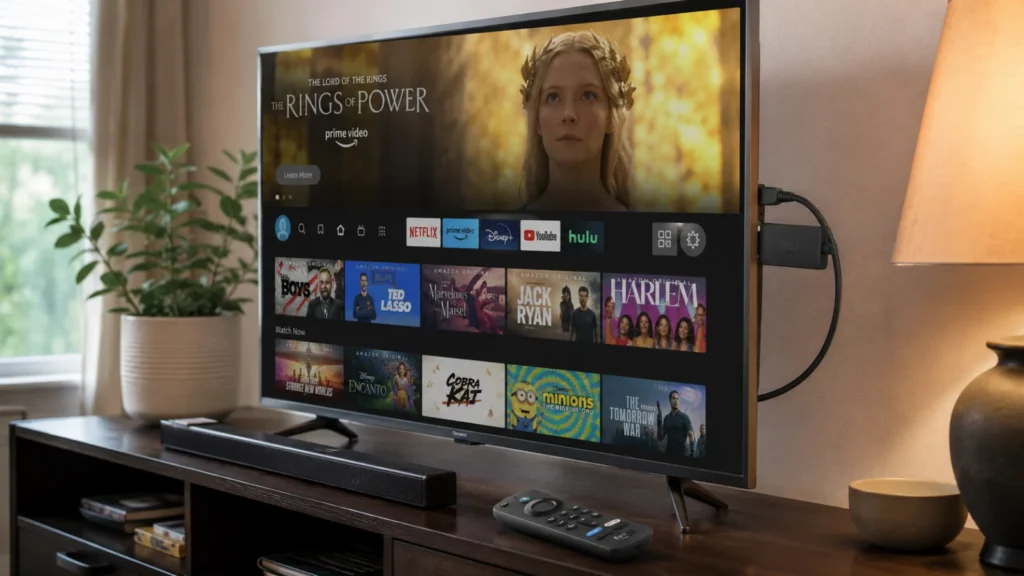
Fire TV isn’t chasing Roku’s simplicity game anymore. In 2026, Amazon finished a Fire TV redesign that meaningfully improved search performance and deepened Alexa+ integration [1]. That’s a real product decision, not marketing copy. Amazon looked at where it was losing and decided the answer wasn’t “be more like Roku.” The answer was “be more like the rest of your Amazon devices.”
If you already run Echo speakers, smart plugs, or a Ring doorbell, Fire TV starts making a different kind of sense. Voice search actually works well when your remote’s mic isn’t the only Alexa endpoint in the room. It’s the same assistant you’re already talking to for your thermostat or your grocery list. That consistency is worth something, and it’s worth more the deeper your Amazon footprint already goes.
Where Fire TV loses me is anywhere outside that ecosystem. If you don’t use Alexa, the voice features are dead weight, and the interface leans harder into Prime Video promotion than Roku’s grid ever leans into any single service. That’s a real tradeoff, not a knock for the sake of balance.
Both Platforms Are Getting Pushier With Ads
Here’s the part nobody wants to put on a spec sheet. Industry analysis has started describing the entire TV operating system market as running out of neutral ground, meaning platforms increasingly function as advertising engines first and navigation tools second. That’s not a fringe complaint. It’s becoming the dominant framing among people who track this space professionally.
Roku’s market weight has already turned into leverage in real carriage disputes, most visibly in negotiations with Fox, where legal analysts have raised antitrust-adjacent questions about platform control over advertising splits and distribution terms. Whatever you think about the legal angle, the practical takeaway for you as a viewer is simple: the bigger a platform gets, the more incentive it has to monetize your home screen instead of just organizing your apps.
I don’t think either company is uniquely guilty here. Fire TV has always leaned commercial, and Roku’s “simplicity” halo is starting to wear thin as sponsored rows creep further up the grid. If you’ve noticed your home screen getting busier over the past year, you’re not imagining it. Both platforms are chasing the same ad revenue, just from different starting positions.
What Actually Matters: Your Existing Hardware, Not the Market Share Chart
This is where I think most comparison articles get it backwards. They lead with market share like it’s a quality signal. It’s not. It’s a distribution signal. Roku’s 37% comes largely from OEM deals with TCL and Hisense, not from millions of people independently evaluating interfaces and picking a winner. Most buyers inherited their platform. They didn’t choose it.
So the real question isn’t “which platform is bigger.” It’s “which platform fits what you already own.” A few practical filters I’d actually use:
-
If you already own multiple Echo devices or use Alexa daily, Fire TV’s voice integration will feel like an upgrade, not a gimmick.
-
If your smart home runs on Google Home or you’re leaning into Matter-standard devices, neither Roku nor Fire TV is your natural center of gravity, and you should weigh Google TV before committing.
-
If you just want the fastest path to content with the least friction and no assistant loyalty, Roku’s grid still does that job better than Fire TV’s more commerce-forward layout.
-
If you’re buying a new TV rather than a standalone streaming box, check what’s preinstalled first. Roku’s OEM presence on TCL and Hisense sets means you may already be getting it by default, and fighting that default with a separate box is rarely worth the cost.
None of this is about which company has better engineers. It’s about which platform stops requiring extra effort once it’s in your living room. That’s the honest way to make this decision, and it’s the one most buying guides skip because it doesn’t produce a clean “winner.”
The Ad Creep Is Worth Testing Yourself
If you want to see this for yourself, count it. Turn on your TV and count how many taps it takes to get from power-on to an actual show, not a sponsored row, not a promoted tile, not an autoplay preview. I’ve run this test informally across both platforms over the past year and neither one is clean anymore. But the pattern differs. Roku tends to front-load sponsored content on the home screen itself. Fire TV tends to weave Prime Video promotion into search results and recommendation rows.
Neither is worse in some objective sense. But they’re worse in different ways, and which one bothers you more is a personal call. If sponsored home screen tiles annoy you more than voice assistant nudges, that’s a real data point for your decision, even if no market research firm is going to quantify it for you.
Frequently Asked Questions
Is Roku or Fire TV better for someone with no existing smart home devices?
Roku is the safer default here. Its interface doesn’t push you toward a specific ecosystem, and its dominant position on TCL and Hisense TVs [2] means it’s likely already the path of least resistance if you’re buying a new set.
Does Fire TV’s Alexa integration only matter if I own Echo speakers?
Mostly, yes. The 2026 Fire TV redesign specifically improved Alexa+ integration and search [1], and that value compounds the more Alexa devices you already run. Without them, you’re getting a voice remote and not much ecosystem benefit beyond that.
Why does Roku have such a big lead in the US but a small share globally?
Roku’s U.S. dominance comes largely from OEM deals with TV makers like TCL and Hisense, which don’t carry the same weight overseas. Globally, Android TV leads with roughly 40% share versus Roku’s 11% [3], reflecting completely different hardware and retail relationships outside the U.S.
Are Roku and Fire TV both getting more ad-heavy over time?
Yes, and it’s a documented industry trend, not just a subjective impression. Analysts have started describing the entire TV OS market as running out of neutral ground as both platforms lean harder into advertising and sponsored placement on the home screen.
Bottom Line
I don’t think there’s a universal winner in the Roku vs. Fire TV debate, and I’d be skeptical of anyone who tells you there is. Roku earns its lead with a cleaner, more neutral grid and heavier OEM presence on budget TVs. Fire TV earns its case with real, tested Alexa integration for households already committed to Amazon’s ecosystem. Check what you already own before you check what’s popular. That’s the only comparison that actually matters here, and it’s the one worth doing before your next TV purchase instead of after.
Sources
-
Roku and Fire TV Control Half of US Streaming: Fox Takeover Puts That Power Up for Sale (techtimes.com)
-
Roku still dominates US streaming, but its lead could start shrinking (pocket-lint.com)
-
Smart TV Platforms Market | Global Industry Analysis 2035 (marketgrowthreports.com)
-
Despite Samsung’s TV dominance, Tizen OS trails Roku, Fire TV, and Google TV (sammobile.com)
-
Google TV is reportedly the #3 streaming OS in the US (9to5google.com)
-
Looper Insights: Streaming Execs Say Roku Most Important CTV Platform for Home Screen Visibility – Media Play News (mediaplaynews.com)
-
Hub: TV Operating Systems Gateway to Streaming Video, Led by Roku – Media Play News (mediaplaynews.com)
Researched from 12 vetted sources · average source authority DR 78