
Some links below are affiliate links. If you buy through one, this site earns a commission at no extra cost to you. It never changes a verdict — here is how that works.
Updated September 13, 2026: This article has been revised to cover WHOOP’s current 5.0/MG lineup and the tiered membership pricing introduced in May 2025. It has also been relabeled as a researched comparison. An earlier version presented legacy WHOOP 4.0 pricing as current and included a three-year cost figure that could not be reproduced from the published subscription options.
About this comparison: This is a researched comparison, not a hands-on synchronized test. It draws on peer-reviewed validation studies, in-depth independent reviews from testers like DC Rainmaker and PCMag, and current manufacturer pricing. Where a claim comes from someone else’s testing, I say so.
Here’s the number that should frame your decision before you sign up for WHOOP: over three years, the membership will cost you between $597 and $1,077 depending on which tier you pick. Compare that to an Oura Ring 4 at roughly $560 over the same period, hardware included, or a Garmin you buy once and own outright, and you can see why this decision is about a lot more than which band looks nicer on your wrist. The accuracy research tells an equally mixed story, and that’s what this comparison digs into.
Gear Mentioned in This Post
- WhoopView on Amazon
- GarminView on Amazon
- OuraView on Amazon
The Subscription Model Nobody Fully Explains
WHOOP doesn’t sell you a gadget. It sells you a membership, and the hardware is just the delivery method. In May 2025, alongside the launch of the WHOOP 5.0 and WHOOP MG, the company replaced its single flat plan with three tiers[6]:
- WHOOP One — $199/year (or $25/month): WHOOP 5.0 device with the basic wired charger. Core strain, recovery, and sleep tracking.
- WHOOP Peak — $239/year (or $30/month): WHOOP 5.0 with the wireless PowerPack and SuperKnit band, plus the Health Monitor, Stress Monitor, and Healthspan features. This is the direct successor to the old single plan.
- WHOOP Life — $359/year (or $40/month): the WHOOP MG (medical grade) device, which adds ECG readings and blood pressure estimates.
The three-year math, stated plainly so you can check it: One is $199 × 3 = $597. Peak is $239 × 3 = $717. Life is $359 × 3 = $1,077. Pay monthly instead of annually and those totals climb to $900, $1,080, and $1,440. There’s also a legacy plan that keeps you on the older WHOOP 4.0 hardware for $149/year — $447 over three years — which is the cheapest way into the ecosystem if you don’t need the new hardware.
Stop paying, and the band stops being useful. You keep the device, but all the tracking analytics live behind the membership. That’s a real tradeoff compared to a Garmin or Apple Watch, which keep working (mostly) even if you never touch an app subscription again. Will Ahmed, WHOOP’s founder and CEO, has been upfront about why the company built it this way. He’s said the company wants to “invest heavily in software and coaching features, which is why we’ve leaned into a membership business model.”[1] It’s a fair rationale. But it’s also a business model, not a favor to you.
The Verge summed up the psychological shift well: you don’t buy a WHOOP, you subscribe to it, and it’s less a gadget and more a service you’re either committed to or you’re not. That framing matters because it changes how you should shop. You’re not comparing devices. You’re comparing ongoing costs.
 From the shopCurrently Optimizing$18.45Shop →
What the Hardware Actually Does
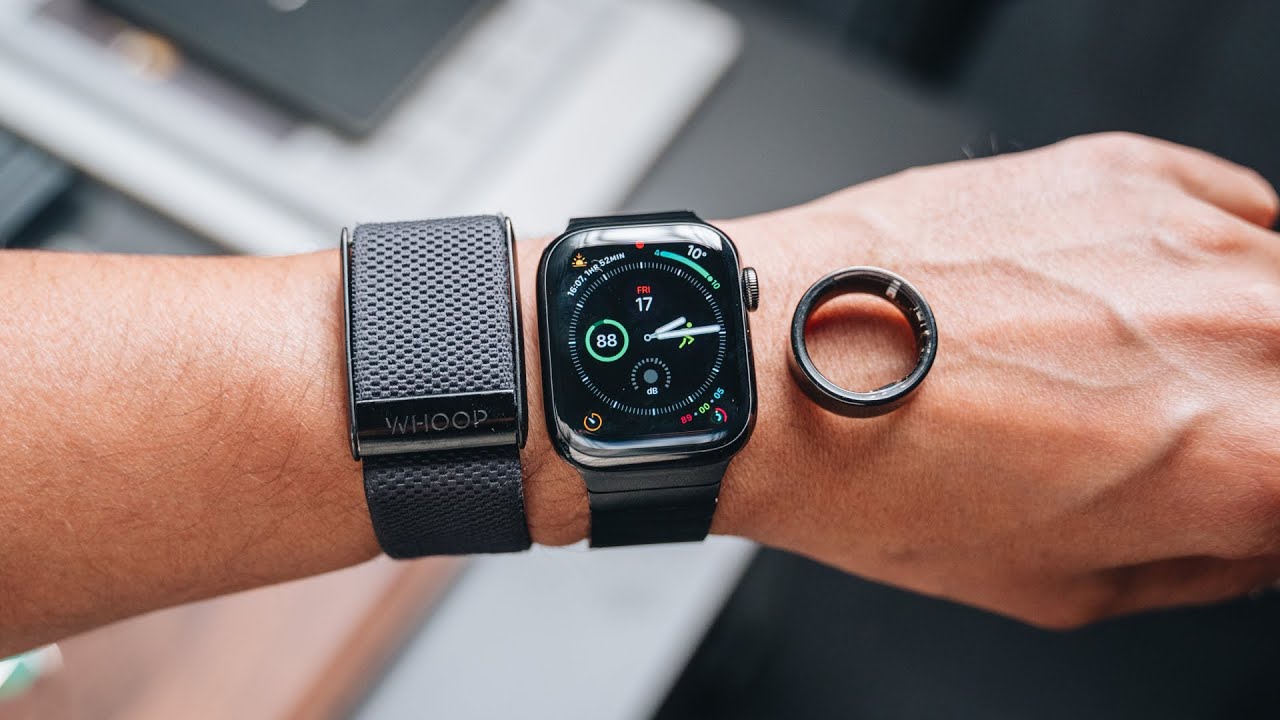
The WHOOP 5.0 is a small, screenless sensor that lives on your wrist (or in WHOOP’s compatible apparel) around the clock. It’s slightly smaller than the 4.0 it replaced, and the headline hardware upgrade is battery life: the 5.0 is rated for roughly 14 days per charge, compared to the 4-to-5 days the 4.0 managed in real-world use[1]. Charging works through a wireless PowerPack that slides onto the band while you’re wearing it, so there’s no reason to ever take the thing off — which is exactly the point for continuous sleep and recovery tracking.
There’s no screen to check obsessively, which some people love and others find frustrating mid-workout. You check everything through the app. That design choice keeps the band comfortable for sleep tracking, which is arguably WHOOP’s strongest use case. It also means you’re fully dependent on your phone to see anything useful in the moment.
The MG variant (Life tier only) adds a metal clasp for on-demand ECG readings and a blood pressure estimation feature that requires calibration against a real cuff. Treat those as screening conveniences, not medical devices replacing actual clinical measurement.
Where Accuracy Actually Holds Up
One honest caveat before the evidence: most published validation research was conducted on the WHOOP 4.0. WHOOP positions the 5.0 as the same sensing approach with upgraded hardware, but independent, peer-reviewed validation specific to the 5.0 is still thin as of this update. With that on the table, here’s what the research shows.
Resting heart rate tracking is genuinely strong. A validation study on military trainees found WHOOP’s resting heart rate correlated with ECG readings at better than 0.9[2], which is a strong result by any clinical standard. Newer validation work on nocturnal resting heart rate and heart rate variability in consumer wearables has continued to support WHOOP’s reliability in these steady-state, low-motion conditions[3].
Sleep detection is another strength. Research comparing wearables to polysomnography, the clinical gold standard for sleep studies, found WHOOP highly sensitive at detecting whether you’re asleep[4]. If you want a device that tells you reliably “yes, you were asleep during this window,” WHOOP does that job well.
There’s also emerging evidence that consistent use matters. Research tracking WHOOP wear frequency found that people who wore the device more consistently saw better outcomes on tracked metrics[5], suggesting the value compounds the more you actually use it rather than checking in occasionally. The 5.0’s two-week battery removes the most common excuse for gaps in the data.
Where It Falls Apart
Now the part the marketing pages don’t emphasize. That same sleep study found WHOOP had low specificity for detecting wake, meaning it often mistakes being awake for being asleep, and only moderate accuracy when it comes to classifying which sleep stage you’re actually in[4]. A separate validation study specifically evaluating the accuracy, utility, and applicability of the WHOOP wearable echoed this pattern: good at big-picture trends, shakier on the fine-grained detail[2].
That distinction matters. If you’re using WHOOP to know roughly how much you slept, it’s a solid tool. If you’re relying on it to tell you exactly how much REM or deep sleep you got last night, treat that number as an estimate, not a diagnosis.
Interval training is the other weak spot. DC Rainmaker’s long-running review work put it plainly: WHOOP is fine for steady efforts, but on intervals it often misses the peaks and lags behind a chest strap. Optical wrist sensors in general smooth over sudden heart rate spikes rather than catching them in real time, which is exactly when a Garmin paired with a chest strap pulls ahead.
Independent sports science reviews have raised a bigger structural concern too: WHOOP’s proprietary recovery and strain scores lack independent clinical validation as predictors of injury or overtraining[2]. That’s worth sitting with. The recovery score is WHOOP’s signature feature, the number people build their entire training day around. And the science backing it as a predictive tool, rather than just a descriptive one, isn’t there yet.
How It Stacks Up Against the Competition
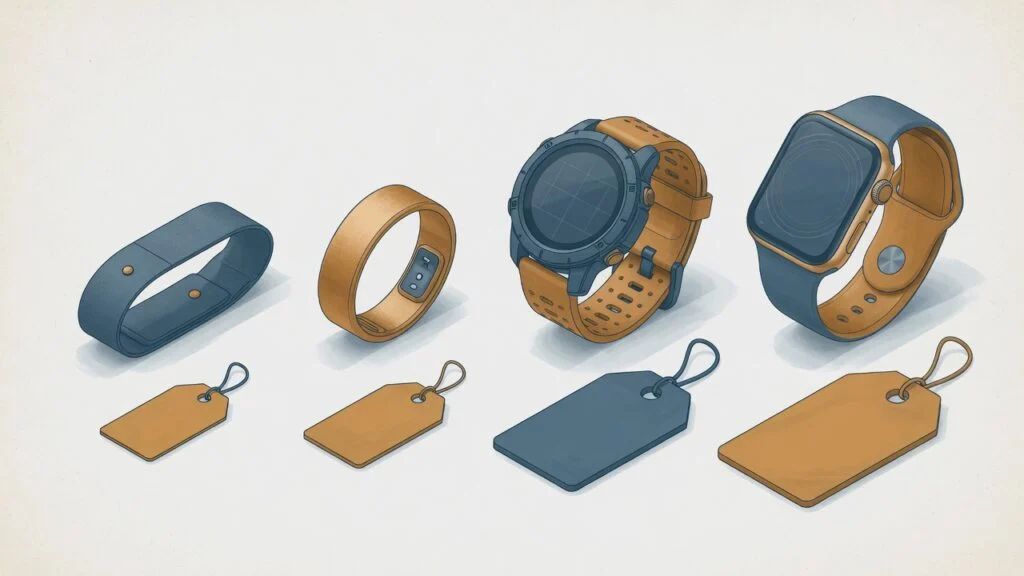
Here’s a practical comparison for anyone deciding between the major players right now:
- WHOOP 5.0 / MG: No upfront hardware cost, but the membership runs $597 (One), $717 (Peak), or $1,077 (Life) over three years billed annually. Strong resting HR and sleep detection in published validation work; weaker on interval HR and sleep-stage precision.
- Oura Ring 4: $349 for the ring in standard finishes (premium finishes up to $499), plus a $5.99/month or $69.99/year membership[7]. Roughly $560 over three years, hardware included — cheaper than every current WHOOP tier.
- Garmin: One-time hardware purchase, no required subscription for core metrics, generally regarded as more accurate during high-intensity interval work according to reviewers like DC Rainmaker — especially when paired with a chest strap.
- Apple Watch: One-time hardware purchase, broader smartwatch functionality beyond fitness tracking, though battery life trails WHOOP’s multi-day rating dramatically.
Notice the pattern? WHOOP wins on comfort, battery, and passive sleep tracking. It loses on cost predictability and high-intensity accuracy. If your training involves a lot of interval work, sprint sessions, or anything with sudden heart rate spikes, a chest-strap-compatible Garmin is going to serve you better. If you mostly care about sleep, recovery trends, and daily strain in low-intensity contexts, WHOOP’s design advantages start to matter more.
Who This Actually Makes Sense For
Wareable’s James Stables put it about as fairly as anyone I’ve read: WHOOP remains one of the most compelling platforms for serious athletes who want day-to-day guidance on whether to push or back off, but tying that to a recurring membership will put off many users. Both halves of that sentence are true, and you need to weigh them against your own habits.
If you’re an athlete who genuinely changes your training based on daily recovery data, and you’ll use the coaching features enough to justify a recurring bill, WHOOP earns its keep. Professional partnerships with organizations like the NFL Players Association, the PGA Tour, NASCAR, and CrossFit reflect real adoption at a high level, though it’s worth noting these partnerships are descriptive case studies and marketing relationships, not controlled scientific trials proving superior outcomes.
If you already own a Garmin or Apple Watch and you’re wondering whether WHOOP adds enough new value to justify paying twice for overlapping metrics, that’s the exact subscription fatigue driving a lot of the cancellation talk in WHOOP’s own user community right now. It’s a legitimate question, and for most casual users, the answer is probably no.
Frequently Asked Questions
Is WHOOP more accurate than a Garmin watch?
Not consistently. Published validation work shows WHOOP performs well for resting heart rate and basic sleep detection, but reviewers like DC Rainmaker have found it lags behind chest-strap-equipped Garmin devices during high-intensity intervals, often missing heart rate peaks that a strap catches in real time.
Does WHOOP stop working if I cancel my membership?
Effectively, yes. You keep the physical device, but all tracking analytics and app access run through the subscription, so the band loses its purpose without one. This is the central tradeoff of WHOOP’s business model compared to Garmin or Apple Watch, which retain core functions after purchase.
Is WHOOP’s recovery score scientifically validated?
Not fully. Independent sports science review has found that WHOOP’s proprietary recovery and strain metrics lack independent clinical validation as predictors of injury or overtraining[2], meaning the score is better treated as a helpful trend indicator than a diagnostic tool.
Is WHOOP or Oura cheaper over time?
Oura. The Ring 4 plus membership comes to roughly $560 over three years ($349 hardware + $69.99/year)[7], compared to $597–$1,077 for WHOOP’s three membership tiers over the same span[6].
Do the accuracy studies apply to the WHOOP 5.0?
Mostly indirectly. The peer-reviewed validation studies cited here evaluated the WHOOP 4.0. WHOOP describes the 5.0 as the same sensing approach on upgraded hardware, but independent 5.0-specific validation is still limited. Treat the 4.0 research as the best available evidence, not a guarantee about the new hardware.
Where to Go From Here
The WHOOP accuracy question doesn’t have a single answer. It depends entirely on what you’re tracking and how you train. If you want the full picture before you commit to a recurring bill, start on the cheapest tier, log how the recovery score compares to how you actually feel each morning, and track that against your workout intensity for at least a few weeks. That’s the only real test that matters, and it’s one no spec sheet can run for you.
Sources
- Whoop 5.0 – Review 2026 – PCMag Canada (ca.pcmag.com)
- Accuracy, Utility and Applicability of the WHOOP Wearable (medrxiv.org)
- Validation of nocturnal resting heart rate and heart rate variability in consumer wearables – PMC (pmc.ncbi.nlm.nih.gov)
- A performance validation of six commercial wrist-worn wearable sleep-tracking devices for sleep stage scoring compared to polysomnography (repository.uantwerpen.be)
- Wearing WHOOP More Frequently Is Associated with Better … (pmc.ncbi.nlm.nih.gov)
- WHOOP Membership Plans (whoop.com)
- Oura Ring Price in 2026: Every Model, Subscription & Real Total Cost (bettervitals.com)