
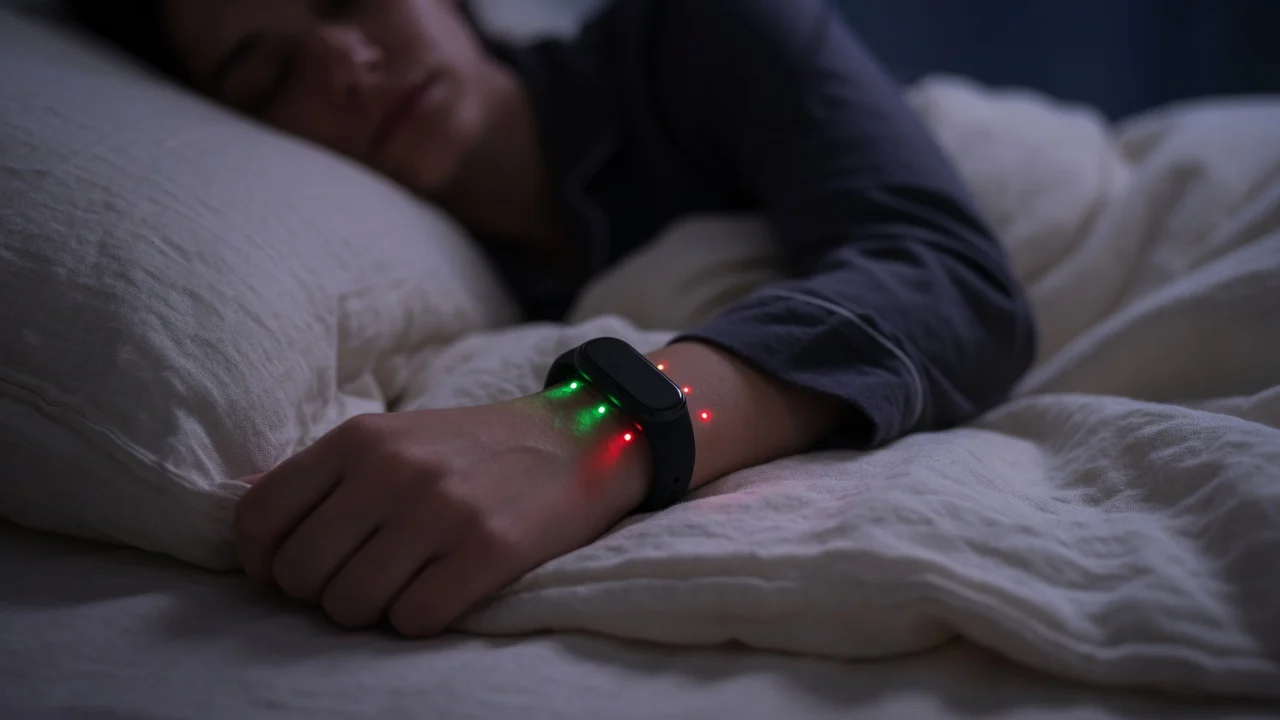
Here’s the thing nobody tells you when a wearable company drops a “2.0”: the sensors inside probably didn’t change at all. That’s exactly what happened with the Hume Band. The 5-LED, 4-photodiode sensor array reads identically to the original. So if you’re wondering whether Band 2.0 measures your heart rate or sleep any more accurately than the first one, the honest answer is: probably not. What changed is everything around the sensor, and for most people, that’s actually the part that matters.
The Sensor Hardware Didn’t Move an Inch
Let’s start with the part that surprised me most. Hume kept the same core sensor stack between generations, 5 LEDs and 4 photodiodes on both bands. If you were hoping for a leap in raw measurement precision, a bigger jump in heart rate accuracy or a smarter way of reading your pulse, that’s not what you’re getting here.
This matters because it reframes the whole upgrade conversation. Band 2.0 isn’t a “better sensor” story. It’s a “better experience wrapped around the same sensor” story. That’s not a knock. Plenty of good product upgrades work this way.
But if you see marketing copy implying dramatically improved accuracy, be skeptical. Nobody has run an independent, head-to-head accuracy benchmark comparing Band 1 and Band 2.0 for heart rate, HRV, sleep, or blood pressure. That gap in testing is worth sitting with before you spend $249.
Buy your Hume Band here – Hume Health Band
Battery Life: The Marketed Number and the Real Number Don’t Match
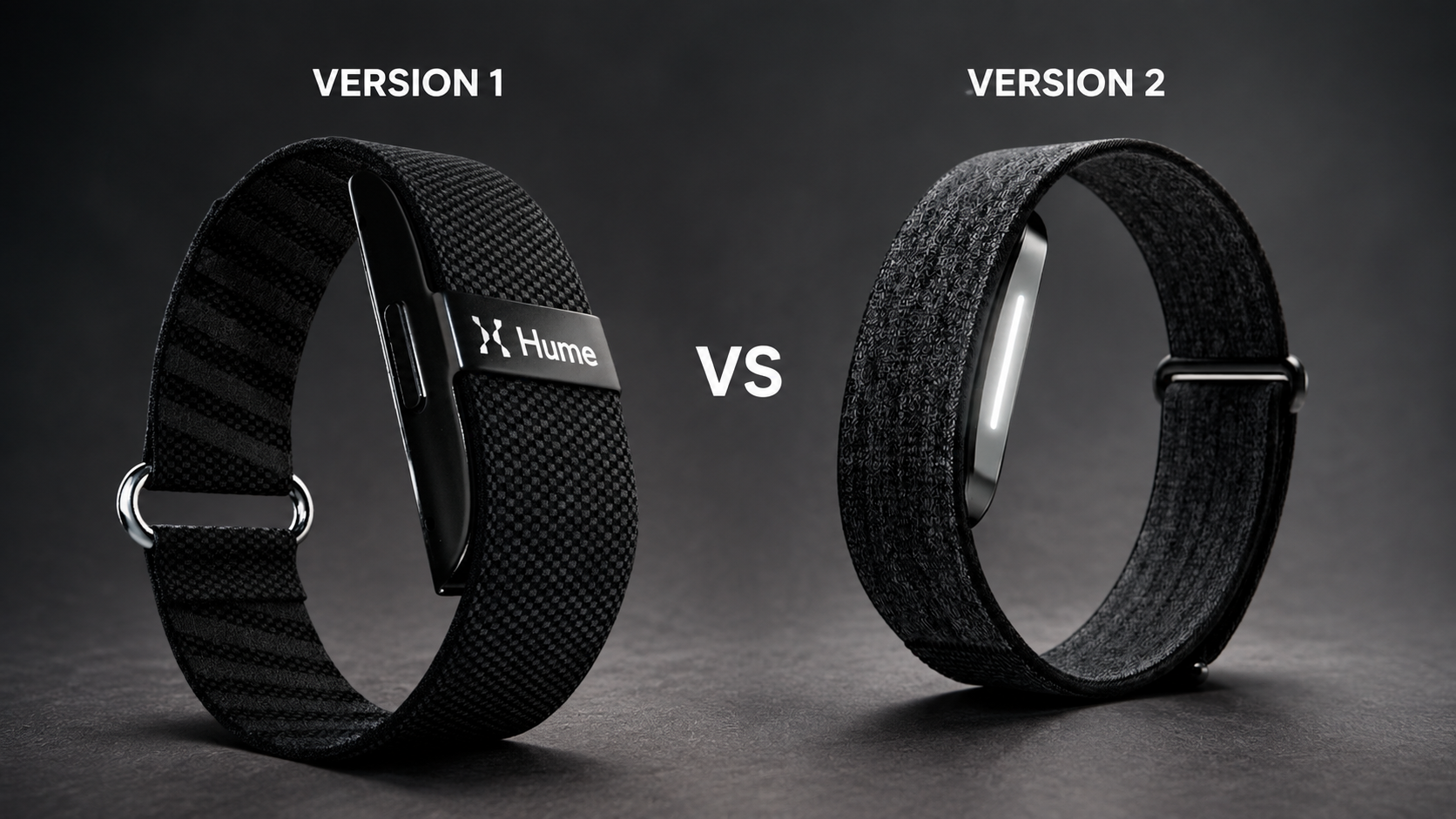
Hume markets Band 2.0 at up to 14 days of battery life. In independent testing, one reviewer got about seven days in real-world use [1]. That’s roughly half the headline claim.
But context matters here, because the original band wasn’t hitting big numbers either. Reviewers testing the first-generation Hume Band reported 4 to 5 days of battery life. One long-term tester who wore Band 2.0 for six weeks straight reported 10 to 11 real days per charge [1]. So depending on who’s testing and how they’re using it, you’re looking at somewhere between 7 and 11 days on the new band, against 4 to 5 days on the old one. That’s a genuine, meaningful improvement even if it falls short of the 14-day promise.
My take: don’t buy based on the 14-day number. Buy expecting something closer to a week, and treat anything beyond that as a bonus. That’s still a real upgrade over the original, just not the upgrade the marketing page implies.
Charging Speed and Comfort Are the Sleeper Upgrades
Nobody talks about charging speed until they’re the person standing in the bathroom at 6 a.m. realizing their band died overnight. Band 2.0 charges in roughly 20 to 80 minutes, compared to about 1.5 hours for the original. That’s a real quality-of-life change if you’re the type who tops off your battery in short bursts instead of committing to a long overnight charge.
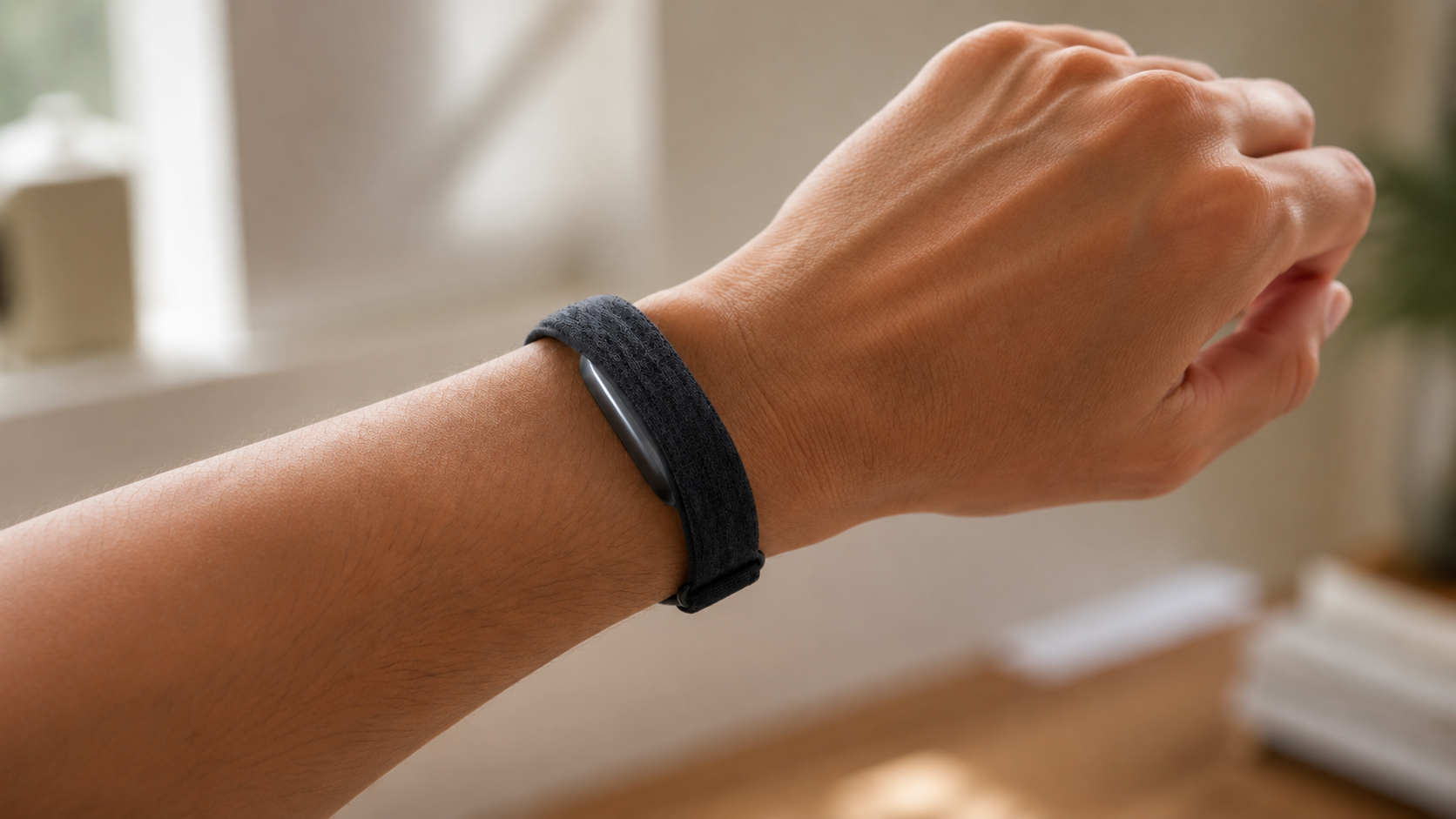
Comfort tells a similar story. Reviewers consistently point to a softer strap material and improved signal processing as standout upgrades, with one calling the improved signal processing “arguably the biggest upgrade because cleaner data makes the app feel more reliable day after day.” Cleaner data doesn’t mean more accurate sensors. It means the software is doing a better job interpreting the same raw signal, smoothing out noise so the numbers you see feel more trustworthy day to day.
- Charging time: roughly 20-80 minutes on Band 2.0 vs. about 1.5 hours on the original
- Battery life: 7-11 days in independent real-world testing on Band 2.0 vs. 4-5 days on the original [1]
- Water resistance: IP68 rated on both generations, up to 1 meter for up to 2 hours
- Sensor hardware: identical 5-LED, 4-photodiode array on both bands
The New Longevity Features Are Where the Real Differentiation Lives
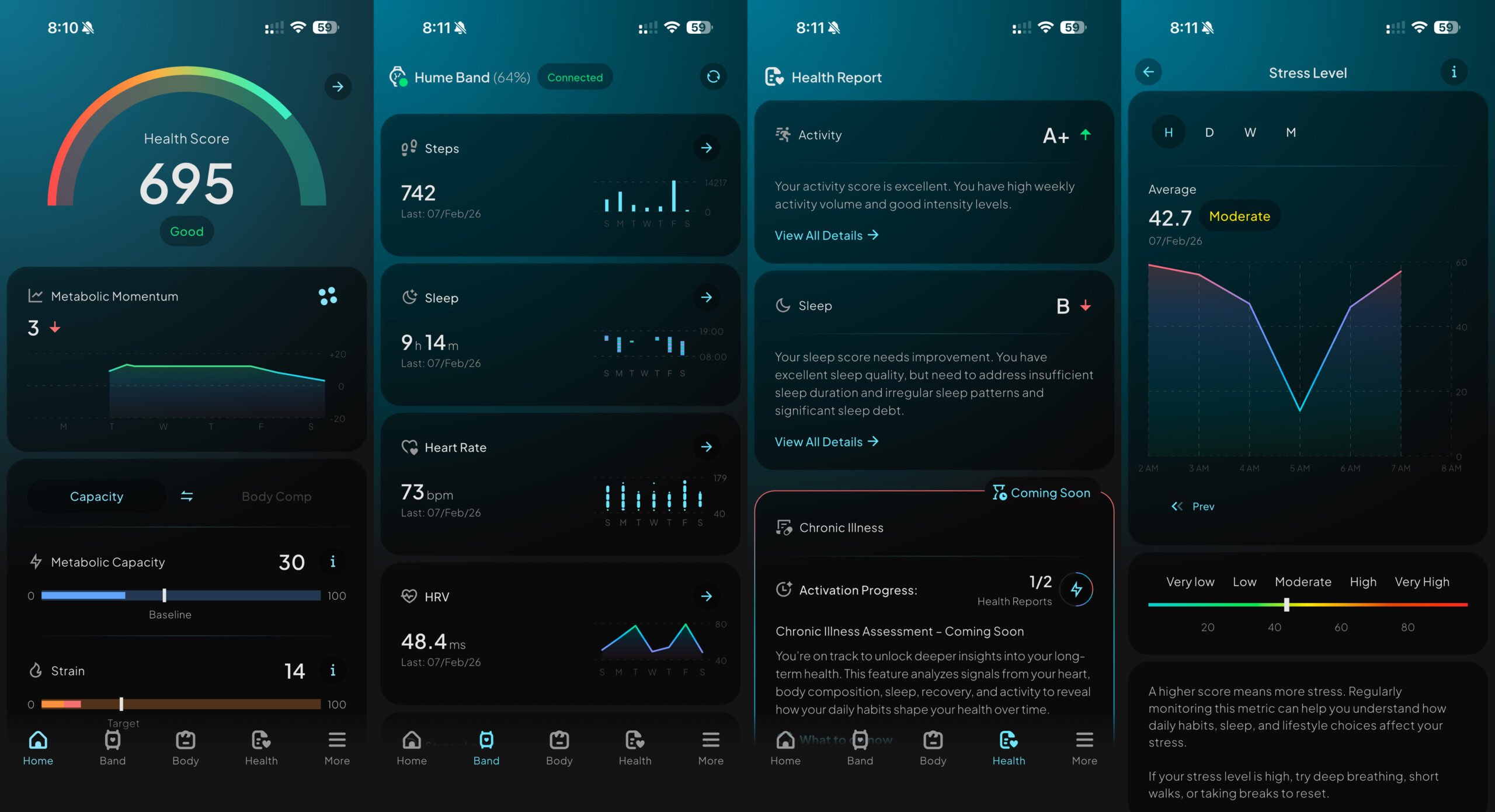
If battery and comfort are incremental wins, the feature set is where Band 2.0 actually tries to be a different product. It adds cuff-free blood pressure trends, coverage across 14-plus biomarkers, and a Claude AI-powered coaching layer. It also introduces Metabolic Momentum and Biological Age tracking, both framed around longevity rather than just workout recovery [2].
One reviewer called Band 2.0 “one of the most differentiated longevity wearables on the market,” pointing specifically to the 14-day battery claim, blood pressure trends, biomarker coverage, and the AI coach as what sets it apart from competitors. I’d push back gently on the battery part of that claim given what independent testers actually measured, but the feature expansion itself is real and it’s a meaningful shift in what this device is trying to be. This isn’t a fitness tracker anymore. It’s angling to be a longevity dashboard on your wrist.
That said, new features and mature features aren’t the same thing. Cuff-free blood pressure tracking is the headline addition, and it’s also the one with the least independent validation. Worth remembering before you treat it as a medical-grade number.
 From the shopCurrently Optimizing$18.45Shop →
Blood Pressure Tracking: Promising, But Not Proven Yet
This is where I’d slow down if I were you. Cuff-free blood pressure estimation on a wrist wearable is genuinely hard to do well, and Band 2.0 is one of the first mainstream devices in this category to try it at scale.
Community feedback tells a mixed story. Users in cardiovascular health groups tracking blood pressure and heart metrics on Band 2.0 have reported inaccurate readings and delayed reports, with more experienced users advising patience while the device calibrates. That’s not a dealbreaker, but it’s also not the confident, ready-for-primetime feature the marketing suggests. If you’re managing a real cardiovascular condition, treat these trends as directional information, not something to replace a real blood pressure cuff or a conversation with your doctor.
The honest read: blood pressure trends on Band 2.0 are a promising direction for the category, not a proven capability yet. Give it time to mature before you lean on it heavily.
Do You Need Premium to Get Value?
Here’s some good news that doesn’t get enough attention. Core health and recovery metrics are free on both generations of the Hume Band. Premium exists, but it’s optional, adding deeper reports like Metabolic Momentum and Biological Age rather than gating basic functionality behind a paywall.
One reviewer specifically flagged this as a favorite thing about Band 2.0: you don’t need Premium to actually use the device day to day. In a wearable market where subscription fatigue is real and growing, that’s a meaningful point in Hume’s favor, and it’s part of why multiple testers describe Band 2.0 as “the better long-term health buy” [3] compared to subscription-heavy competitors.
Price is worth flagging too. Band 2.0 has been listed at a $249 promotional price, down from a $356 list price, and it’s HSA/FSA eligible at the sale price. That’s a meaningfully lower barrier to entry than you’d expect for a device with this feature set, and it helps explain the strong satisfaction numbers reviewers are reporting, including a 5.0 out of 5 rating across more than 2,955 verified buyers in one dataset and an editor’s score of 4.7 out of 5 citing comfort and the screen-free form factor as standout strengths.
So Should You Upgrade?
If you already own the original Hume Band and you’re happy with it, don’t feel pressured to jump to 2.0 for accuracy reasons alone. The sensor hardware hasn’t changed, so your existing data quality isn’t going to improve.
But if you’re annoyed by short battery life, slow charging, or a strap that never quite feels comfortable overnight, Band 2.0 solves all three of those real, lived-with frustrations. And if you’re specifically interested in longevity metrics like Biological Age or Metabolic Momentum, those features simply don’t exist on the original band at all. That alone might be reason enough for some of you.
If you’re a new buyer choosing between the two, this one’s easy. Get Band 2.0. The price gap is modest relative to the comfort, battery, and feature improvements, and there’s no scenario where the original band gives you something 2.0 doesn’t.
Frequently Asked Questions
Is Hume Band 2.0 more accurate than the original Hume Band?
Not necessarily. Both generations use the same 5-LED, 4-photodiode sensor array, and no independent testing has directly benchmarked accuracy differences between the two for heart rate, HRV, sleep, or blood pressure.
How long does the Hume Band 2.0 battery actually last?
Hume markets up to 14 days, but independent testers report closer to 7 days in typical use [1], with one long-term six-week test reporting 10 to 11 days per charge [1]. Expect somewhere in that range rather than the full two weeks.
Do you need a Premium subscription to use Hume Band 2.0?
No. Core health and recovery metrics are free on both generations. Premium adds extra reports like Metabolic Momentum and Biological Age, but it’s optional, not required for daily use.
Is the blood pressure tracking on Hume Band 2.0 reliable?
It’s still an emerging feature. Some users in health-focused communities have reported inaccurate or delayed readings, and there’s no independent benchmark confirming its reliability yet. Treat it as a trend indicator, not a medical-grade measurement.
Buy your Hume Band here – Hume Health Band
Bottom Line
Hume Band 2.0 isn’t chasing a sensor breakthrough, it’s chasing a better everyday experience wrapped around the same core technology. If you value longer battery life, faster charging, a more comfortable strap, and longevity-focused features like Biological Age and blood pressure trends, it’s a legitimate upgrade worth the money. Just go in with realistic battery expectations and treat the newest health metrics as promising rather than proven. That’s the honest take, and it’s the only one worth having before you spend on this one.
Sources
- Best Screenless Health Bands (2026): A Short, Honest List (bodycompositionlab.vercel.app)
- Hume Band 2.0 Reviews 2026: Honest Expert Analysis – Worth … (inmybowl.com)
- Hume Band 2.0: Metabolic Momentum & Capacity Guide | Scribe (scribehow.com)
Researched from 4 sources.