
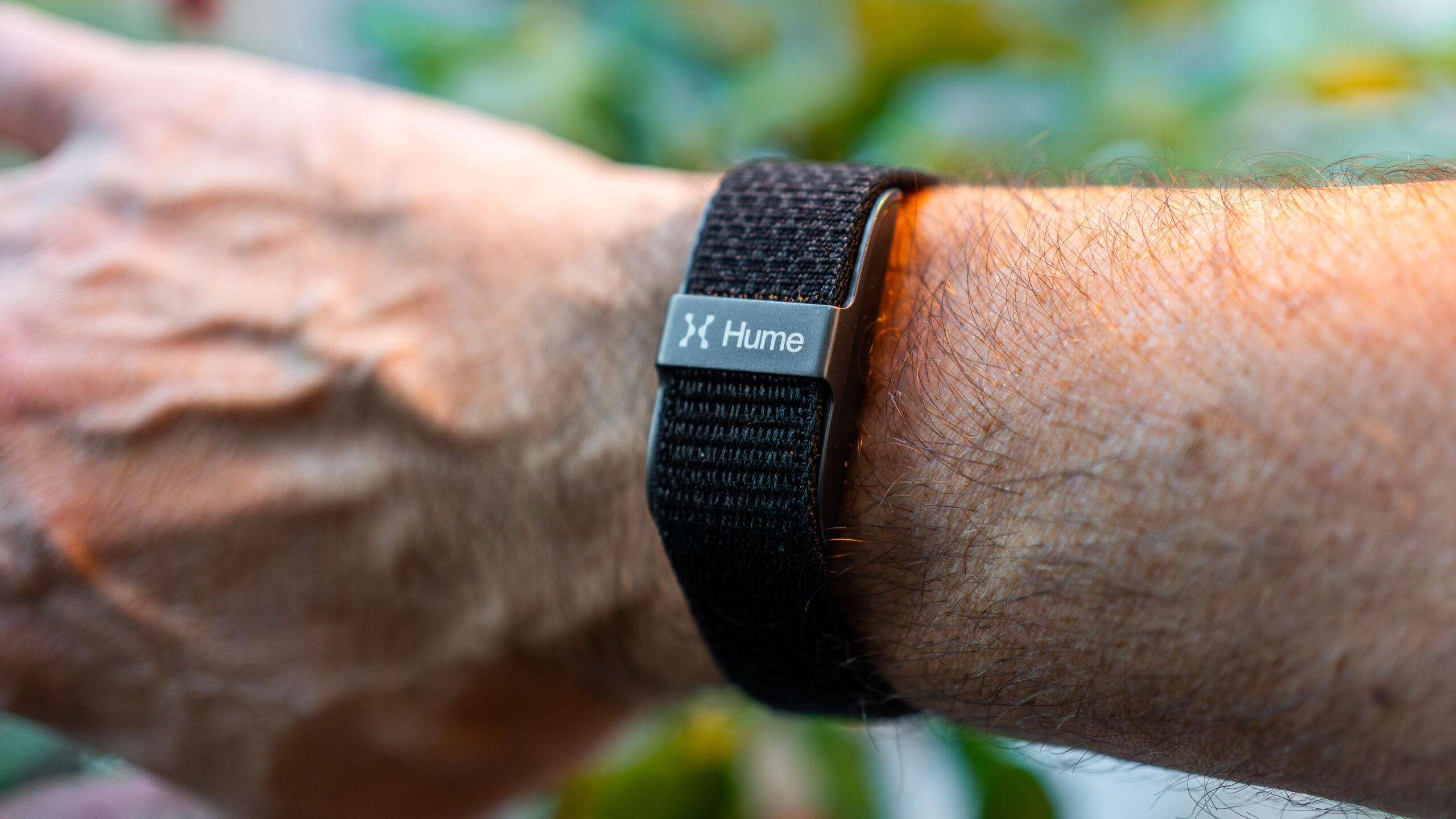
Updated September 23, 2026: This review now covers Hume Band 2.0, Hume’s current model. My hands-on testing is from the original Hume Band (Gen 1) and is labeled that way; Band 2.0 specs, pricing and battery figures are researched. The full update note is at the end of the article.
How I Tested (and What This Update Is)
I wore the original Hume Band (Gen 1) for 8+ weeks of continuous daily use, running it alongside an Oura Ring 4 and a Garmin chest strap. Testing included heavy compound lifts (deadlifts, squats, pull-ups), Zone 2 cardio (30–60 minutes), sleep across different schedules, desk work, and travel. Those side-by-side accuracy notes still matter because Band 2.0 keeps the same core optical sensor block (5 LEDs + 4 photodiodes) — Hume’s own docs say the 2.0 upgrades are mostly processing, battery, strap, and blood-pressure trend insights, not a brand-new optical array.
Band 2.0 section: Specs, pricing, battery claims, strap naming, BP trends, and subscription model are researched from Hume’s official Band 2.0 pages plus independent reviews (including Wareable’s June 2026 hands-on). Where I cite independent battery results (~7 days vs Hume’s 14-day claim), that is their testing, not mine. I am not inventing weeks of Band 2.0 wear I did not do.
TL;DR — Hume Band 2.0 Review (Sep 2026)
- Best for: people who want 24/7 sleep + recovery + longevity metrics without a required subscription
- What changed vs Gen 1: advertised battery jumps to up to 14 days (independent testers closer to ~7), UltraLux/SuperKnit strap refresh, blood-pressure trend insights, faster charging (typically 20–80 minutes), improved signal processing on the same 5-LED / 4-photodiode stack
- What still applies from my Gen 1 test: comfortable screenless wear, strong Metabolic Capacity/Momentum framing, lifting HR can lag peaks, sleep staging roughly tracks Oura trends, occasional app sync quirks
- Buy it if: you want a buy-once Whoop-style band with longevity scoring and you’re fine reviewing everything in the phone app
- Skip it if: you need built-in GPS, a smartwatch, clinical cuff-grade blood pressure, or an athlete-first recovery stack
Deal: Hume Band 2.0 at Hume Health — try code ROBBSUTTON at checkout (promotional pricing is often already applied; verify the total before you pay).
Also in this series: Hume Band vs Band 2.0 — what actually changed, plus the Hume Pod body composition scale if you’re considering the full ecosystem.
In the world of fitness wearables, we are still stuck in “Subscription Fatigue.” You buy a $300 ring or band, then you’re held hostage for another monthly fee just to see your own sleep data. It’s a rental model for your biology, and it’s exhausting.
Enter the Hume Band 2.0 — the current generation of Hume Health’s screenless wristband. Gen 1 already made a splash as a subscription-optional Whoop alternative. Band 2.0 is the version you actually buy in September 2026: longer advertised battery, a refreshed strap, blood-pressure trend insights, and the same longevity-first app language (Metabolic Capacity, Metabolic Momentum, Biological Age).
I’ve lived with the original Band for eight-plus weeks in the garage gym, in bed, and at a desk. This rewrite updates the buyer’s guide for Band 2.0 so the specs and marketing claims match what’s shipping now — without pretending I secretly logged another two months on the new module.
Get Hume Band 2.0: Code ROBBSUTTON · HumeHealth.com/pages/hume-bandv2
Gear Mentioned in This Post
- GarminView on Amazon
- OuraView on Amazon
- WhoopView on Amazon
Hume Band 2.0 Specs (Current Gen)
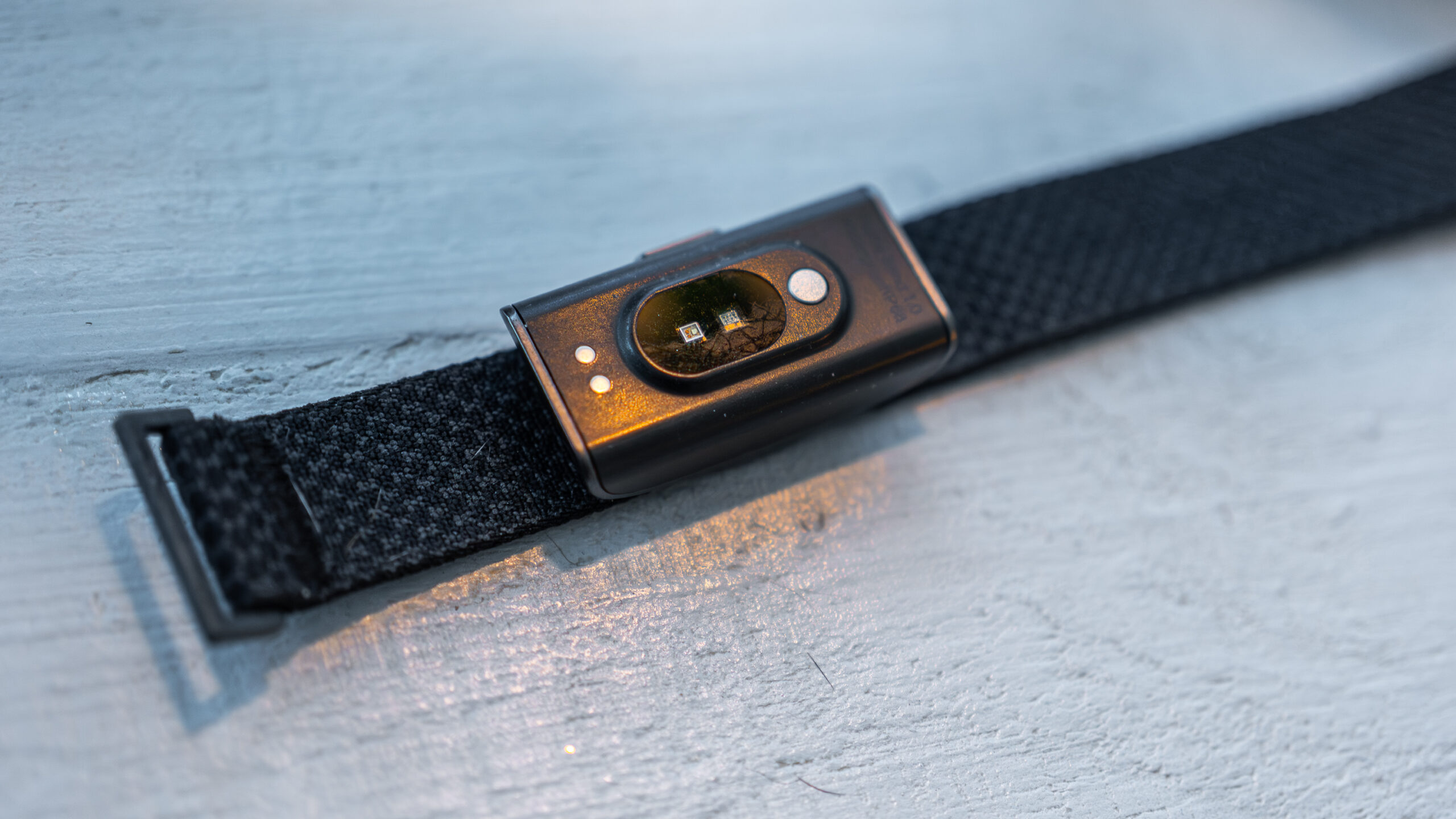
Screenless fabric-strap tracker designed for 24/7 wear. No notifications. No GPS. Phone app is the UI.
- Form factor: Screenless wristband with UltraLux / SuperKnit-style fabric strap (2.0 refresh of Gen 1 SuperKnit)
- Sensors: 5 LEDs + 4 photodiodes (optical HR, SpO2, skin temperature) — same optical block as Gen 1; Hume says signal processing is improved
- Battery (official): Up to 14 days; typical charge 20–80 minutes
- Battery (independent): Wareable’s June 2026 hands-on reported about 7 days of day/night wear — treat 14 days as a best-case marketing ceiling
- Water resistance: IP68 (Hume: up to 1 m for up to 2 hours — showers/swimming OK)
- Connectivity: Bluetooth Low Energy; iOS 14+ / Android 8.0+
- Key metrics: HR, HRV, SpO2, sleep stages, activity, recovery/strain, skin temperature, Metabolic Capacity, Metabolic Momentum, Health Score, Biological Age / Pace of Aging framing, blood pressure trend insights (wellness trends — not a cuff replacement)
Pricing & Subscription (Band 2.0, Sep 2026)
Still the headline vs Whoop/Oura: one-time hardware purchase, optional Premium for deeper coaching — core tracking does not brick if you never pay monthly.
- List / promo (official page check): about $356 list, commonly shown at $249 promo (HSA/FSA eligible on Hume’s site)
- Returns / warranty: 45-day return window; 1-year warranty (extended warranty sold as optional add-on)
- Subscription: Optional. Free app includes core metrics. Hume Premium starts around $8.99/month for AI coaching / deeper longevity analysis. Accurate phrasing: no mandatory subscription, not “nothing ever costs extra.”
- Pod: Optional. Band works alone; Hume Pod adds body-composition context in the same app.
Deal: Official Hume Band 2.0 page · code ROBBSUTTON — confirm the checkout total; auto-sale pricing is common.
Design & Comfort: Still the “Invisible” Wearable
If you already wear a Garmin or Apple Watch, Band 2.0 (like Gen 1 and Whoop) does not fight for screen real estate. No texts. No glowing face at 2 a.m. It is a data collector.
 From the shopCurrently Optimizing$18.45Shop →
Strap (Gen 1 hands-on + 2.0 product note)
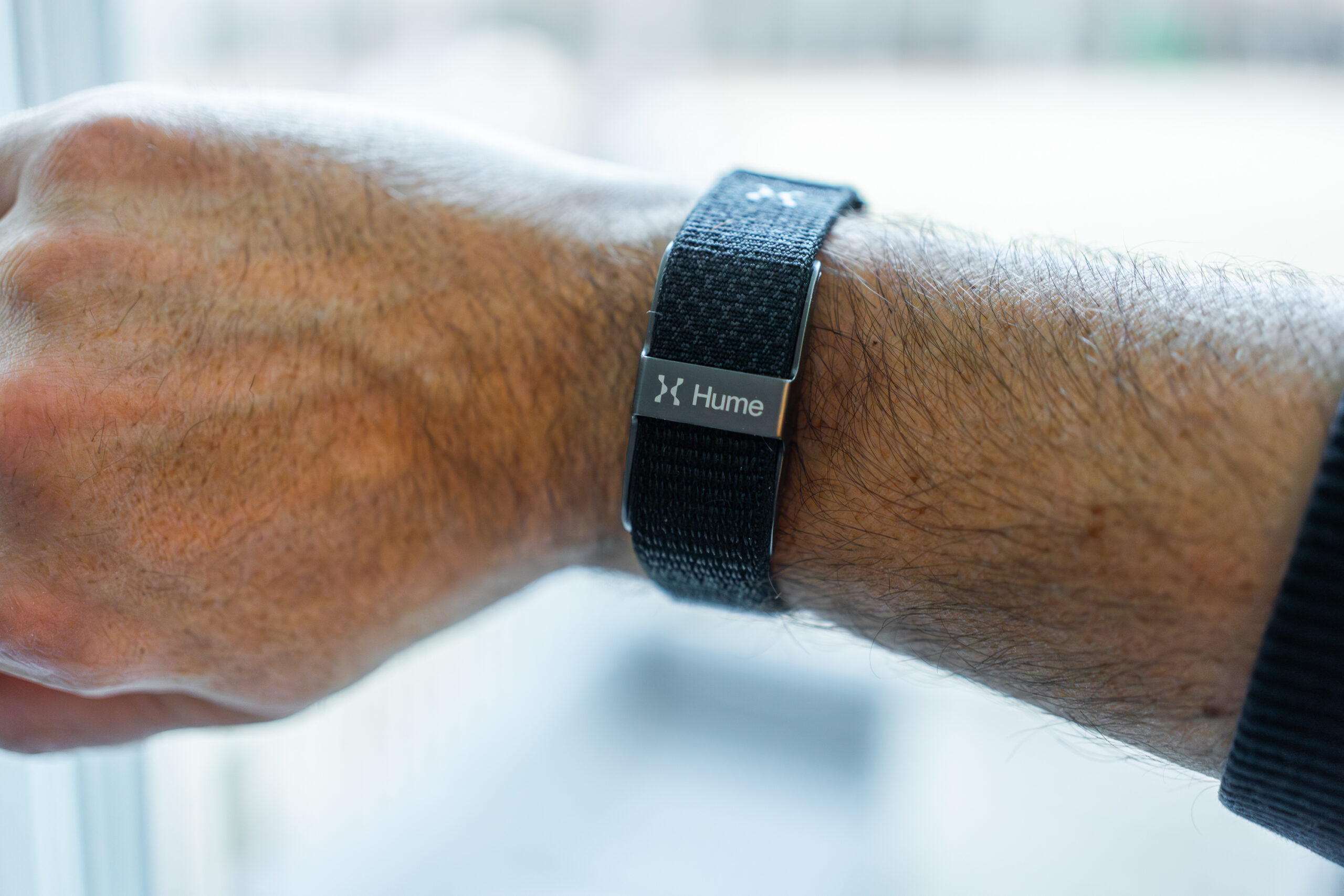
Gen 1 test: SuperKnit was softer than typical silicone sports bands and breathed well for 24/7 sleep wear. Velcro clasp is secure but fiddly — snug for workouts, not tourniquet-tight for sleep. Once dialed in, I mostly left it alone. Fabric picks up chalk/sweat; it’s washable.
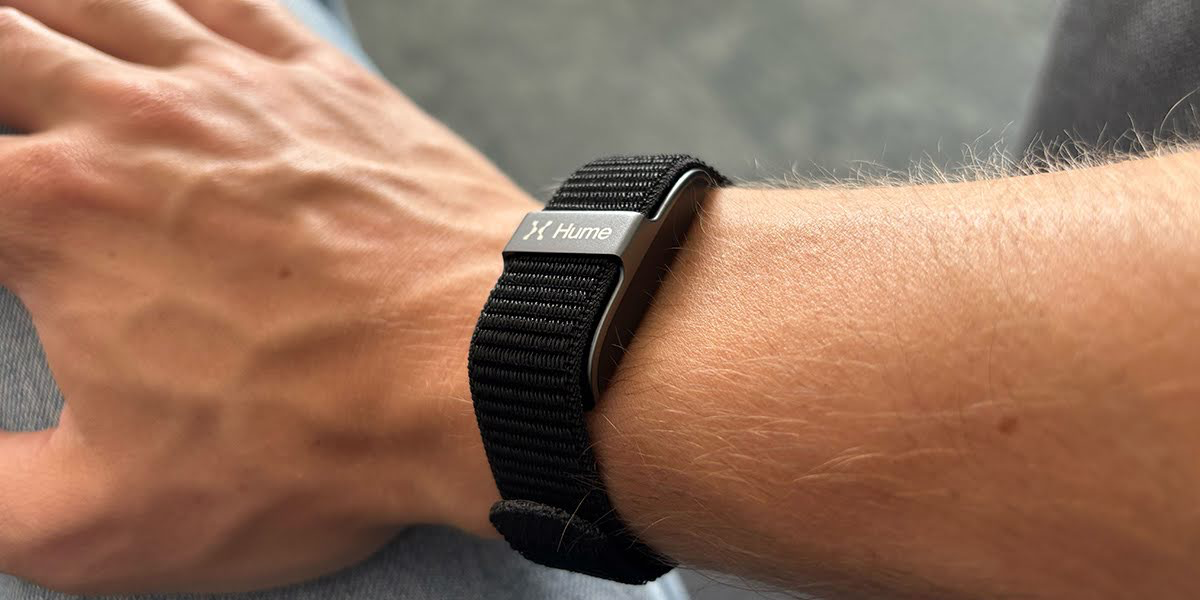
Band 2.0 research: Hume markets an UltraLux / updated SuperKnit strap for all-day comfort. Wareable called the upgrade incremental rather than revolutionary. Expect the same “disappears on the wrist” thesis, not a totally different form factor.
Durability (Gen 1)
I banged Gen 1 against barbells and racks. Module felt dense plastic, not fragile. Expect fabric wear over months of chalk and sweat on any generation.
Water (both gens)
IP68, up to 1 m / 2 hours per Hume. Showers and swimming are fine. I still would not cook lithium batteries in a long sauna session on purpose.
The Metabolic Approach (Still Hume’s Differentiator)
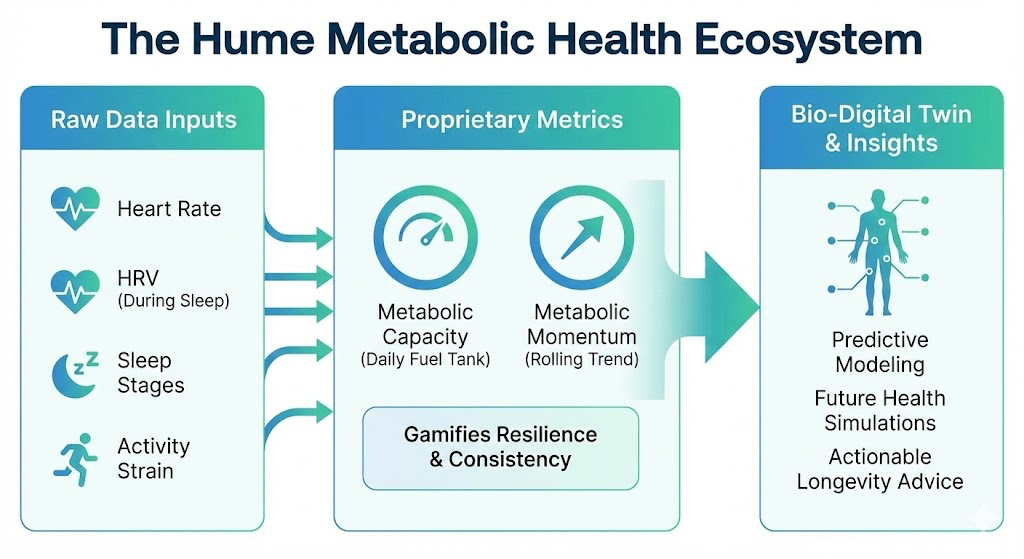
Most trackers sell steps and strain. Hume sells metabolic health + longevity framing. That language carried from Gen 1 into 2.0.
1. Metabolic Capacity — daily “fuel tank”
Closest cousins: Garmin Body Battery / Whoop Recovery, tilted toward resilience. Builds from HRV, sleep efficiency, and recent strain. Question it answers: How much stress can I take today without digging a hole?
2. Metabolic Momentum — the anti-anxiety metric
This was Gen 1’s smartest idea and it’s still the reason I point people at Hume. One bad night does not equal failure. Momentum looks at a rolling trend so consistency matters more than a single score. That framing reduces the “tracker anxiety” loop a lot of Whoop/Oura users complain about.
3. Bio-Digital Twin / coaching layer
Hume’s “digital twin” is best understood as trend + prediction UX, not sci-fi. With Gen 1 alone it felt like dressed-up insights. Paired with the Hume Pod, composition data makes the coaching more concrete. Premium AI coaching is the optional paid layer on top of free core scores.
4. What’s new on Band 2.0: blood pressure trends
Official marketing adds blood pressure trend insights (daily cuff-free monitoring language). Treat this as a wellness trend feature, not a clinically validated sphygmomanometer. Do not replace a doctor’s cuff or diagnose from the band. If BP is a medical concern, use a validated monitor and talk to a clinician.
Bottom line: Whoop peaks athletes. Oura obsesses sleep. Hume tries to slow aging language down into daily habits. Band 2.0 does not change that mission — it extends battery and adds BP trends around the same core.
Accuracy: What My Gen 1 Test Still Tells You
Because the optical stack is the same generation of hardware, Gen 1 side-by-side results are still the honest baseline for HR/sleep physics. Band 2.0’s “improved accuracy” claim is about processing — I have not re-run the full Oura + chest-strap protocol on 2.0.
1. Sleep tracking (Gen 1 vs Oura 4)
- Good: REM / deep / light staging generally aligned with Oura. Sleep onset / wake usually within ~10–15 minutes.
- Bad: Still-but-awake (reading/scrolling in bed) often became “Light Sleep,” inflating recovery.
- Gaps: Loose fit = night data gaps. Fix: wear snugger than a casual Whoop fit; some users spin the sensor to the inside of the wrist at night.
2. Heart rate & HIIT (Gen 1 vs Garmin chest strap)
- Steady-state cardio: Within ~2–3 BPM of chest-strap averages in Zone 2/3.
- Heavy lifting: Classic wrist-optical problem. Grip tension under-reads mid-set; Gen 1 sat ~110 BPM while chest strap hit ~165 on squats, then caught up ~20 seconds after racking. Strain for lifting can be under-reported.
- Resting HR quirk: Gen 1 read ~5–8 BPM higher than Garmin/Oura for me.
3. HRV (Gen 1)
Absolute ms values differed from Oura; direction of trends matched. That is what Metabolic Capacity actually rides on day to day — and those daily rest/go nudges matched how I felt.
4. Sync quirks (Gen 1)
Not Apple Watch–seamless. Sometimes needed force-close/reopen to sync. Letting the band die overnight risked losing the night’s sleep data. Rule that still applies regardless of generation: don’t let it sit near empty overnight.
App Experience & Premium
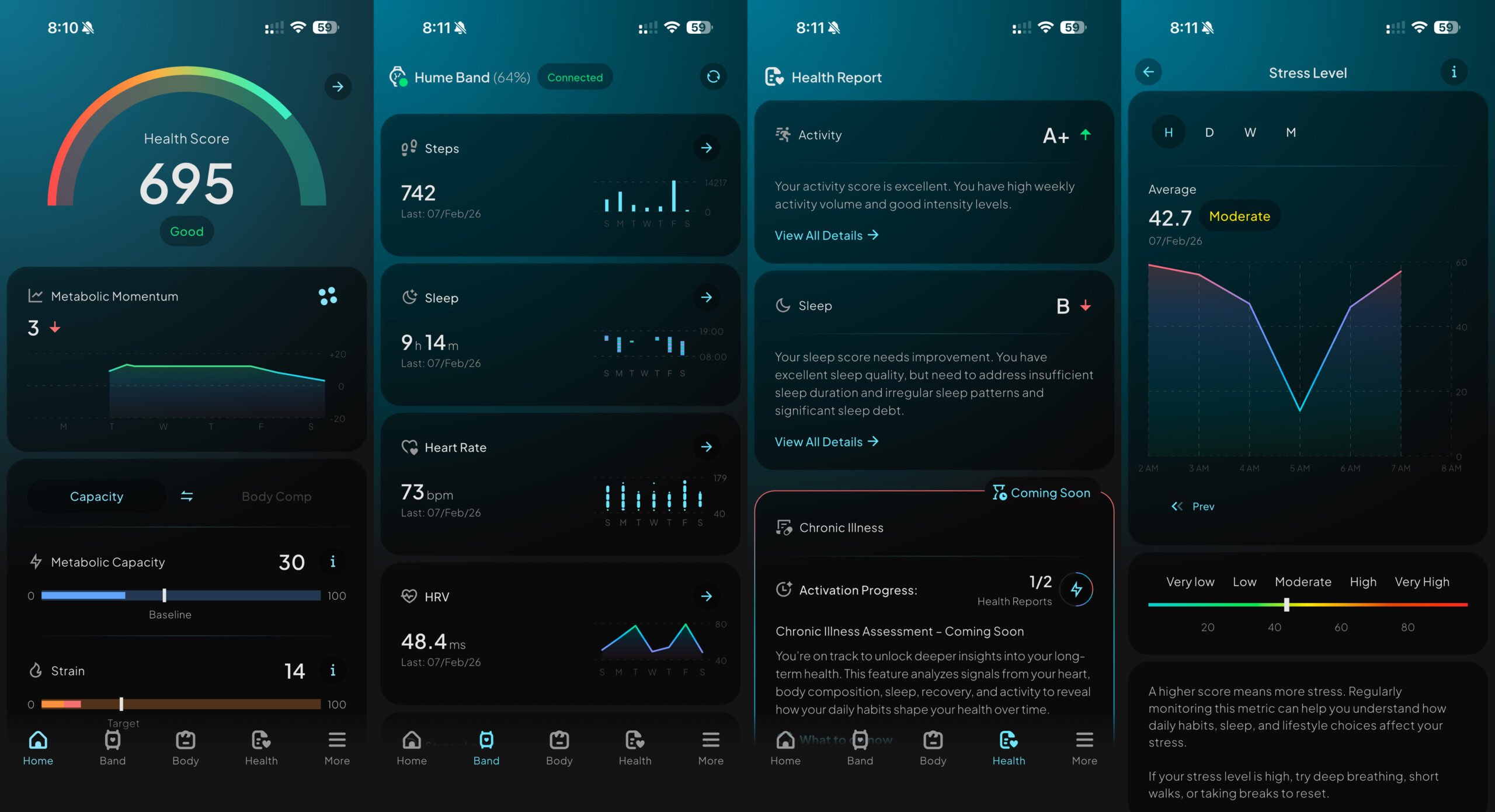
The Hume Health app is cleaner than Garmin’s firehose. Home screen centers a Health Score and the metabolic metrics instead of twenty identical charts.
- Free: Core daily data — HR, sleep, HRV-related scores, steps, Metabolic Capacity/Momentum/Health Score access per Hume’s current positioning.
- Premium (~$8.99/mo): Deeper AI coaching / longevity analysis. Optional.
- My take (unchanged): Free tier is enough for most people. Unlike Whoop, the band does not become a paperweight if you never subscribe.
Battery Life: The Biggest Gen 1 → 2.0 Change
Gen 1 (my test): Hume’s older marketing floated up to ~7 days; I got 4–5 days with 24/7 tracking. Charging was slow-ish (~90 minutes in older reports). Dying overnight could nuke sleep data.
Band 2.0 (researched): Hume claims up to 14 days and much faster top-offs (typically 20–80 minutes). Independent Wareable testing with continuous wear landed closer to 7 days. That is still a meaningful jump over Gen 1’s 4–5 day reality — just do not plan your life around two full weeks without verifying your own drain pattern.
If Gen 1’s charge cadence was your deal-breaker, Band 2.0 is the reason to revisit. If you need two weeks guaranteed, wait for your own charge cycle before you trust the brochure.
Gen 1 vs Band 2.0 — Quick Diffs
- Sensors: Same 5 LED / 4 photodiode optical block; 2.0 adds processing + BP trend insights
- Battery: Gen 1 real-world ~4–5 days → 2.0 advertised 14 / independent ~7
- Charge time: Gen 1 ~1.5 hours class → 2.0 typically 20–80 minutes
- Strap: SuperKnit → UltraLux / updated SuperKnit
- Availability: Gen 1 discontinued; 2.0 is the current buy
- Worth upgrading from Gen 1? Only if battery/charge speed/BP trends matter — feature set is evolutionary. New buyers should buy 2.0, not hunt used Gen 1. More detail: Band vs Band 2.0 comparison.
Competitor Comparison
Hume Band 2.0 vs Whoop
Cost: Whoop is membership-first. Hume is buy-once + optional Premium. Over 2–3 years Hume is usually cheaper if you only need core tracking.
Data: Whoop stays more athlete-granular. Hume wins longevity/metabolic framing and ownership model.
Verdict: Long-term owners who hate rent → Hume. Peak training nerds → Whoop.
Hume Band 2.0 vs Oura Ring
Ring vs wrist is preference. Rings scratch bars and pinch under hooks; fabric band is gym-friendlier. Oura’s sleep polish is excellent but membership-gated for the full experience. Hume stays usable without a sub. Lifters → Hume. Sleep-only minimalists who like rings → Oura.
Hume Band 2.0 vs Apple Watch
Different jobs. Apple Watch = smartwatch (apps, texts, GPS, daily charge). Hume = passive multi-day tracker with no screen glare at night. I still treat them as complementary, not substitutes.
Pros and Cons (Band 2.0 Buyer View)
Pros:
- No mandatory subscription for core tracking
- Battery step-up vs Gen 1 (even if real-world is ~7 days, not 14)
- Faster charging (20–80 minutes class)
- Comfort-first screenless design + UltraLux strap refresh
- Longevity framing (Metabolic Capacity / Momentum) that reduces daily score panic
- BP trend insights as an added wellness signal (with medical caveats)
- Ecosystem: pairs cleanly with the Hume Pod
Cons:
- 14-day battery claim looks optimistic vs independent ~7-day reports
- Not a fitness watch — no GPS, weak for HIIT peak capture (wrist optical physics)
- BP insights ≠ medical cuff
- App polish still younger than Whoop/Fitbit ecosystems (sync quirks showed up on Gen 1)
- Evolutionary upgrade — Gen 1 owners may not need to jump solely for features
FAQ
Does Hume Band 2.0 require a subscription?
No mandatory subscription is required for the band or core data. Optional Hume Premium (about $8.99/month) adds AI coaching and deeper analysis. The device does not become a paperweight if you never subscribe — unlike Whoop’s membership model.
How long does Hume Band 2.0 battery last?
Hume advertises up to 14 days with typical use and 20–80 minute charging. Independent Wareable testing with day/night wear reported about 7 days. My Gen 1 unit lasted 4–5 days — Band 2.0 is clearly better on paper and in third-party tests, but plan around ~1 week until you measure your own drain.
Can Hume Band 2.0 measure blood pressure?
It offers blood pressure trend insights, not cuff-equivalent clinical measurements. Do not diagnose or manage hypertension from the band alone. Use a validated cuff and clinician guidance for medical decisions.
How accurate is the Hume Band for weightlifting?
On Gen 1, steady-state cardio stayed within ~2–3 BPM of a chest strap. During heavy compound lifts, wrist optical HR lagged mid-set and caught up after racking — typical for this form factor. Expect similar physics on Band 2.0 unless independent tests prove otherwise.
Can you wear Hume Band 2.0 in the shower or swimming?
Yes. IP68 — Hume rates it for up to 1 meter for up to 2 hours. Showers, swimming, and sweaty workouts are fine. Prolonged high-heat sauna use is a bad idea for battery longevity on any wearable.
Does Hume Band 2.0 have GPS?
No built-in GPS. Outdoor route tracking needs your phone or a dedicated GPS watch.
How does Hume Band 2.0 compare to Whoop?
Cost structure is the big split: Whoop is membership-tied hardware; Hume is a one-time purchase with optional Premium. Whoop stays more athlete-optimized; Hume leans longevity metrics and ownership. Over multi-year ownership, Hume is usually cheaper if you only need core recovery/sleep trends.
Should Gen 1 owners upgrade to Band 2.0?
Only if longer battery, faster charging, or BP trend insights are worth the spend. Sensors are the same optical generation. New buyers should buy 2.0 — Gen 1 is discontinued.
Final Verdict: Who Is Hume Band 2.0 For?
Who it is for
- Subscription haters: Want Whoop-like recovery without renting your data forever
- Hybrid athletes: Lift, sleep, work a desk job — want 24/7 trends without a glowing screen
- Longevity-minded buyers: Care more about multi-week Momentum than yesterday’s step count
- Gen 1 battery refugees / new buyers: Want the current SKU with longer advertised runtime and faster charging
Who it is not for
- GPS racers: Get a Garmin (or similar) with real navigation and pacing
- Smartwatch seekers: Apple Watch / Galaxy Watch territory
- Clinical BP patients: Buy a validated cuff; Band 2.0 trends are not medical-grade
- Feature maximalists upgrading from Gen 1: If battery is already fine, 2.0 may not justify the swap
Closing Thoughts
Gen 1 already attacked the right industry problem: your baseline health data should not be a subscription hostage situation. Band 2.0 keeps that philosophy and fixes the most annoying Gen 1 practical gap — battery and charge speed — while adding BP trend insights and a strap refresh on the same optical foundation.
Is it perfect? No. Treat the 14-day claim as aspirational until your own week of wear proves otherwise. Treat BP insights as trends, not diagnosis. Treat lifting HR like every other wrist optical. And treat my Gen 1 accuracy notes as the honest physics baseline, not a fake Band 2.0 lab report.
If you want a calm, ownable longevity tracker and you’re buying in September 2026, Band 2.0 is the correct SKU — not leftover Gen 1 marketing copy.
Get Hume Band 2.0: Code ROBBSUTTON · HumeHealth.com/pages/hume-bandv2
Disclaimer: Gen 1 findings are from real-world side-by-side testing. Band 2.0 specs/pricing/features are researched as of September 21, 2026 and can change. Affiliate links/codes support this site. This device is for informational wellness tracking only — not medical advice or diagnosis. Consult a clinician for health decisions.
Update note, September 23, 2026: This review was rewritten for Hume Band 2.0. The earlier version reviewed the original Hume Band, which Hume has since replaced, so the recommendation now points to Band 2.0 instead of Gen 1. My Gen 1 accuracy, comfort and battery findings are kept and labeled as Gen 1 testing. Band 2.0 details come from Hume’s official product pages and Wareable’s June 2026 hands-on review. I have not run my multi-week test protocol on Band 2.0.
Affiliate disclosure: This post contains affiliate links. If you purchase through them, I earn a small commission at no extra cost to you. The original Hume Band (Gen 1) was purchased with my own funds for long-term testing. Band 2.0 product facts below are researched from official Hume specs and reputable third-party reviews as of September 2026 — I have not completed a separate multi-week hands-on of Band 2.0 hardware.