
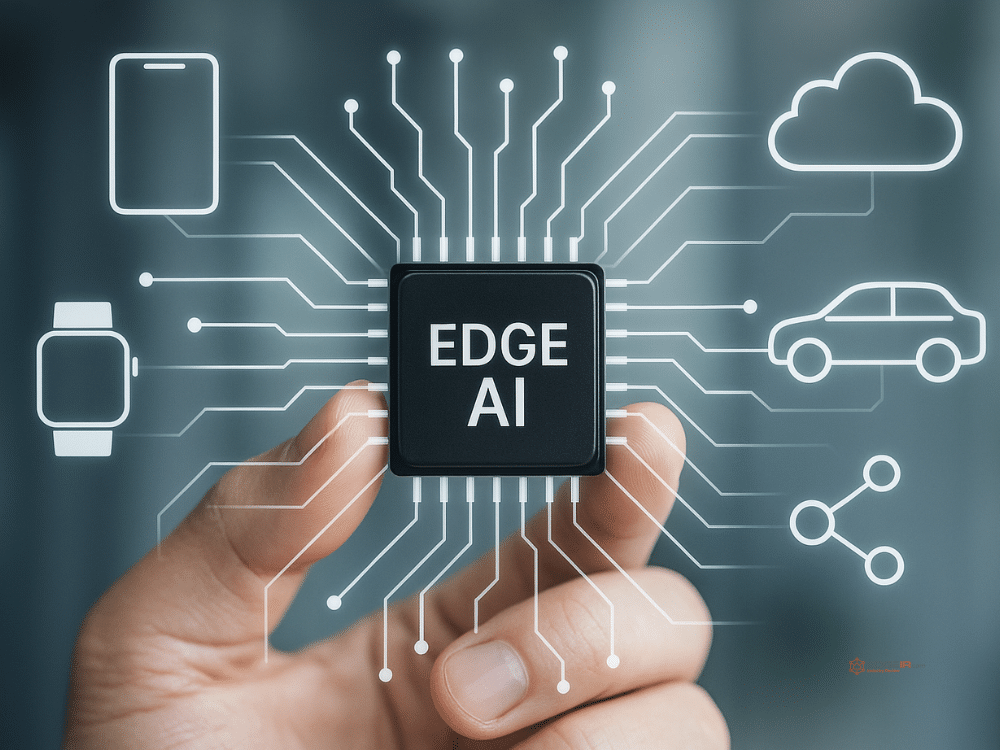
The biggest shift in smart home security in 2026 isn’t a new camera or a better app. It’s where the intelligence lives.
Edge AI — processing data directly on the device instead of sending it to the cloud — is fundamentally changing how security cameras, doorbells, and sensors work. It’s faster. It’s more private. And it solves problems that cloud-based systems have struggled with for years.
If you’re running a smart home security setup or thinking about building one, understanding Edge AI is the difference between buying a camera that works for you and buying one that works for someone else’s data pipeline. Let me break down what’s actually happening.
Why Cloud Processing Was Always a Compromise
Traditional smart security cameras capture video, compress it, send it to a cloud server, run analysis on that server, and then push a notification back to your phone. Every step in that chain adds latency. By the time you get an alert, the event happened 5-15 seconds ago. For a package delivery, that’s fine. For a break-in, it’s an eternity.
Cloud processing also means your video footage lives on someone else’s server. Every frame from every camera goes to Amazon, Google, or whoever runs your camera’s backend. Privacy policies govern what happens to that data, but the fundamental reality is that you don’t control it once it leaves your network.
And cloud processing requires constant internet connectivity. If your internet goes down — or if an intruder is smart enough to cut your cable — your cloud-dependent cameras become expensive paperweights.
 From the shopIt Worked Before the UPDATE$18.45Shop →
What Edge AI Changes
Edge AI processes video directly on the camera’s onboard chip. The AI algorithms run locally. Detection, classification, and alerting happen in milliseconds, not seconds. Your footage never leaves your property unless you explicitly choose to back it up to the cloud.
The practical improvements are significant. Alerts arrive the instant an event occurs. Person detection, vehicle detection, and package detection all happen on-device with dramatically lower false positive rates because the processing power is dedicated, not shared across thousands of users on a cloud server.
Privacy gets a genuine upgrade. If the AI runs locally and video stays on a local storage device, your security footage doesn’t become training data for someone else’s machine learning model. This matters more than most people realize — the default business model for cheap security cameras is monetizing the data they collect.
And reliability improves fundamentally. An Edge AI camera with local storage continues recording and detecting events during internet outages. The camera doesn’t need the cloud to do its job. The cloud becomes an optional backup layer rather than a required dependency.
What to Look For in 2026
The key spec to check is whether the camera processes AI locally or requires cloud processing for smart features. Marketing language is often vague — “AI-powered” doesn’t tell you where the AI runs. Look for specific mentions of on-device processing, edge computing, or local AI.
Resolution and night vision matter, but they’re table stakes now. Color night vision with Starlight sensors has replaced grainy infrared on anything above the budget tier. 2K and 4K resolution is standard. The differentiator in 2026 is intelligence — what the camera does with what it sees.
Battery-powered cameras with solar panel options are now viable for locations without hardwired power. The latest models use ultra-low power standby with PIR motion sensors that wake the camera instantly when motion is detected. Solar panels keep the battery topped off even in overcast conditions. The days of climbing a ladder to swap batteries every two months are ending.
Look for Matter compatibility. It’s not essential yet — Matter support for cameras is still rolling out — but it’s the interoperability standard that ensures your camera will work with Google Home, Apple HomeKit, and Amazon Alexa without locking you into one ecosystem.
The Practical Setup
For most homes, a three-camera Edge AI system covers the critical points: front door, back door, and driveway or garage. Add a video doorbell and you’ve got comprehensive coverage.
Store footage locally on a microSD card or a NAS (network-attached storage) device on your home network. Use cloud backup as a secondary option, not the primary storage. This gives you fast local access to footage while maintaining an off-site copy in case of theft or damage.
Set up familiar face recognition — most Edge AI cameras now support this — and tag family members, regular visitors, and delivery drivers. The camera sends routine notifications for known faces and escalated alerts for unknown people. This reduces notification fatigue dramatically.
And invest in a UPS (uninterruptible power supply) for your router and NVR. If power goes out, your security system stays online for hours. If someone cuts your power, your cameras keep recording. This is a $50-$100 investment that closes the biggest vulnerability in any security setup.
The Bottom Line
Edge AI makes smart home security genuinely smart for the first time. Faster alerts, better privacy, improved reliability, and lower false positive rates — all because the intelligence lives where the action is, not in a server farm 1,000 miles away.
The cloud isn’t going away. It still serves a purpose for remote access, long-term storage, and multi-property management. But the camera itself no longer needs the cloud to think. And that changes everything about how well your security system actually protects your home.