
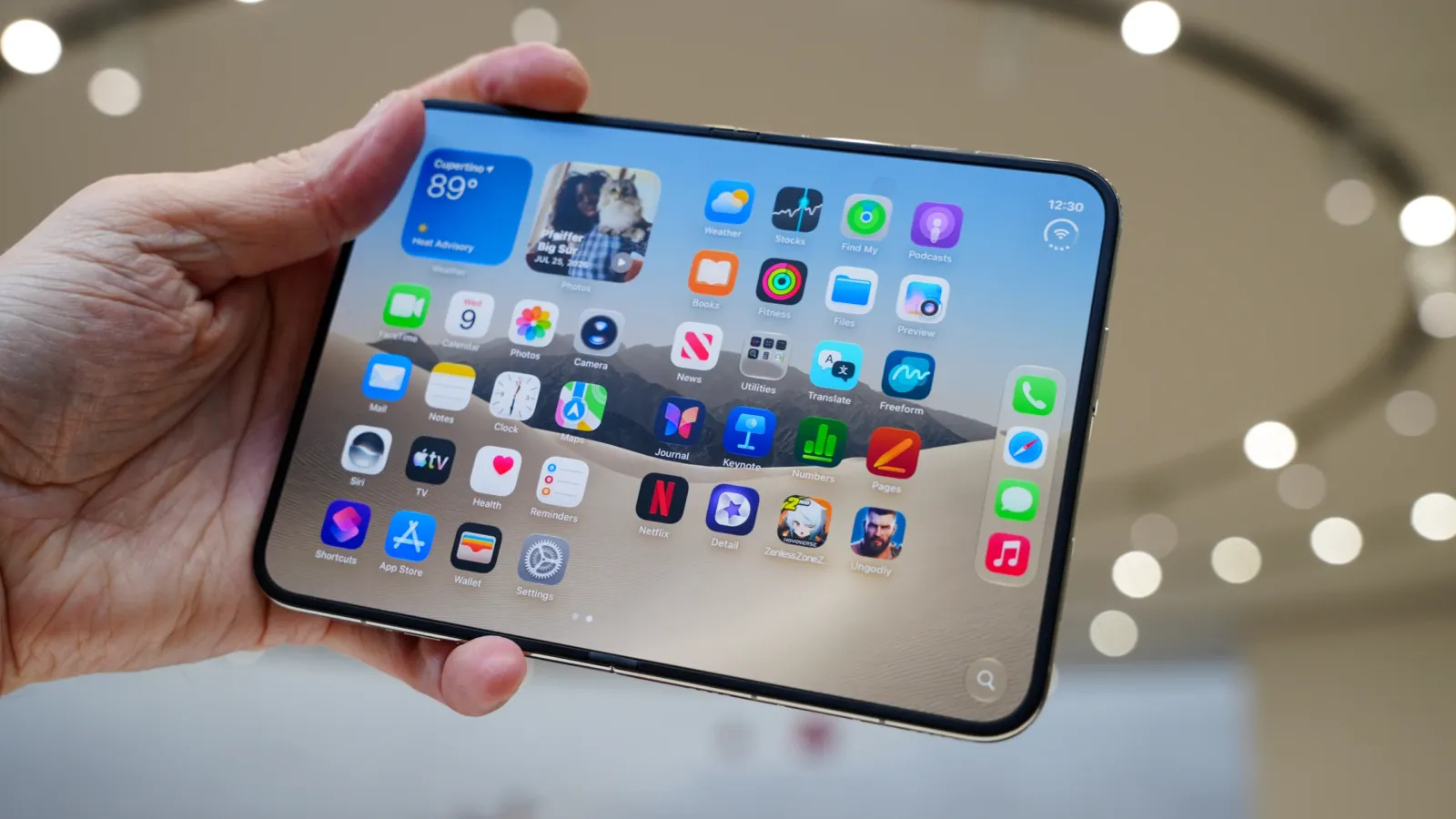
Picture this. You’re standing in line to preorder a phone that folds in half, and the person next to you asks the only question that matters: is this actually better than my flat iPhone, or am I paying $1,999 for a party trick? That’s the exact spot a lot of tech enthusiasts are in right now with the iPhone Duo, Apple’s first foldable, launching at $1,999 for the base 256 GB model [1] and going all the way up to $3,199 for 2 TB of storage [2]. Samsung and Google have been selling foldables for years.
So the real question isn’t whether Apple can build one. It’s whether Apple’s version is worth the jump, especially against phones that have already had years to work out the kinks.
What You’re Actually Paying For
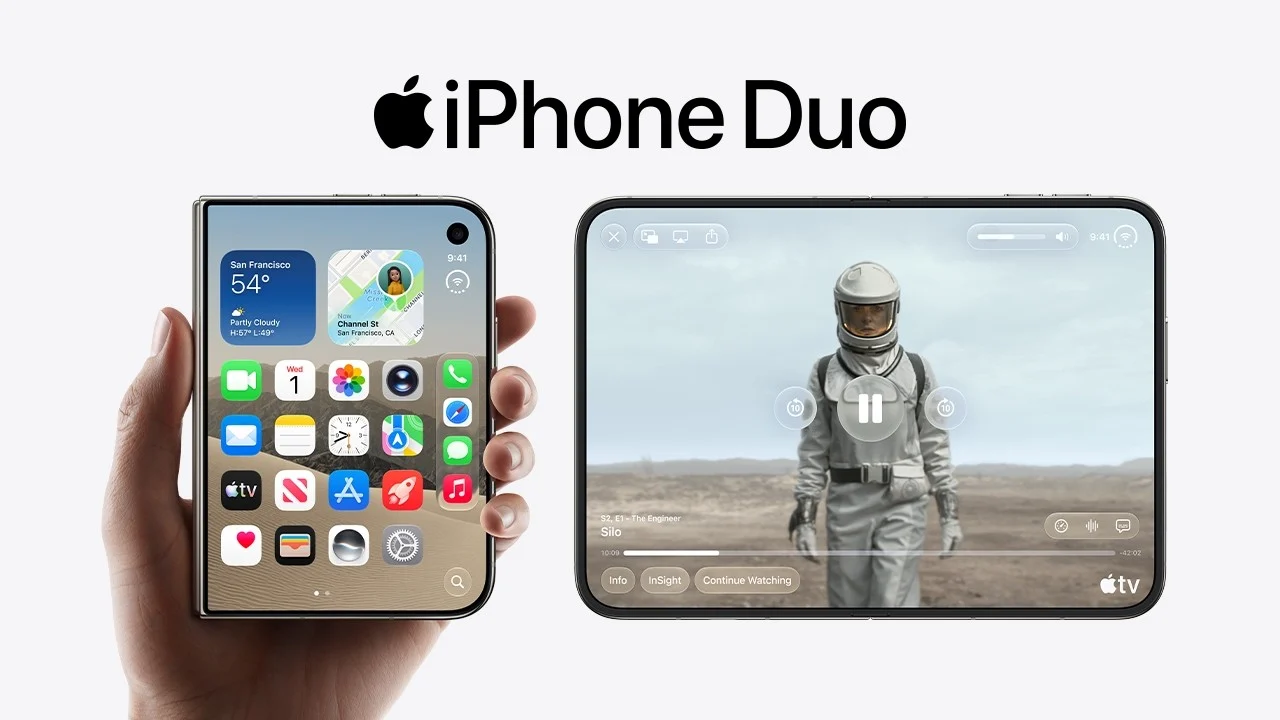
Let’s start with the number that’ll make most people flinch. The Duo costs roughly $700 more than the entry-level iPhone 18 Pro [3]. That’s not a rounding error. That’s the price of an entire second device, and it buys you a 7.6-inch inner display and a 5.4-inch outer display that share the same aspect ratio [1][4]. Apple says the inner screen is 50% larger than the iPhone 18 Pro Max’s display, and the outer screen covers more than 90% of the iPhone 18 Pro’s screen area [5].
Those numbers sound impressive on a keynote slide. In real life, they mean you’re carrying a phone that acts like a phone when folded and a small tablet when open. Whether that’s worth $700 depends entirely on how you actually use your device, not on how good it looks in a hands-on video.
Here’s my honest take: raw screen size has never been the hard part of foldables. Samsung and Google already nailed big, sharp displays years ago. The real test is what Apple does with the software once that screen is open, and whether the hinge holds up after six months of pocket use. Apple hasn’t published a support document or user manual for the Duo yet, which means we don’t even have Apple’s own guidance on care and handling [6][7].
How the Hardware Stacks Up
On paper, the Duo is a legitimately serious piece of hardware. It’s rated IP68 for dust and water resistance [8], which matches the standard flagship phones have carried for years, and it’s not something every early foldable could claim. It’s reportedly running Apple’s A20 Pro chip alongside a new in-house C2 modem [9], and Apple claims 24 hours of mixed dual-screen battery use with a 50% charge in about 20 minutes [9].
Folded, it measures 117.8 by 84.1 by 11.3 millimeters. Unfolded, it stretches to 117.8 by 164.6 by 5.2 millimeters [4]. That folded thickness matters more than people expect. It’s the difference between a phone that disappears into your pocket and one that constantly reminds you it’s there.
Compare that to Samsung’s foldable lineup, which sits at roughly $1,900 for a comparable model according to the New York Times [10], and you start to see Apple isn’t trying to undercut the competition on price. It’s matching it. That’s a telling choice. Apple isn’t betting on being cheaper. It’s betting that its ecosystem, privacy positioning, and software polish will be enough to pull buyers who’ve been loyal to Samsung or Google for years [9].
 From the shopPermanently in BETA$18.45Shop →
The Software Question Nobody’s Answered Yet
This is where things get genuinely interesting, and it’s also where I’d tell you to slow down before you preorder. Early coverage highlights that iOS reacts to the phone’s position and how far it’s folded, adjusting the interface based on orientation [11]. CNN’s early hands-on reporting also points to real day-one friction, like juggling between outer and inner screens, switching cameras, and adapting to a UI that changes based on how you’re holding the phone [12].
That’s a real software challenge, not a marketing bullet point. Samsung has spent years refining multi-window productivity tools on its foldables. Apple is walking into that fight for the first time, and iOS has never had to think about “what happens when the screen folds” before. Early hands-on notes suggest the crease is still visible, though less pronounced than some expected [13].
Here’s my honest opinion after watching this category for a while: display specs stopped being the differentiator a couple of years ago. Software intelligence, how well the operating system understands and adapts to a foldable form factor, is the actual battleground now. Apple has one shot to get this right on day one, because reviewers and buyers will judge the whole category through that first impression.
What Foldables Are Actually Good For
Let’s get practical, because specs alone don’t tell you if this phone fits your life. Foldables tend to shine in a few specific situations:
Work-from-home power users who want a bigger screen for email, docs, and video calls without carrying a separate tablet
Content creators and mobile editors who benefit from more screen real estate and stylus input, since Apple Pencil support is confirmed on the Duo [2]
Frequent travelers who want to leave the tablet at home and rely on a passport-sized folded footprint plus IP68 durability for one device that does both jobs
Early adopters who just want the newest form factor and don’t mind paying a premium to get it first
If you don’t fall into one of those groups, the Duo is a much harder sell. A flagship phone plus a separate tablet might actually cost less and serve you better, depending on how you split your usage between the two.
What We Still Don’t Know
This is the part that matters most, and it’s the part getting buried under launch-day excitement. The Duo hasn’t been in anyone’s pocket for more than a few days. There’s no long-term durability data. Nobody knows how the hinge holds up after a year of folding and unfolding hundreds of times a day.
Nobody knows how the battery degrades under real dual-screen use, or whether that crease down the middle of the inner display becomes more noticeable over time.
Samsung and Google have years of real ownership data behind their foldables. Apple has a keynote and a handful of hands-on impressions from launch day. That gap is exactly why I’d tell you to wait before dropping $1,999 to $3,199 on a device with zero track record. The New York Times has been blunt about this tension, noting that foldables remain a relatively unpopular category compared to standard slab phones, even as Apple enters at a price that directly matches Samsung’s [10]. Reuters frames Apple’s approach as a bet that design and data privacy promises will let it leap ahead of rivals who’ve been refining folding phones for years [9]. That’s a bold bet. It’s not evidence yet.
My Honest Take
I don’t think the iPhone Duo is a bad phone. The hardware specs are genuinely competitive, the IP68 rating is a real step up from where foldables started, and Apple Pencil support signals it’s serious about the creative and productivity crowd. But “competitive on paper” and “worth it in your pocket for the next two years” are two different questions.
If you’re the type who needs the newest thing on release day and can absorb the risk of buying into an unproven first-generation product, go for it. Preorders open October 16, with general availability on October 23 [14]. If you’re the type who got burned by a first-gen product before, and I know a lot of you have, this is a phone worth watching from the sidelines for a few months. Let the early buyers deal with any hinge issues or software quirks first. That’s not cynicism. That’s just how new hardware categories tend to shake out.
Frequently Asked Questions
Is the iPhone Duo worth $1,999?
It depends on your use case. If you need a bigger screen for productivity or creative work and can afford the premium, the specs justify the price. If you’re comparing it to a standard flagship purely on value, the $700 upcharge over the iPhone 18 Pro [3] is a tough sell without long-term durability data.
How does the iPhone Duo compare to Samsung’s foldables in price?
The Duo starts at $1,999, which lines up closely with Samsung’s comparable foldable at roughly $1,900 [10]. Apple isn’t undercutting the competition on price. It’s matching it and betting on ecosystem and software to win buyers over.
What chip does the iPhone Duo use?
Reports point to Apple’s A20 Pro chip paired with a new in-house C2 modem [9].
When can I buy the iPhone Duo?
Preorders open October 16, with general availability starting October 23 [14].
What to Do Next
If you’re on the fence about the iPhone Duo, don’t let launch-day hype make the decision for you. Wait for real hands-on testing that covers weeks of daily use, not just a few days with a press unit. I’ll be tracking hinge durability, battery health, and how iOS actually handles the fold once the initial shine wears off. Check back before you commit $1,999 or more to a device with zero ownership track record yet.
Sources
Apple unveils $2,000 iPhone Duo, its first foldable smartphone (fortune.com)
Fold the phone: Apple’s new CEO unveils a foldable iPhone – NPR (npr.org)
iPhone Duo – Wikipedia (en.wikipedia.org)
iPhone Duo – Apple (apple.com)
iPhone Duo: The Ledger of What Apple Has Not Published (macobserver.com)
iPhone Duo Has No Manual: Apple Has Published No Support Document for Its Foldable (macobserver.com)
iPhone Duo Announced: Meet Apple’s First Foldable Smartphone (ubergizmo.com)
Apple joins foldable phone race with $1999 passport- … (reuters.com)
Foldable Phones Are Unpopular. Why Is Apple Selling One? (nytimes.com)
Apple unveils foldable iPhone Duo – 9to5Mac (9to5mac.com)
What it’s like to use the iPhone Duo, Apple’s biggest change … – CNN (cnn.com)
Hands-On With the iPhone Duo: The Crease is Still There, But Barely – MacRumors (macrumors.com)
Apple unveils its first foldable, the iPhone Duo – TechCrunch (techcrunch.com)
Researched from 26 vetted sources · average source authority DR 89
Independently verified
The statistics above were independently corroborated against these sources:
theverge.com (DR 92)
usatoday.com (DR 92)
tomsguide.com (DR 87)
macobserver.com (DR 77)
gsmarena.com (DR 86)