
Some links below are affiliate links. If you buy through one, this site earns a commission at no extra cost to you. It never changes a verdict — here is how that works.
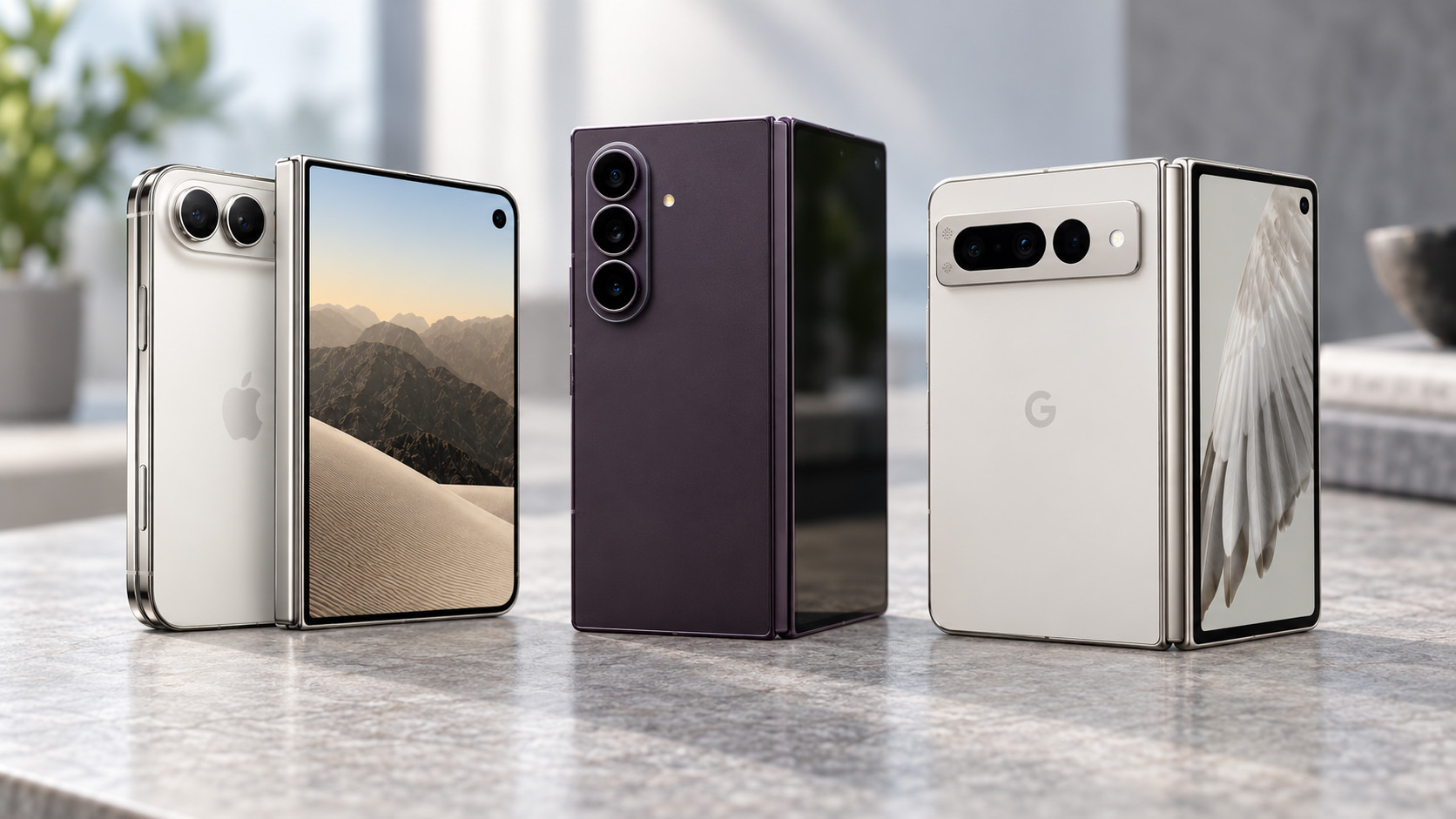
TL;DR: The iPhone Duo starts at $1,999 and ships October 23, landing almost exactly between the $1,899 Galaxy Z Fold 8 and the $2,099 Fold 8 Ultra, with Google’s $1,899 Pixel 11 Pro Fold arriving the same month. Apple wins on displays, water resistance, stylus support, and battery life when the phone stays closed. It gives up a telephoto lens, Face ID, the Action Button, and 53 grams of weight to get there. Nobody on Earth has long-term hinge data yet. If you’re on the fence, wait for real testing before you preorder.
Every year for the past few years, I’ve done the same thing at Best Buy. Pick up the latest Galaxy Fold, open it, close it, feel the hinge, put it back. Impressive, never quite convincing. Now Apple’s finally in the game with the iPhone Duo, and the question isn’t whether it’s cool. It’s whether $1,999 buys you something genuinely better than what Samsung and Google already sell, or whether you’re paying an Apple premium for a first-generation product. Let’s work through it with the numbers we actually have.
Gear Mentioned in This Post
- Wi-Fi 7View on Amazon
iPhone Duo Price, Release Date, and What You’re Buying
The Duo starts at $1,999 for 256 GB, topping out at $3,199 for 2 TB. Preorders open October 16, with availability on October 23, 2026. That storage spread, $1,999 to $3,199, is wider than anything on a slab iPhone, and it tells you how Apple sees this device: a premium SKU, not a mainstream upgrade path.
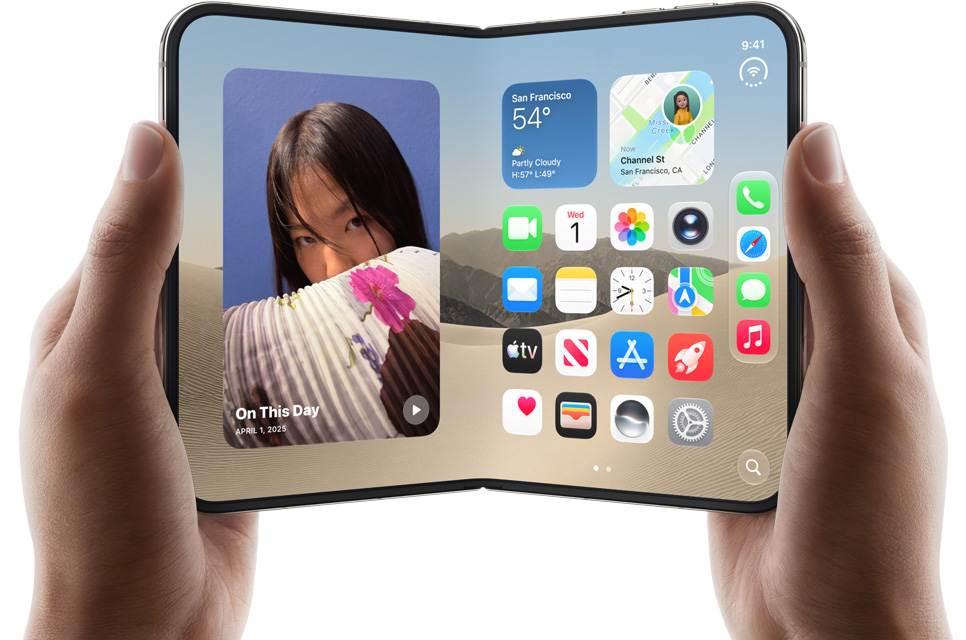
The hardware case is strong. A 7.6-inch inner Super Retina XDR display and a 5.4-inch outer display share the same aspect ratio, so apps scale cleanly between them instead of reflowing. Both get ProMotion, Always-On, and 3,000 nits of peak brightness. The frame and hinge cover are Grade 5 titanium with Ceramic Shield front and back, and the inner display carries a nano-texture matte finish that kills glare. Folded, it measures 117.8 x 84.1 x 11.3 mm. Open, it’s 5.2 mm, the thinnest iPhone Apple has made.
Inside: the A20 Pro with a vapor chamber, 12 GB of RAM, Apple’s own C2 modem, and the new N1 wireless chip with Wi-Fi 7, Bluetooth 6, and Thread. That Thread radio matters more than it sounds if you run a smart home. Your phone becomes a border-router-adjacent device for Matter gear, no hub gymnastics required.
iPhone Duo vs. Galaxy Z Fold 8 vs. Pixel 11 Pro Fold: The Spec Table
My last draft of this comparison only fought Samsung. That’s not the October that’s actually happening. Google’s Pixel 11 Pro Fold ships the same month at $1,899, which makes this a genuine three-way fight.
| iPhone Duo | Galaxy Z Fold 8 | Pixel 11 Pro Fold | |
|---|---|---|---|
| Starting price | $1,999 (256 GB) | $1,899 ($2,099 Ultra) | $1,899 (256 GB) |
| Inner display | 7.6″ Super Retina XDR, nano-texture | 7.6″ Dynamic AMOLED 2X, rotating 4:3 | ~8″ OLED, 120 Hz |
| Outer display | 5.4″, 90% of iPhone 18 Pro’s area | 10:16 cover display | 6.4-inch class |
| Thickness (open / folded) | 5.2 / 11.3 mm | 4.5 / 9.7 mm | TBD (thinnest Pixel Fold yet, per leaks) |
| Weight | 254 g | 201 g | TBD |
| Rear cameras | 48 MP main + 48 MP ultrawide, no telephoto | Dual camera | 50 MP main + 48 MP ultrawide + 48 MP periscope telephoto (reported) |
| Water/dust rating | IP68 | IP48 | IP68 (carried over from Pixel 10 Pro Fold) |
| Chip | A20 Pro, vapor chamber | Snapdragon 8 Elite Gen 5 | Tensor G6 (2nm) |
| Battery | Dual-cell, 24 hr mixed / 44 hr video closed | 4,800 mAh, 45W wired | ~5,000 mAh class |
| Stylus | Apple Pencil (USB-C), later this year | None (S Pen dropped after Fold 6) | None |
| Biometrics | Touch ID side button | Side fingerprint | Side fingerprint |
| Ships | Oct 23, 2026 | On sale now | October 2026 |
Two rows deserve a second look. On IP68, Apple matched the best in class, but it didn’t get there first. The Pixel 10 Pro Fold claimed the first IP68 rating on a foldable a full year ago. Samsung is the outlier here: IP48 means the Fold 8 survives a dunk but can’t keep out fine dust, and dust is what kills hinges. On the stylus row, the story flipped from what most people assume. Samsung walked away from S Pen support on the Fold, so Apple Pencil compatibility is now an Apple exclusive in this category. The catch: it’s coming “later this year” via the $79 USB-C Apple Pencil, not in the launch box. If day-one note-taking is your use case, that’s a real asterisk.
The Camera Compromise Nobody Should Skim Past
Here’s where the Duo asks you to give something up. It carries a 48 MP Fusion main and a 48 MP ultrawide, and that’s it. No dedicated telephoto. The 2x “optical-quality” zoom is a sensor crop, and a good one, but it’s not the 8x optical-quality reach of the iPhone 18 Pro, and it’s nothing like the 48 MP periscope telephoto the Pixel 11 Pro Fold is reported to ship with. If you shoot your kids’ games from the bleachers, the $1,999 Apple phone is the worst zoom camera at this price.
What the fold gives back is a set of shooting modes no slab can do. Smart Take props the phone half-open and fires automatically when everyone’s in frame, no timer. Duo Preview turns the outer display into a live preview so your subject sees the shot. And because the outer screen doubles as a viewfinder, your “selfie camera” is the full 48 MP main sensor. The inner display’s FaceTime camera hides under the screen until you need it, which is why the open canvas looks uninterrupted. Clever engineering, and a real trade: fun new ways to shoot in exchange for reach.
Touch ID Is Back. Face ID Is Gone.
This is the change most coverage buried and the one you’ll feel every single day. The Duo has no Face ID, the first flagship iPhone without it since 2017. Authentication moves to Touch ID in the side button, plus Apple Watch unlock. The Action Button is gone too.
The engineering logic holds up. A fingerprint works identically whether the phone is open or closed, and TrueDepth hardware would cost thickness Apple clearly refused to spend. But logic isn’t habit. If you pay with your face, autofill with your face, and glance-unlock notifications on your desk, budget an adjustment period. Try the side-button reach in a store before you preorder. It’s the kind of thing that’s fine in a demo and mildly annoying at hour 400.
Battery: Better Closed Than Open
Apple’s headline number is 24 hours of mixed dual-screen use with a 50% charge in about 20 minutes on a 60W adapter. The spec sheet underneath is more interesting: up to 44 hours of video playback on the outer display, 31 hours on the inner one. For context, the iPhone 18 Pro Max is rated at 45 hours. Keep the Duo closed and you’re basically carrying Apple’s best battery. Live on the big screen all day, the way a foldable tempts you to, and you land closer to 31. That gap between the two numbers is the honest battery story, and it’s the first thing I want to measure against real use rather than a rating.
The Crease, the Hinge, and What We Actually Know
Launch-week consensus is unusually consistent here. Tom’s Guide says you can barely see the crease and can’t feel it, and most hands-ons credit the nano-texture matte finish for hiding it. A few reviewers still catch it at certain angles. Samsung isn’t standing still either. PCMag confirmed the Fold 8’s claimed 20% crease reduction from its Flex Titanium display structure.
What no launch coverage can tell you: how any of this looks after a thousand fold cycles, a summer of pocket lint, and eighteen months of daily use. Demo units under store lighting are the best case these phones will ever be. Anyone claiming to know how the hinge ages is guessing, and I’m not going to pretend otherwise.
Software: Where the Fight Actually Gets Decided
Hardware specs are converging across all three phones. Software is where they split. iOS 27 on the Duo reacts to the fold angle itself, morphing the interface as you pose the device, and early hands-ons describe the open/close transitions as the most polished part of the experience. But polish isn’t depth. Samsung has years of multi-window and DeX refinement behind One UI, and early Duo coverage flags multitasking as more limited than what the Fold 8 does today. Google’s pitch is Gemini doing the work for you rather than better window management. Three different bets on what a big folding screen is for: Apple says continuity, Samsung says desktop-class multitasking, Google says AI. Which one matches how you actually work should drive this purchase more than any spec row above.
Which Foldable Fits You
Get the Duo if you’re deep in the Apple ecosystem, you want the best displays and build in the category, and 2x zoom covers your photography. Get the Fold 8 if weight and thickness matter most, you multitask like it’s a laptop, and you want the phone that’s shipping and reviewed today. Wait for the Pixel 11 Pro Fold if camera versatility is the priority, because that reported periscope telephoto has no answer from Apple or Samsung at this size.
And if you’re comparing the Duo against a flagship-plus-iPad-mini combo instead of another foldable, the math genuinely shifts. One $1,999 device that replaces a phone and a small tablet is a different proposition than $1,500 of separate hardware you carry and charge separately.
What I’m Watching Before I Recommend Buying
Nobody has six months of daily wear data on this phone, because it hasn’t shipped. So here’s my checklist once units are in hand: Does mixed-use battery hold near 24 hours outside a lab? Does the crease stay invisible after months of open-close cycles? Does Touch ID stop feeling like a step backward by week two? And does angle-aware iOS 27 beat Samsung’s mature multitasking in real work, or is it just prettier?
Personally, I am in the iPhone/Apple ecosystem so I don’t have a lot of interest in going back to Android. That said, I am not interested in being the first adopter for the iPhone Duo, not at this price. I do think we are plateauing on phone technology and while having the larger screen available is a nice option, I can’t justify the pricing increase to have less camera options and a smaller main screen. Maybe if they release a Max version, I’ll be more excited about switching.
Frequently Asked Questions
Is the iPhone Duo worth $1,999 compared to a Samsung or Google foldable?
On price it’s a near three-way tie: $1,999 vs. $1,899 for both the Fold 8 and Pixel 11 Pro Fold. The decision comes down to ecosystem and priorities. Apple wins displays, durability rating, and stylus support; Samsung wins weight and multitasking; Google wins camera reach.
Does the iPhone Duo have Face ID?
No. It uses Touch ID built into the side button, plus Apple Watch unlock. It’s the first flagship iPhone without Face ID since 2017.
Does the iPhone Duo have a telephoto camera?
No. You get 48 MP main and ultrawide cameras with a 2x optical-quality crop. The iPhone 18 Pro and the Pixel 11 Pro Fold both offer dedicated telephoto hardware the Duo lacks.
Does the iPhone Duo support Apple Pencil?
Yes, via the USB-C Apple Pencil, but support arrives “later this year,” not at launch. Notably, Samsung no longer offers S Pen support on the Fold line, so this is an Apple exclusive among the big three foldables.
When can I buy the iPhone Duo?
Preorders open October 16; availability starts October 23, 2026. Pricing runs $1,999 (256 GB) to $3,199 (2 TB).
Bottom Line
This comparison doesn’t really settle until these phones live in real pockets for real months, not demo tables under controlled lighting. On paper, the Duo is a legitimate first entry: best-in-class displays and build, matched-best durability rating, and a software idea nobody else is attempting, in exchange for weight, zoom, and Face ID. My advice stands: don’t preorder on day one. Wait for the wear data. I’ll have a full hands-on follow-up once I’ve lived with one, and that’s the review that will actually tell you whether it’s worth your money.