Some links below are affiliate links. If you buy through one, this site earns a commission at no extra cost to you. It never changes a verdict — here is how that works.
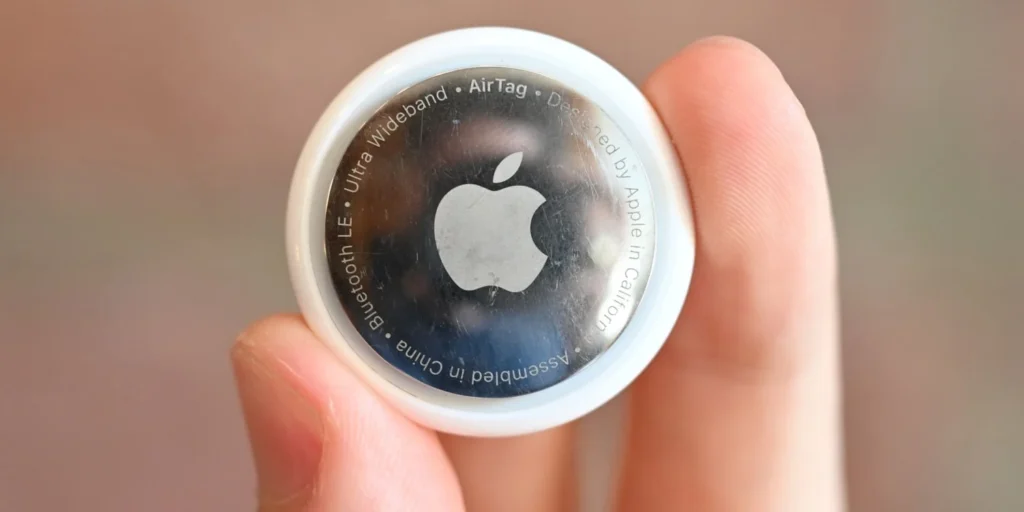
Here’s a number that should make you pause before clipping an AirTag onto anything: Apple allegedly received more than 40,000 stalking reports connected to AirTag devices between April 2021 and April 2024[1]. That’s not a typo, and it’s not a fringe complaint. It’s the backdrop for one of the most useful little gadgets I’ve tested in years. I’ve had AirTags on my luggage, my bike, and my dog’s collar for a while now, and the honest take is more complicated than “buy it” or “avoid it.”
Some uses are genuinely worth it. Others deserve a second thought.
Gear Mentioned in This Post
- AirTagView on Amazon
Why AirTag Works So Well When It Works
AirTag’s biggest strength is something most reviews gloss over: it doesn’t rely on its own signal to find your stuff. It piggybacks on every iPhone in Apple’s Find My network, which means your lost bag isn’t just broadcasting to you, it’s broadcasting to a massive, invisible mesh of other people’s phones. That’s why an AirTag left behind at a hotel or airport tends to surface fast, especially in dense cities where iPhones are everywhere.
The Precision Finding feature, powered by ultra-wideband, is the part that actually impressed me in daily use. Point your iPhone in the general direction of a tagged item and you get on-screen arrows and distance readouts that guide you within a few feet. Try that with a basic Bluetooth tracker and you’re stuck listening for a chirp under a couch cushion.
That said, AirTag has no official published range spec, which is a strange omission for a product with this much marketing behind it [2]. Compare that to Tile, where the Tile Pro claims up to 500 feet, the Tile Mate and Slim claim around 350 feet, and the Tile Sticker claims around 250 feet. Apple leans on network density instead of raw broadcast range, and in my testing that tradeoff mostly pays off in cities and suburbs, less so in rural areas with fewer iPhones around.
Luggage: The Clearest Win
Of the three use cases in this piece, luggage is the one I’d recommend without much hesitation. Airlines lose bags. It happens more than any airline wants to admit, and when it does, you’re usually stuck waiting on hold while your suitcase sits in a random terminal three states away.
An AirTag tucked into a side pocket turns that guessing game into an actual answer. I’ve watched a bag “stuck” at a connecting airport update its location in near real time once someone with an iPhone walked past it. You’re not tracking your bag through some proprietary app that only works if the airline’s own tag survives baggage handling. You’re tracking it through the phone of a stranger who has no idea they’re helping you.
The tradeoff here is minor: battery life. AirTag runs on a user-replaceable CR2032 and lasts roughly one year, compared to Tile’s claimed battery life of up to three years [2]. For a device you check maybe twice a year before a trip, that’s a manageable annoyance, not a dealbreaker.
 From the shopPermanently in BETA$18.45Shop →
Bikes: Worth It, But Know the Limits
Bike tracking is where AirTag’s design starts showing its seams. A bike sitting outside your apartment or locked at a train station is exactly the kind of stationary, semi-public target Find My handles well, and I’ve had good luck recovering test units left in similar spots.
The problem is concealment. AirTags are small and were, by design, built to be tucked away and forgotten, which is great for finding your bike and not so great once you think about who else might be hiding one. Legal complaints filed against Apple describe devices “designed in a way that made them easily concealable and exploitable,” hidden in bags, sewn into clothing, or placed on vehicles to track someone without consent. That’s a stalking allegation, not a bike-theft scenario, but it’s the same physical property, small size and easy concealment, that makes AirTag good at both jobs.
Practically speaking, for bike security I’d still use one, but pair it with a second layer: a chain lock rated for actual resistance, and maybe a Bluetooth alarm as backup. AirTag tells you where your bike went. It does nothing to stop it from going anywhere in the first place.
Pets: The Riskiest of the Three
This is the category I have the most mixed feelings about, and it’s also the most popular. Apple holds a 27% brand share in the Amazon US “Pet AirTag” niche, ahead of its 23% share in the general “AirTags 4-pack” category, so clearly plenty of pet owners are already doing this.
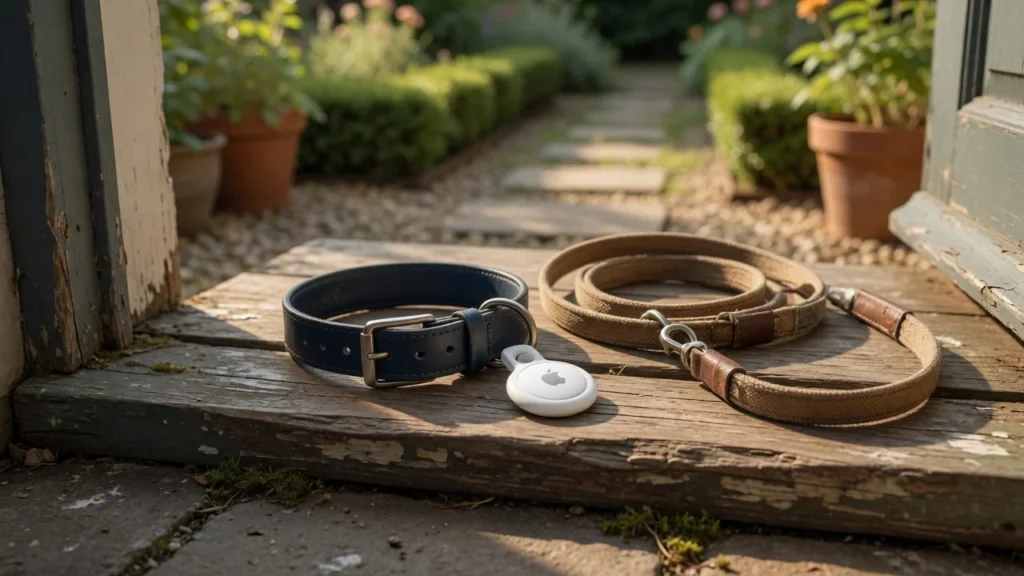
The appeal is obvious if you’ve ever had a dog slip a leash or a cat bolt out an open door. But AirTag wasn’t built for pets. It’s not water-rated for swimming, it’s bulky compared to purpose-built pet trackers, and it depends entirely on nearby iPhones to update location, which means a runaway dog in a rural area might not report its position for hours.
I tested this with a friend’s Lab in a fairly suburban neighborhood, and updates were frequent. Take that same setup out to farmland and the story changes fast.
There’s also a less obvious risk worth naming honestly: any small, easily hidden tracker built for one purpose can be misused for another. The stalking litigation against Apple isn’t about pet collars, but it’s a reminder that a device this good at tracking objects is, mechanically, just as good at tracking people. That’s not a reason to skip a pet tag. It’s a reason to know what you’re actually buying.
The Part Nobody Puts in the Buying Guide
I don’t think most reviews take this seriously enough, so let’s just say it plainly. Apple has been named in more than 30 lawsuits alleging that AirTag’s design facilitates stalking, up from roughly 22 in earlier filings. More than 20 individual AirTag stalking lawsuits are currently pending across at least 17 federal districts, and lawyers have petitioned to centralize them into a single multidistrict litigation. This isn’t a fringe legal theory. In March 2024, a federal judge dismissed part of the case but allowed negligence and strict product-liability claims from three California plaintiffs to move forward, which means courts see enough substance here to let it proceed to discovery.
This isn’t unique to the US. UK police data shows stalking incidents involving Bluetooth trackers or GPS devices rose from 57 in 2018 to 568 in 2024, an 896% increase. In Japan, police consultations tied to “lost-item tag” stalking rose from 3 cases in 2021 to 679 in 2025, roughly a 226-fold increase, according to the most recent figures available. That’s not a US legal quirk. That’s a global pattern tied to how small, precise, and easy to hide these trackers have become.
None of that means don’t buy an AirTag. It means understand the tradeoff you’re making. The same UWB precision that finds your lost keys in three seconds is the exact feature that makes AirTag effective at finding a person who doesn’t know they’re being tracked.

Setting Up Safety Alerts (Do This If You Buy One)
If you own an iPhone, Apple’s “unwanted tracking” alert system is genuinely good, and there’s no reason not to have it active whether you own an AirTag or not. Here’s what actually helps:
-
Keep “Tracking Notifications” enabled in Find My settings so your iPhone alerts you if an unknown AirTag is traveling with you
-
If you get an alert, use the “Find Nearby” feature to locate the unknown tag rather than ignoring it
-
Android users should install Apple’s dedicated “Tracker Detect” app, since Android doesn’t get these alerts automatically
-
If you genuinely suspect you’re being tracked, don’t just remove the battery, document it and contact local law enforcement, since at least one criminal case has already resulted in stalking charges tied to AirTag misuse
That last point matters. Most of the AirTag stalking cases in the news are civil lawsuits against Apple itself, but there have been criminal prosecutions too, including a case in Iowa where a 24-year-old was charged with felony stalking for allegedly using an AirTag to track a victim’s vehicle. This is not hypothetical harm. It’s happened, and it’s being prosecuted.
My Honest Take
Luggage tracking is close to a no-brainer. Bike tracking is worth it if you treat it as one layer of security, not the whole plan. Pet tracking is fine for suburban dogs and cats with predictable routines, but don’t expect rural-level reliability, and go in knowing this device wasn’t built for that job specifically.
What ties all three together is the same lesson: AirTag earns its reputation through genuine engineering, deep network integration, real UWB precision, a battery you can replace yourself. But that same design is why regulators, courts, and safety advocates are paying close attention to how easily it can be pointed at a person instead of a possession. Buy it for the right reasons, set up the safety alerts, and you’ll get real value out of it. Just don’t pretend the tradeoff doesn’t exist.
Frequently Asked Questions
Is an AirTag worth it for tracking luggage?
Yes. This is the strongest use case of the three. Apple’s Find My network is dense at airports and hotels, so lost bags tend to update location quickly once they’re near other iPhones.
Can an AirTag track my pet reliably?
It works reasonably well in suburban or urban areas with lots of iPhones nearby, but it wasn’t designed as a pet tracker. It’s not built for water exposure, and updates slow down in rural areas with fewer nearby phones.
How long does an AirTag battery actually last?
Roughly one year on a single user-replaceable CR2032 battery, compared with some Tile models that claim up to three years [2].
How do I know if someone put an AirTag on me without my knowledge?
Your iPhone will send a tracking notification if an unfamiliar AirTag is moving with you over time. Android users need to manually install Apple’s Tracker Detect app since that alert isn’t automatic on Android devices.
If you’re deciding whether an AirTag fits your life, start with the use case that actually solves a real problem for you, not the one that looks coolest in an ad. Set up the safety alerts on day one, and treat it as one tool in a bigger plan rather than a complete answer on its own.
Sources
-
Apple AirTags Review: The Pros and Cons of Apple’s Bluetooth … (itechpost.com)
-
Tile vs AirTag Battery Life Compared: Total Cost Over 5 Years | Techwalla (techwalla.com)
Researched from 2 vetted sources · average source authority DR 72