
Some links below are affiliate links. If you buy through one, this site earns a commission at no extra cost to you. It never changes a verdict — here is how that works.
A Comprehensive Analysis of the World’s Leading Subscription-Free Smart Ring
Author’s Note: This report is based on a longitudinal six-month evaluation of the Ultrahuman Ring Air. The analysis integrates rigorous testing of hardware durability, algorithmic accuracy, and ecosystem maturity, updated to reflect the 2026 wearable landscape.
Affiliate Disclosure: This report contains affiliate links. Readers interested in purchasing the Ultrahuman Ring Air can use the link http://ultrahuman.com/robbsutton and the code “ROBB10” for a 10% discount.
Gear Mentioned in This Post
- GarminView on Amazon
- WhoopView on Amazon
- OuraView on Amazon
Quick Verdict
If you want the most comfortable, least intrusive wearable for sleep + recovery, and you refuse the idea of paying a subscription to access your own health data, the Ultrahuman Ring Air is one of the strongest options in the category — especially because Ultrahuman has leaned into circadian rhythm coaching and its modular PowerPlugs ecosystem.
Where it still loses ground is predictable: any ring will be weaker than a sports watch for high-intensity training accuracy, and the Ring Air’s coatings can show wear if you lift hard with knurled bars. Battery life is solid (though not “set and forget”), and the app is dense by design.
Score: 8.5/10
A Note on Availability (U.S. Readers)
As of early 2026, Ultrahuman states the Ring Air isn’t available in the United States right now.
This intersects with a broader patent/remedy situation reflected in U.S. International Trade Commission documentation, including corrected cease-and-desist orders and clarifications around warranty replacements for covered products.
1. The Wearable Paradigm Shift: Why the Ring?
The landscape of personal health quantification is undergoing a fundamental structural shift. For the past decade, the “quantified self” movement has been dominated by the wrist—smartwatches and fitness bands that demand our attention with haptic feedback, glowing OLED screens, and a constant stream of notifications. While these devices, epitomized by the Apple Watch and Garmin Fenix series, have revolutionized active fitness tracking, they have introduced a new physiological tax: cognitive load.
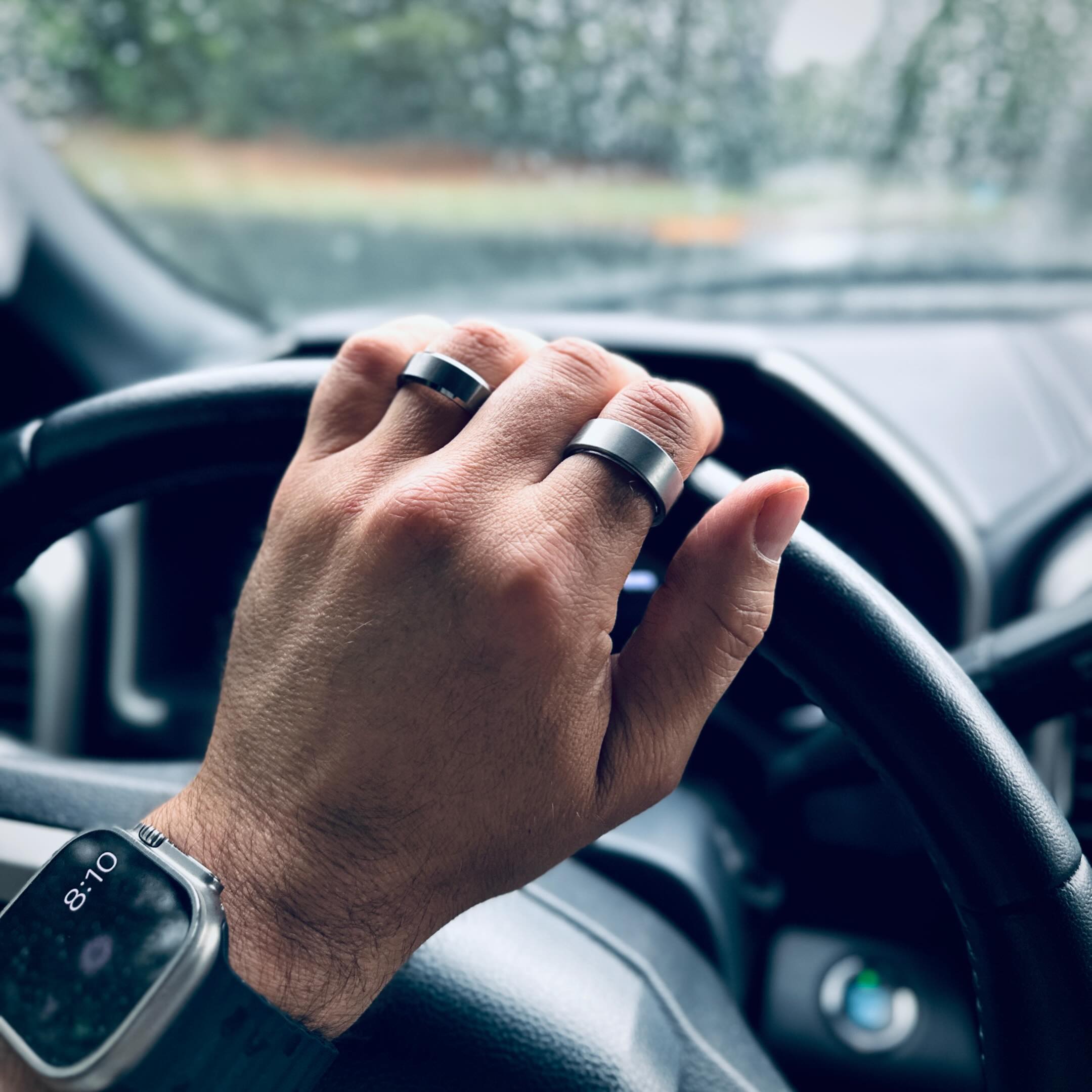
The smart ring represents the antithesis of this notification-heavy paradigm. It is designed to be “invisible,” a term frequently used in human-computer interaction to describe technology that recedes into the background, collecting data passively without altering the user’s behavior through interruption. The Ultrahuman Ring Air is at the vanguard of this second wave of wearables. It promises to deliver clinical-grade insights into sleep, recovery, and metabolic health without the intrusive nature of a wrist computer.
For the past six months, this device has been subjected to the rigors of daily life—from high-intensity interval training and long-distance running to sleep analysis and metabolic experiments. This report serves not merely as a product review, but as a deep-dive analysis of whether the Ultrahuman Ring Air delivers on its promise to optimize human performance through passive data collection, and how it stands against the titans of the industry like the new Oura Ring 4, Whoop, and Apple.
2. Hardware Engineering and Material Science
2.1 Chassis Construction and Metallurgy
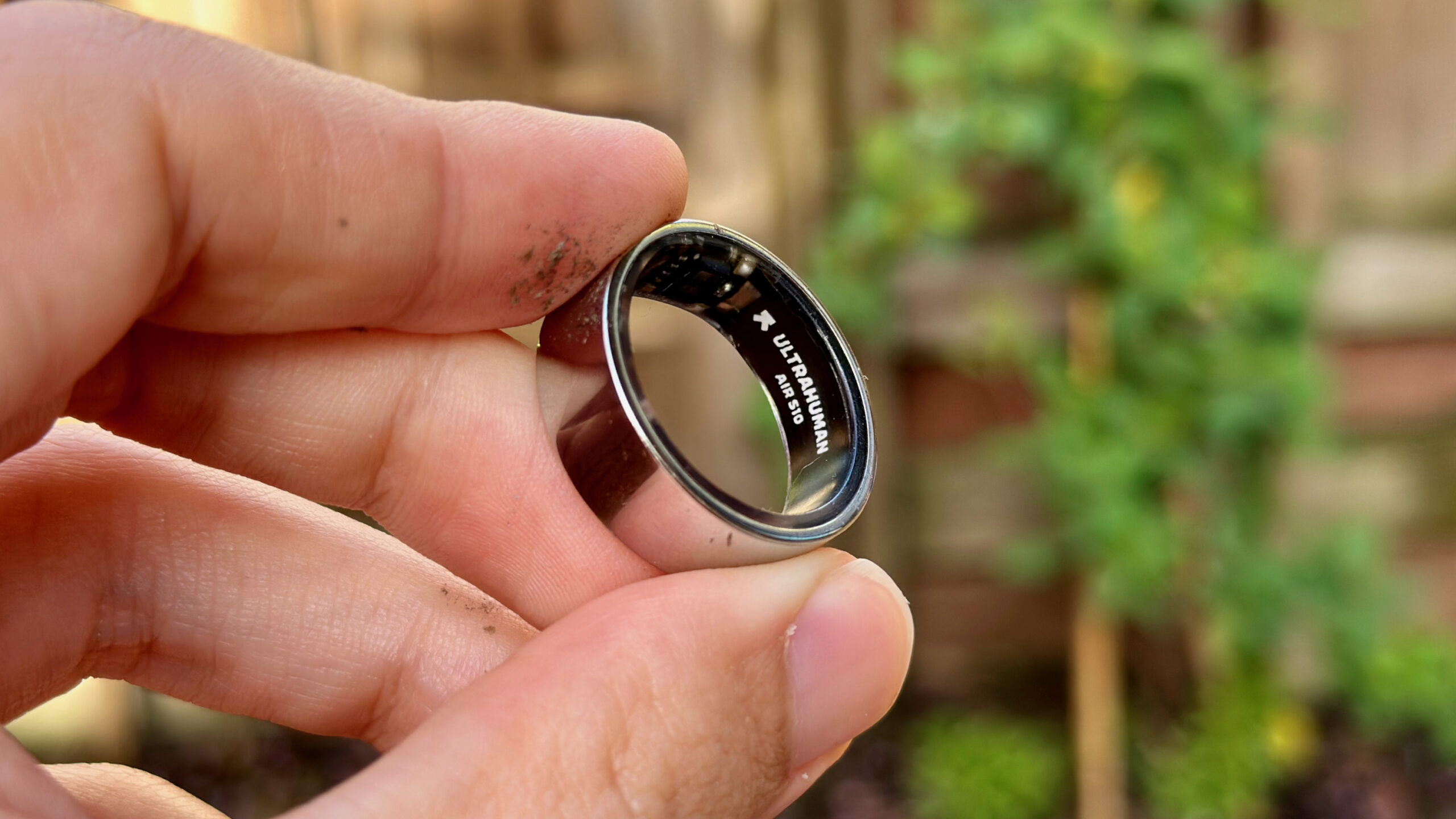
The physical construction of a smart ring presents a unique engineering challenge: it must house a battery, motherboard, antennas, and sensor array in a form factor that is millimetrically constrained. The Ultrahuman Ring Air addresses this with a chassis constructed from fighter-jet grade Titanium. Titanium (likely Grade 5 Ti-6Al-4V) is selected for its supreme strength-to-weight ratio and biocompatibility.
Unlike the earlier iterations of smart rings which often felt bulky or plasticky, the Ring Air is coated with Tungsten Carbide Carbon (TCC). This is a critical differentiation point. Tungsten Carbide is an extremely hard ceramic-metal composite, often used in industrial cutting tools. The application of this coating is intended to provide extreme scratch resistance.
- Long-Term Durability Findings: Over a six-month testing period involving barbell training and daily wear, the durability tells a nuanced story. While the structural integrity of the titanium remains flawless, the TCC coating—specifically on the darker “Aster Black” and “Matte Grey” colorways—is susceptible to micro-abrasions. These are not deep gouges in the metal but rather surface-level marks where the coating has interacted with harder knurled steel surfaces found in gyms. The lighter “Raw Titanium” and “Space Silver” finishes mask these micro-scratches significantly better than the matte black options.
- Inner Shell: The interior is lined with a medical-grade hypoallergenic epoxy resin. This is transparent to allow the optical sensors to penetrate the skin. The choice of epoxy over metal for the inner surface is crucial for preventing contact dermatitis, a common issue for users wearing devices 24/7. It also ensures the device remains thermally neutral against the skin, avoiding the cold shock of metal during winter months.
2.2 Dimensions and Ergonomics
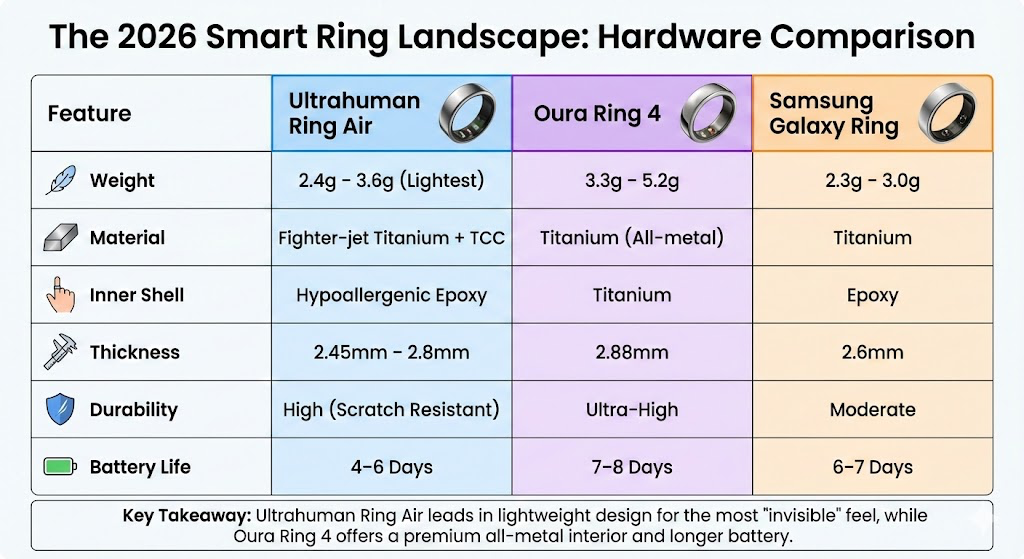
The “Air” moniker is derived from its weight, which ranges between 2.4 grams and 3.6 grams depending on the size.To contextualize this engineering feat: it is approximately 11 times lighter than an Apple Watch Ultra and significantly lighter than the Oura Ring Gen 3. The newer Oura Ring 4 has closed this gap slightly but still weighs between 3.3g and 5.2g.
| Specification | Ultrahuman Ring Air | Oura Ring 4 | Samsung Galaxy Ring |
| Weight | 2.4g – 3.6g | 3.3g – 5.2g | 2.3g – 3.0g |
| Thickness | 2.45mm – 2.8mm | ~2.88mm | 2.6mm |
| Width | 8.1mm | 7.9mm | 7.0mm |
| Outer Material | Titanium + TCC | Titanium | Titanium |
| Inner Material | Hypoallergenic Epoxy | Titanium | Epoxy |
The thickness of 2.45mm – 2.8mm is notable. While slim for a piece of technology, users moving from a traditional wedding band will notice the bulk. It forces a slight separation between fingers. However, the six-month test confirms that neural adaptation occurs rapidly; within 48 hours, the sensory awareness of the ring largely vanishes.
2.3 The Sensor Stack
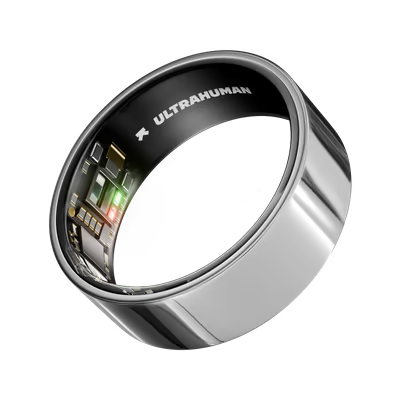
Packed within this resin and titanium shell is a sophisticated array of biosensors:
- Infrared Photoplethysmography (PPG) Sensor: Utilized primarily during sleep to measure resting heart rate (RHR) and heart rate variability (HRV). Infrared light is chosen because it penetrates deep into tissue to observe volumetric blood flow without the sleep-disturbing glow of visible light.
- Visible Light LEDs (Green and Red): The green LED activates for active heart rate tracking during the day and workouts. The red LED is employed for pulse oximetry (SpO2), measuring oxygen saturation by analyzing the absorption of light by oxygenated versus deoxygenated hemoglobin.
- Non-Contact Skin Temperature Sensor: This sensor measures the minute fluctuations in skin temperature. Unlike core temperature, skin temperature is highly responsive to circadian rhythms, menstrual cycles, and immune responses.
- 6-Axis Motion Sensor: A combination of a 3-axis accelerometer and a 3-axis gyroscope tracks orientation, steps, and movement intensity. This is the engine behind the “Movement Index” and sleep stage detection (actigraphy).
3. The User Experience: Setup and Daily Life
3.1 The Sizing Process
Purchasing a smart ring differs fundamentally from buying a watch. The fit is the primary determinant of data accuracy. If the ring is too loose, ambient light leaks into the sensor, corrupting the PPG signal. If too tight, it restricts capillary blood flow, dampening the pulse signal. Ultrahuman ships a Sizing Kit prior to the actual device. The kit contains plastic replicas of sizes 5 through 14.
- Recommendation: The six-month test suggests wearing the plastic sizer for at least 24 hours, specifically overnight. Fingers swell due to hydration, salt intake, and ambient temperature (the “sausage finger” effect). A ring that fits perfectly at 2 PM might be uncomfortably tight at 6 AM. The index finger is recommended for the highest signal fidelity due to the prominent digital artery, though the middle and ring fingers are acceptable alternatives.
3.2 Unboxing and Initial Sync
The unboxing experience mimics the premium nature of modern smartphones. The ring sits on a pedestal charger connected via USB-C.
- Pairing: Connectivity is established via Bluetooth Low Energy (BLE). The initial setup involves a firmware update, which historically has been a friction point for some users , but recent updates in 2024/2025 appear to have stabilized the bootloader process.
- Data Sovereignty: Unlike many competitors, Ultrahuman does not require a subscription activation during setup. This is a critical “unboxing moment”—the realization that the hardware purchase is the final transaction.
3.3 Water Resistance and Toughness
The ring is rated for water resistance, often cited as equivalent to depths of 100 meters or sufficient for swimming and showering.
- Real-World Test: Over six months, the device was subjected to daily showers, dishwashing, and occasional swimming. No moisture ingress or sensor fogging was observed. However, the smooth epoxy inner shell can become slippery when wet with soap, risking the ring sliding off if not properly sized.
- Temperature Extremes: The device operates between -10°C and 50°C. Wearing the ring in a sauna is generally discouraged by battery chemists (heat degrades Lithium-ion cells), but the titanium shell itself handles thermal shock well.
4. Physiological Analysis: What is Tracked?
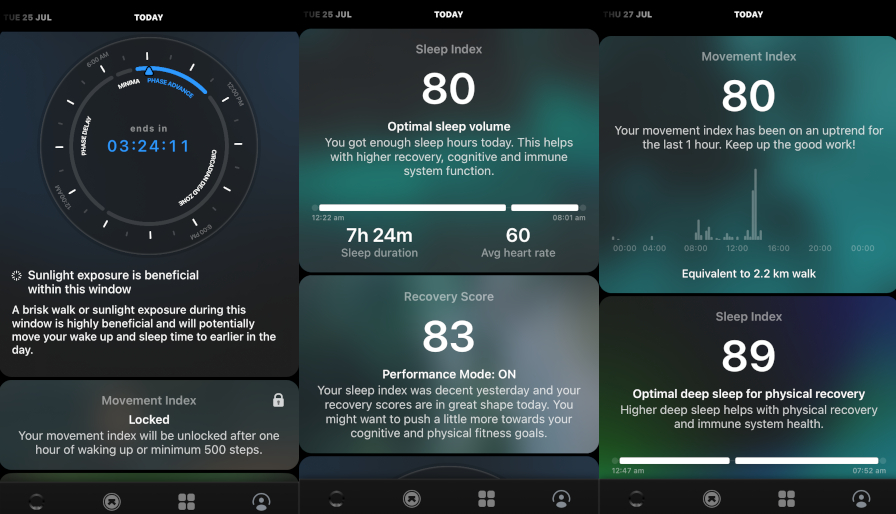
The Ultrahuman Ring Air is an engine of data synthesis. It does not merely report numbers; it attempts to construct a narrative of the user’s biological state. The metrics are divided into three primary “Scores” (0-100) and several specialized zones.
 From the shopIt Worked Before the UPDATE$18.45Shop →
4.1 The Sleep Index
Sleep tracking is the raison d’être of the smart ring form factor.
- Sleep Stages: The ring utilizes the motion sensor (actigraphy) and HRV data to differentiate between Awake, Light, Deep (Slow Wave), and REM sleep.
- Deep Sleep: Crucial for physical restoration, muscle repair, and growth hormone release.
- REM Sleep: Essential for cognitive processing, memory consolidation, and emotional regulation.
- Accuracy Analysis: In comparative testing against an Apple Watch Series 9 (which has high correlation with polysomnography), the Ultrahuman Ring Air demonstrates strong accuracy in detecting Sleep Onset (latency) and Wake Time. However, like all wrist/finger wearables, it occasionally struggles to differentiate between “lying still while awake” and “light sleep,” sometimes overestimating sleep duration by 15-30 minutes.
- Temperature & Oxygen: The integration of SpO2 and temperature adds layers to the analysis. A drop in SpO2 can trigger the “Respiratory Health” insights, identifying potential snoring or apnea events. A deviation in temperature is often the first biometric sign of an oncoming viral infection, frequently alerting the user 24 hours before symptoms manifest.
4.2 The Recovery Score
This metric answers the question: “How hard can I push today?” It is a composite algorithmic score derived from:
- Resting Heart Rate (RHR): A lower trend indicates cardiovascular efficiency.
- Heart Rate Variability (HRV): The gold standard of recovery metrics. High HRV indicates a balanced autonomic nervous system (parasympathetic dominance), suggesting the body is rested and ready for strain. Low HRV indicates sympathetic (fight or flight) dominance, signaling stress or overtraining.
- Sleep Quotient: How well you slept the previous night.
- Movement Trends: Recent activity load.
Dynamic Recovery: A unique feature of Ultrahuman is that the Recovery Score is dynamic. While Oura’s Readiness score is largely static after waking, Ultrahuman’s score can degrade throughout the day if the user registers high stress or excessive strain, or improve slightly with naps and breathing exercises. This reflects the biological reality that recovery is a fluid state, not a morning timestamp.
4.3 The Movement Index
This is where the device diverges from a “Sports Watch.” The Movement Index is designed to measure Non-Exercise Activity Thermogenesis (NEAT) rather than athletic performance.
- Philosophy: The goal is to prevent sedentary behavior. The app nudges users to move if they have been static for long periods.
- Metrics: Steps, Calories, Distance, and “Movement Frequency.”
- Limitations: The step counting algorithm is strictly accelerometer-based. It requires arm swing.
- The Stroller/Treadmill Problem: If a user pushes a grocery cart, a stroller, or holds the handrails of a treadmill, the ring will register zero steps because the hand is stationary. This is a physics limitation of the form factor.Users tracking treadmill desks or walks with strollers will find the data severely under-reported compared to a hip-worn pedometer or an Apple Watch (which uses GPS and leg impact vibrations more effectively).
5. Advanced Features: The PowerPlugs Ecosystem
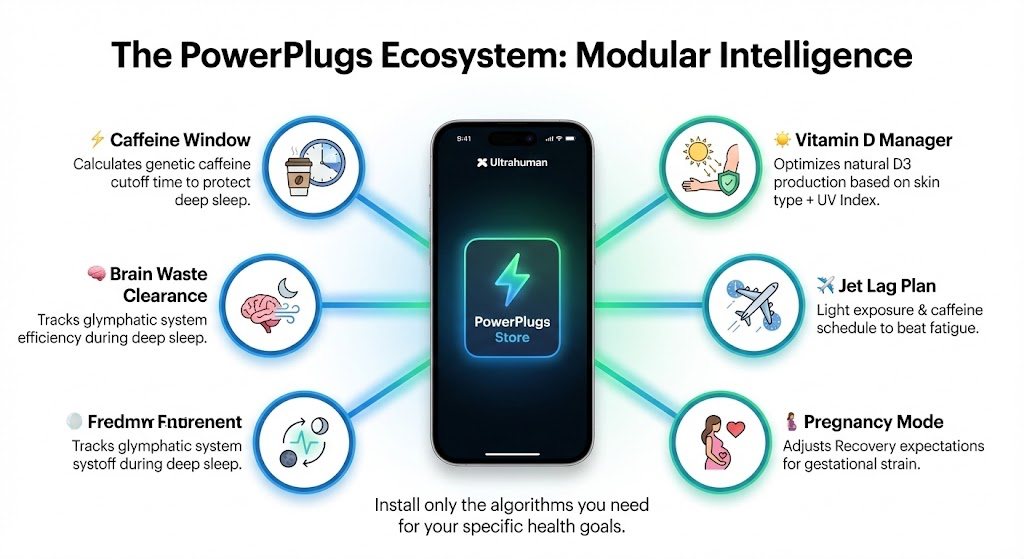
Ultrahuman distinguishes itself with a modular software architecture called PowerPlugs. Rather than overwhelming every user with every feature, it allows users to “install” specific algorithms relevant to their goals.
5.1 Caffeine Window (Stimulant Management)
This is a favorite feature for biohackers.
- Mechanism: The app calculates the user’s specific caffeine sensitivity and sleep schedule. It displays a “permissible window” for caffeine consumption.
- The Science: Caffeine has a half-life of roughly 5-6 hours. Consuming it too late blocks adenosine receptors, preventing the build-up of “sleep pressure” required for deep sleep. The app visualizes this, giving a hard “cutoff time” (e.g., 2:00 PM) to protect sleep architecture. Recent updates integrate “Brain Waste Clearance” data—estimating the glymphatic system’s efficiency—to adjust this window dynamically based on prior sleep quality.
5.2 Circadian Phase Alignment
This PowerPlug assists users in syncing their biological clock with the solar clock.
- Actionable Advice: It provides specific windows for “Light Exposure” (to cortisol spike in the morning), “Exercise,” and “Wind Down” (to stimulate melatonin).
- Jet Lag: For travelers, this feature helps shift the circadian phase proactively before and during trips, minimizing the physiological impact of crossing time zones.
5.3 Cycle Tracking & Ovulation (Women’s Health)
Utilizing the continuous temperature sensor, this plug offers detailed menstrual cycle insights.
- Fertility Windows: By detecting the biphasic temperature shift (a slight rise in Basal Body Temperature caused by progesterone after ovulation), the ring can predict fertility windows and menstruation onset with increasing accuracy over time.
- Differentiation: Unlike Oura, which requires an active subscription to access full cycle insights (and often partners with Natural Cycles for the advanced data), Ultrahuman offers this as a native, free feature within the PowerPlug ecosystem.
5.4 Shift Work Mode
Most sleep trackers break when used by night-shift workers, penalizing them for sleeping during the day. The Shift Work PowerPlug completely reconfigures the sleep algorithm. It validates daytime sleep as restorative and adjusts the “consistency” scoring to match a rotating roster. This makes the Ring Air uniquely viable for medical professionals, pilots, and emergency responders.
5.5 Vitamin D and Screen Time
- Vitamin D: Estimates D3 generation based on location, UV index (pulled from weather data), and skin type, coupled with the time spent outdoors.
- Screen Time: Monitors screen usage (via phone permissions) and correlates it with sleep latency, nudging users to initiate a digital sunset.
5.6 The Ecosystem: Ultrahuman Home
Ultrahuman has expanded beyond wearables with the Ultrahuman Home($549), a stationary device for your bedroom. It monitors CO2, particulate matter, humidity, noise, and light spectrum.
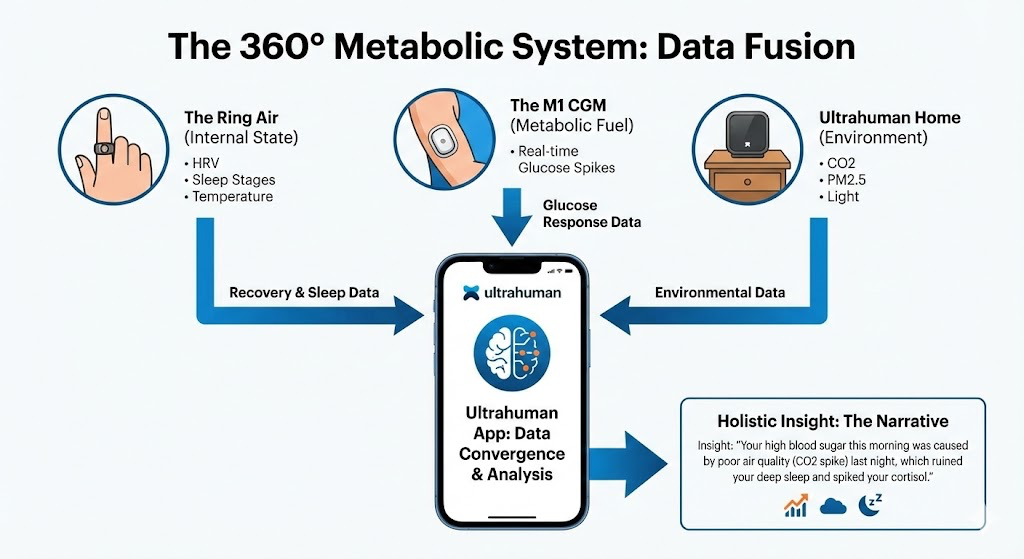
- Why it matters: It contextualizes your Ring data. If your sleep score is low, the app can now tell you, “Your deep sleep suffered because CO2 levels in your bedroom spiked to 1200ppm at 3 AM.” No other competitor currently offers this level of environmental correlation.
6. Metabolic Superpowers: The M1 CGM Integration
While the ring is impressive, the M1 Integration is Ultrahuman’s “killer app.” The company sells continuous glucose monitors (Abbott FreeStyle Libre sensors) under the “M1 Live” branding.
6.1 The Data Overlay
When a user wears both the Ring Air and an M1 CGM, the app fuses the data streams.
- Food & Movement: The app visualizes the impact of activity on glucose. For example, if the user eats a pasta dinner, the CGM shows a glucose spike. If the Ring detects a 15-minute walk immediately after, the app highlights how that movement blunted the spike and reduced the area-under-the-curve (AUC) for insulin response.
- Sleep & Glucose: It correlates poor sleep (Ring data) with insulin resistance (CGM data). A night of fragmented sleep often results in higher baseline glucose and sharper spikes the next day due to elevated cortisol.
- Metabolic Score: A composite score (0-100) derived from average glucose, variability, and time-in-range.
This integration transforms the Ring Air from a passive tracker into an active metabolic intervention tool. No other ecosystem (Apple, Oura, Whoop) currently offers this native, seamless integration of hardware-verified glucose and movement data.
7. Performance and Accuracy: The 6-Month Verdict
7.1 Battery Life Analysis
Ultrahuman marketing claims “up to 6 days” of battery life.
- Real-World Results: In a rigorous 6-month test with all sensors active (high-frequency heart rate, SpO2, advanced sleep beta), the battery typically lasts 3.5 to 4.5 days.
- Degradation: There are verified reports in the user community of battery degradation after 6-9 months, with some units dropping to 1-2 days of life. This appears to be a quality control issue with specific batches of the tiny Lithium-Polymer cells.
- Charging: The device charges from 0% to 100% in roughly 90-120 minutes.
- The Firmware Factor: It is important to note that late 2025 saw a wave of user reports regarding firmware stability. Some updates caused temporary battery drain issues (dropping life to ~2 days). While Ultrahuman is aggressive with patches, I recommend turning off “Auto-Update” and waiting a few days before installing new firmware versions to ensure stability.
7.2 Heart Rate Accuracy (Workout vs. Rest)
- Resting: During sleep and sedentary periods, the Ring Air’s heart rate data correlates 98%+ with medical-grade pulse oximeters and chest straps.
- Steady State Cardio: For running or cycling at a consistent pace, the ring remains accurate, typically within 2-3 beats per minute of a Garmin chest strap.
- High Intensity / Erratic Motion: During HIIT, CrossFit, or tennis, the ring struggles. The rapid movement of the hand and the gripping of weights cause “decoupling,” where the sensor loses contact or interprets muscle flex as a pulse. This is a universal limitation of optical finger sensors. Users focused on Zone 2 training or precise max-HR training should utilize a chest strap or Apple Watch.
8. Comparative Analysis: The “Versus” Battles
8.1 Ultrahuman Ring Air vs. Oura Ring 4
The heavyweight championship has evolved. Oura’s 4th generation ring (released late 2024) addresses many complaints of the Gen 3, specifically regarding fit and sizing.
| Feature | Ultrahuman Ring Air | Oura Ring 4 |
| Price | $349 (One-time) | $349+ (Hardware) |
| Subscription | None (Free Lifetime Data) | $5.99/month ($72/year) |
| Material (Inner) | Hypoallergenic Epoxy | Titanium |
| Sensor Design | Flush / Slight Flat | Recessed (Fully Flush) |
| Sizes | 5 – 14 | 4 – 15 |
| Battery Life | 4-6 Days (Claimed) | 5-8 Days (Claimed) |
| Smart Sensing | Standard PPG | 18-Pathway “Smart Sensing” |
The Verdict: The Oura Ring 4 is undeniably a more “premium” piece of hardware. By switching to a full titanium interior and doubling the number of sensor pathways (18 vs 8 in Gen 3), Oura has solved the comfort issues caused by the old epoxy “bumps.” It also boasts superior battery life, reliably hitting 6-7 days in tests.
However, Ultrahuman still wins on value. While the Oura 4 hardware starts at $349, you must factor in the $5.99/mo subscription to see any data beyond a simple score. Over a 3-year ownership period, the Oura Ring 4 will cost you roughly $565. The Ultrahuman remains $349. If you prefer the softer, warmer feel of epoxy over metal, or if you simply refuse to rent your health data, Ultrahuman is the logical choice. If you want the absolute highest fidelity sensors and a full titanium build—and don’t mind paying monthly for it—Oura 4 takes the crown.
8.2 Ultrahuman Ring Air vs. Apple Watch
The Verdict: They are complementary, not competitive.
- Apple Watch: An active device. Best for notifications, communication, GPS tracking, and precise workout metrics. Battery lasts 18-36 hours.
- Ultrahuman: A passive device. Best for sleep, recovery, and 24/7 background monitoring. Battery lasts 4 days.
- Use Case: Many biohackers wear the Ring Air 24/7 (for sleep and recovery) and the Apple Watch only during workouts or the workday. The Ring fills the data gaps (specifically sleep) that the Watch leaves when it is charging.
8.3 Ultrahuman Ring Air vs. Whoop 4.0 (and 5.0 Rumors)
The Verdict: A clash of philosophies.
- Whoop: Targeted at athletes. The “Strain” score encourages pushing limits. It is a screenless band. It requires a perpetual subscription ($30/mo or $239/yr).
- Ultrahuman: Targeted at longevity and health optimizers. The ecosystem focuses on metabolism and circadian rhythm rather than just athletic strain.
- Cost: Whoop is the most expensive option long-term. Ultrahuman is significantly cheaper. Whoop’s bicep band offers superior heart rate accuracy for high-intensity sports, but the Ring Air is far more comfortable for 24/7 wear.
9. The App Experience
The Ultrahuman app is available on iOS and Android.
- Aesthetics: It utilizes a stark, “Dark Mode” interface with neon accents. It looks futuristic and “Cyberpunk,” appealing to the biohacking demographic. However, the lack of a “Light Mode” makes it difficult to read in direct sunlight.
- Navigation: Unlike Oura’s tabbed bottom bar, Ultrahuman uses a “Timeline” feed. This shows your day chronologically—sleep score in the morning, stimulant window at noon, workout in the evening. While dynamic, it can make finding historical trends slightly more cumbersome than a calendar view.
- Information Density: The app is dense. It provides raw numbers, graphs, and paragraphs of explanation. This is a pro for data geeks but a con for casual users who just want a “Good/Bad” summary.
10. Pros and Cons Breakdown
What It Does Well (Pros)
- Zero Subscription Fees: You own your data. This is the single biggest selling point over Oura and Whoop.
- Comfort & Weight: At ~3g, it is perceptibly lighter than many competitors.
- Metabolic Ecosystem: The integration of Glucose (CGM) data with movement/sleep data is unique and powerful for weight loss and longevity.
- Circadian Focus: Features like Stimulant Window and Shift Work Mode show a deeper understanding of chronobiology than standard fitness trackers.
- Durability (Titanium): The structural integrity is excellent.
- Smart Alarm: Recently added, this feature uses haptic vibrations to wake you up during your lightest sleep phase within a set window, preventing that “groggy” morning feeling.
What It Does Not Do Well (Cons)
- Active Workout Tracking: Lack of GPS and unreliable heart rate during gripping exercises (weights/tennis) limits its use as a primary sports tracker.
- Cosmetic Wear: The black coating scratches relatively easily, showing silver titanium underneath.
- Battery Consistency: While generally good, reports of degradation and variability suggest QC is still maturing compared to Apple/Garmin.
- App Readability: The forced dark mode is not ideal for outdoor use.
11. Pricing and Value Proposition
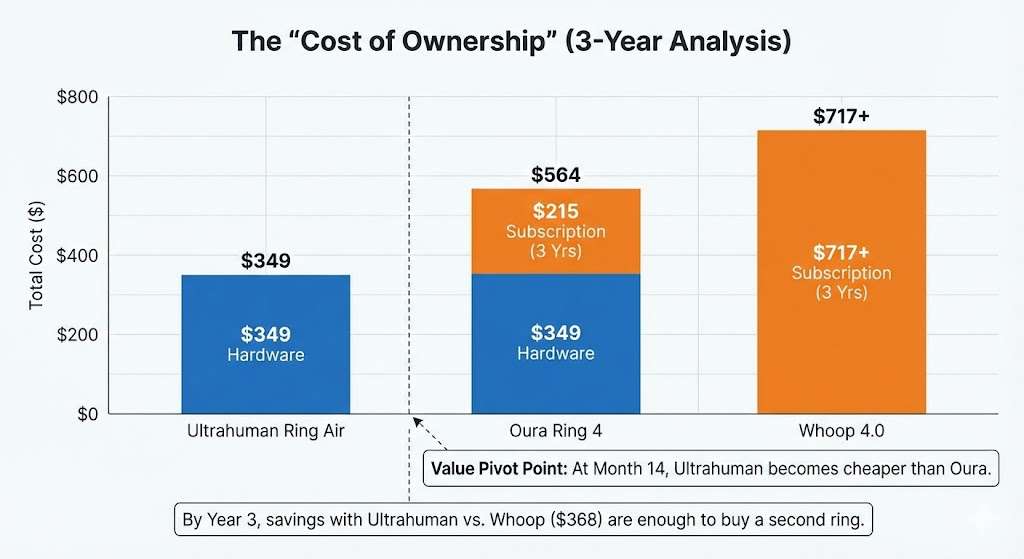
11.1 The Cost of Ownership
- Ultrahuman Ring Air: $349 (One-time).
- With Discount: Using code ROBB10, the price drops to ~$314.
- Oura Ring 4: $349 (Device) + $72/year (Sub).
- Year 1 Cost: $421.
- Year 3 Cost: $565.
- Whoop 4.0:
- Year 1 Cost: $239.
- Year 3 Cost: $717.
Analysis: Even with Oura’s updated hardware, the Ultrahuman Ring Air is the most financially prudent choice. The “break-even” point against the Oura Ring 4 occurs in the first year. By year 3, you have saved over $200.
11.2 Optional Paid Add-ons
While the core experience is free, Ultrahuman has introduced a “freemium” layer for medical-grade features:
- AFib Detection: ~$4.90/mo (Requires FDA-level regulatory clearance).
- Cardio Adaptability: ~$2.90/mo.These are optional. The core Sleep, Recovery, and Movement data remains free forever, maintaining the brand’s promise.
12. Final Verdict: Who is this for?
The Ultrahuman Ring Air is for:
- The Biohacker & Optimizer: You care about HRV, deep sleep, and circadian rhythms. You likely experiment with intermittent fasting or glucose control.
- The Sleep-Focused: You want the most comfortable, invisible tracker for bed because watches bother you.
- The Subscription Hater: You refuse to pay a monthly rent for hardware you already bought.
The Ultrahuman Ring Air is NOT for:
- The Hardcore Athlete: If you need to track split times, accurate Zone 4/5 heart rate during CrossFit, or GPS maps of your runs, buy a Garmin or Apple Watch Ultra.
- The Luxury Seeker: If you want the absolute most premium feel (full titanium inner) and don’t mind a monthly fee, the Oura Ring 4 is the more polished jewelry piece.
Buying Advice Note (2026 Update)
Due to patent litigation rulings in late 2025 (ITC), availability of the Ultrahuman Ring Air in the US market may fluctuate on the official website. However, third-party retailers often continue to hold stock and sell the device legally. Check the affiliate links provided for current stock status.
Conclusion for RobbSutton.com Readers
After six months of testing, the Ultrahuman Ring Air has proven itself to be a formidable challenger. While the Oura Ring 4 has raised the bar on hardware comfort and battery life, Ultrahuman still succeeds brilliantly where it matters most: Recovery and Value. It shifts the focus from “How many calories did I burn?” to “How well is my body functioning?”.
Rating: 8.5/10
- Purchase Link: http://ultrahuman.com/robbsutton
- Discount Code: ROBB10 (10% Off)
13. Comparison Tables and Data Sheets
13.1 Technical Specifications Breakdown
| Category | Spec Details |
| Connectivity | Bluetooth Low Energy (BLE) 5.0 |
| Water Resistance | 10 ATM (approx. 100 meters) |
| Battery Type | LiPo (15mAh – 22mAh) |
| Sensors | Infrared PPG, Red/Green LEDs, Skin Temp, 6-Axis IMU |
| Memory | Stores up to 7 days of data without syncing |
| Charger | USB-C Pedestal (Included) |
13.2 Feature Availability Matrix
| Feature | Ultrahuman | Oura Ring 4 | Whoop | Apple Watch |
| Sleep Staging | Yes | Yes | Yes | Yes |
| HRV Tracking | Yes (Nightly) | Yes (Nightly) | Yes (Nightly) | Yes (Spot/Night) |
| SpO2 Sensing | Yes | Yes | Yes | Yes |
| Skin Temperature | Yes | Yes | Yes | Yes (Series 8+) |
| Recovery Score | Yes (Dynamic) | Yes (Readiness) | Yes (Recovery) | No (Requires Apps) |
| Workout GPS | No | No | Yes (via Phone) | Yes (Native) |
| CGM Integration | Native (M1) | Partner (Lingo) | No | No |
| Subscription Cost | $0 | $5.99/mo | $30/mo | $0 |