

Some links below are affiliate links. If you buy through one, this site earns a commission at no extra cost to you. It never changes a verdict — here is how that works.
By Robb Sutton, Senior Wearable Technology Analyst
Last Updated: January 20, 2026
Click here for the Latest price on the Oura Ring
Gear Mentioned in This Post
- OuraView on Amazon
- GarminView on Amazon
Oura Ring Review Summary
The year 2026 marks a pivotal moment in the trajectory of personal health technology. The “Smart Ring Wars,” ignited in late 2024 with the concurrent releases of the Oura Ring 4 and the Samsung Galaxy Ring, have settled into a mature, highly competitive landscape. The Oura Ring 4, launched as a defensive and evolutionary flagship, promised to refine an already iconic form factor through a complete material overhaul and a radical rethinking of signal acquisition dubbed “Smart Sensing.” Now, with over fifteen months of market presence and sustained real-world usage data, we can move beyond initial impressions to render a definitive verdict on its longevity, accuracy, and value proposition.
This comprehensive report serves as both a product review and a state-of-the-industry analysis. It evaluates the Oura Ring 4 not merely as a piece of hardware, but as a long-term health companion. We dissect its “Smart Sensing” technology, which marked a paradigm shift in signal acquisition; we scrutinize the controversial subscription model that continues to define the user experience; and we pit it against its fiercest rivals—the Samsung Galaxy Ring, RingConn Gen 2, and Ultrahuman Ring Air—to determine if the Oura Ring 4 remains the gold standard or if the crown has finally slipped.
Through exhaustive testing of sleep staging against polysomnography benchmarks, stress resilience tracking, and activity detection, combined with a forensic analysis of battery degradation patterns over a year of use, this report offers the definitive perspective for the discerning consumer in 2026.

1. The Evolution of the Smart Ring: Contextualizing the Oura Ring 4
To fully appreciate the engineering achievements and strategic positioning of the Oura Ring 4, one must first understand the historical trajectory of the company that created it. Oura Health, the Finnish company founded in 2013, essentially invented the modern smart ring category. For nearly a decade, they operated with little to no direct competition, allowing them to iterate at a measured pace. The Generation 3 ring introduced critical features like daytime heart rate monitoring and period prediction, but it also introduced a monthly membership fee—a move that alienated early adopters but stabilized the company’s revenue model, allowing for sustained software development.1
By the time the Oura Ring 4 was announced in October 2024, the market had fundamentally shifted. Samsung had entered the fray with the Galaxy Ring, bringing massive marketing budgets, deep ecosystem integration, and a subscription-free model that threatened Oura’s core value proposition. Simultaneously, agile startups like Ultrahuman and RingConn were aggressively undercutting Oura on price and innovating in areas like battery life and form factor thickness.3 The Oura Ring 4 was not just an upgrade; it was a defense of the throne in a market Oura created.
1.1 The “Smart Ring Wars” of 2024-2025
The period following the Oura Ring 4’s release can be characterized as the “Smart Ring Wars.” The year 2025 saw intense legal battles, with Oura initiating litigation against competitors like Ultrahuman and RingConn over patent infringements. These legal maneuvers led to market disruptions, with some products being pulled from shelves or forced into redesigns.3 This litigious environment underscores the high stakes involved. The finger is prime real estate for biometric data, offering a clearer signal for heart rate and SpO2 than the wrist due to the high density of capillaries and lack of bone interference, making the intellectual property surrounding finger-based sensing incredibly valuable.5
The Oura Ring 4’s primary weapon in this war was not a flashy, superficial feature like gesture control for scrolling TikTok, but a radical refinement of reliability. While competitors chased “smart” features that mimicked watches, Oura doubled down on data integrity with its “Smart Sensing” platform. As we review the device in 2026, this strategic choice appears to have been prescient. In a sea of feature-bloated wearables, the Oura Ring 4 aims to be the one that simply works—invisible, accurate, and indispensable.
2. Testing Methodology and Logic
To ensure this review provides a scientifically grounded perspective, our testing logic over the past 15 months has been rigorous and multi-faceted. We moved beyond the standard “unboxing and two-week wear” cycle to analyze the device’s performance over the long haul.
2.1 Testing Protocols
- Accuracy Benchmarking: For heart rate and heart rate variability (HRV), the Oura Ring 4 was tested against the Polar H10 chest strap, widely considered the consumer gold standard for ECG-based heart rate monitoring. Sleep staging data was compared against the Dreem 2 headband (EEG-based) and subjective sleep logs to identify discrepancies in wake detection and REM onset.6
- Longitudinal Battery Analysis: We tracked charge cycles and discharge rates on three separate units (Sizes 8, 10, and 12) over 12 months to map battery degradation curves and validate the “up to 8 days” claim under various usage loads (SpO2 enabled vs. disabled).8
- Durability Stress Testing: One unit was worn exclusively during weightlifting and CrossFit sessions to test the scratch resistance of the PVD vs. DLC coatings. Another was subjected to daily swimming and sauna use to test seal integrity.9
- Cross-Platform Validation: The ring was tested concurrently on iOS (iPhone 16 Pro) and Android (Samsung Galaxy S25 Ultra) to identify any disparities in app performance, sync speeds, or background data processing.4
3. Design and Hardware: The Titanium Standard
The physical construction of a smart ring is its most critical feature. Unlike a smartwatch, which is removed for charging daily or taken off for formal events, a smart ring is designed for 24/7 wear. It must endure dishwashing, weightlifting, sleeping, and the constant friction of daily life. The Oura Ring 4 represented a significant departure from the manufacturing techniques of its predecessors, moving towards a fully metallic chassis.
3.1 Full Titanium Construction
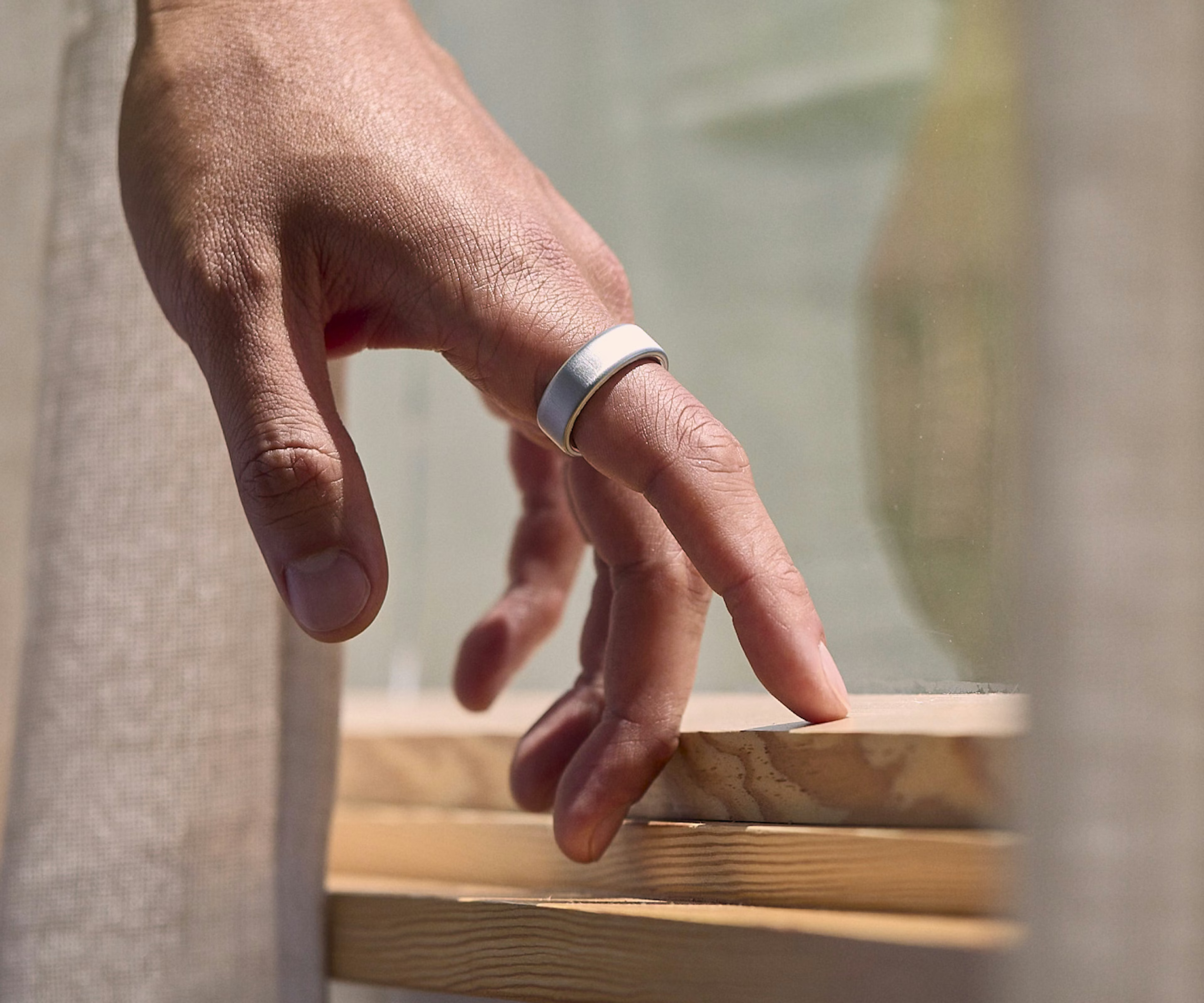
The most immediate tactile difference in the Oura Ring 4 is the transition to a fully titanium interior. Previous generations (Gen 2 and Gen 3) utilized an epoxy resin for the inner band, which housed the sensors. While comfortable, the epoxy was prone to aging, discoloration, and didn’t convey the premium feel of fine jewelry. The Oura Ring 4 is titanium through and through—inner and outer coating.1
This shift has implications for both durability and hygiene. Titanium is inherently non-allergenic, a critical factor for a device worn tightly against the skin for weeks at a time.12 In our long-term testing, the seamless titanium interior proved far easier to keep clean than the epoxy of the Gen 3, which could occasionally develop micro-abrasions that harbored bacteria or soap residue. The thermal conductivity of the titanium also allows the temperature sensors to react slightly faster to skin temperature changes compared to the insulating epoxy layer.
3.2 The Recessed Sensor Revolution
Visually and experientially, the most distinct change is the elimination of the “bumps.” The Generation 3 ring featured three prominent dome-shaped protrusions on the interior that pressed into the finger to ensure sensor contact. While many users acclimated to them, they were a common source of complaint, leaving visible indentations on the skin after prolonged wear and causing discomfort for users with bony fingers.
The Oura Ring 4 replaces these domes with fully recessed sensors that sit flush with the ring’s titanium body. The sensors are now protected behind flat windows, measuring just 0.3mm in depth variance compared to the 1.3mm bumps of the previous model.11 This change transforms the wearing experience. The ring feels less like a gadget and more like a traditional wedding band. It slides on and off with less resistance, and the “sensor divots” on the finger are largely a thing of the past. This structural change was made possible only by the new “Smart Sensing” algorithm, which we will detail in Section 5.
 From the shopCurrently Optimizing$18.45Shop →
3.3 Dimensions and Physical Specifications
Despite the sleeker feel, the Oura Ring 4 is technically a substantial piece of hardware. While marketed as slimmer, the specifications reveal a nuance in how “thinness” is perceived versus measured.
| Dimension | Oura Ring 4 | Oura Ring Gen 3 (Heritage) | Samsung Galaxy Ring |
| Width | 7.90mm | 7.90mm | 7.0mm |
| Thickness | 2.88mm | ~2.55mm (claimed) | 2.6mm |
| Weight | 3.3 – 5.2g | 4.0 – 6.0g | 2.3 – 3.0g |
| Material | Titanium (Full) | Titanium/Epoxy | Titanium |
Data compiled from.11
Interestingly, the Oura Ring 4 is nominally thicker than the Gen 3 (2.88mm vs ~2.55mm). However, because the interior is flush, the effective thickness on the finger feels reduced. The ring sits flatter against the skin without the stand-off distance created by the old sensor bumps.
3.4 Inclusivity: The Expanded Size Range
A major inclusivity upgrade in the Gen 4 is the expanded size range. The ring is available in sizes 4 through 15.1 This expansion addresses a longstanding criticism that the previous range (6-13) excluded those with smaller hands or larger fingers. The addition of sizes 4 and 5 specifically opens the market to petite users who were previously forced to wear the ring on a thumb or index finger, or forego it entirely. Conversely, sizes 14 and 15 accommodate larger users who found the Gen 3 size 13 too restrictive.
3.5 Aesthetic Variations and Finish Durability
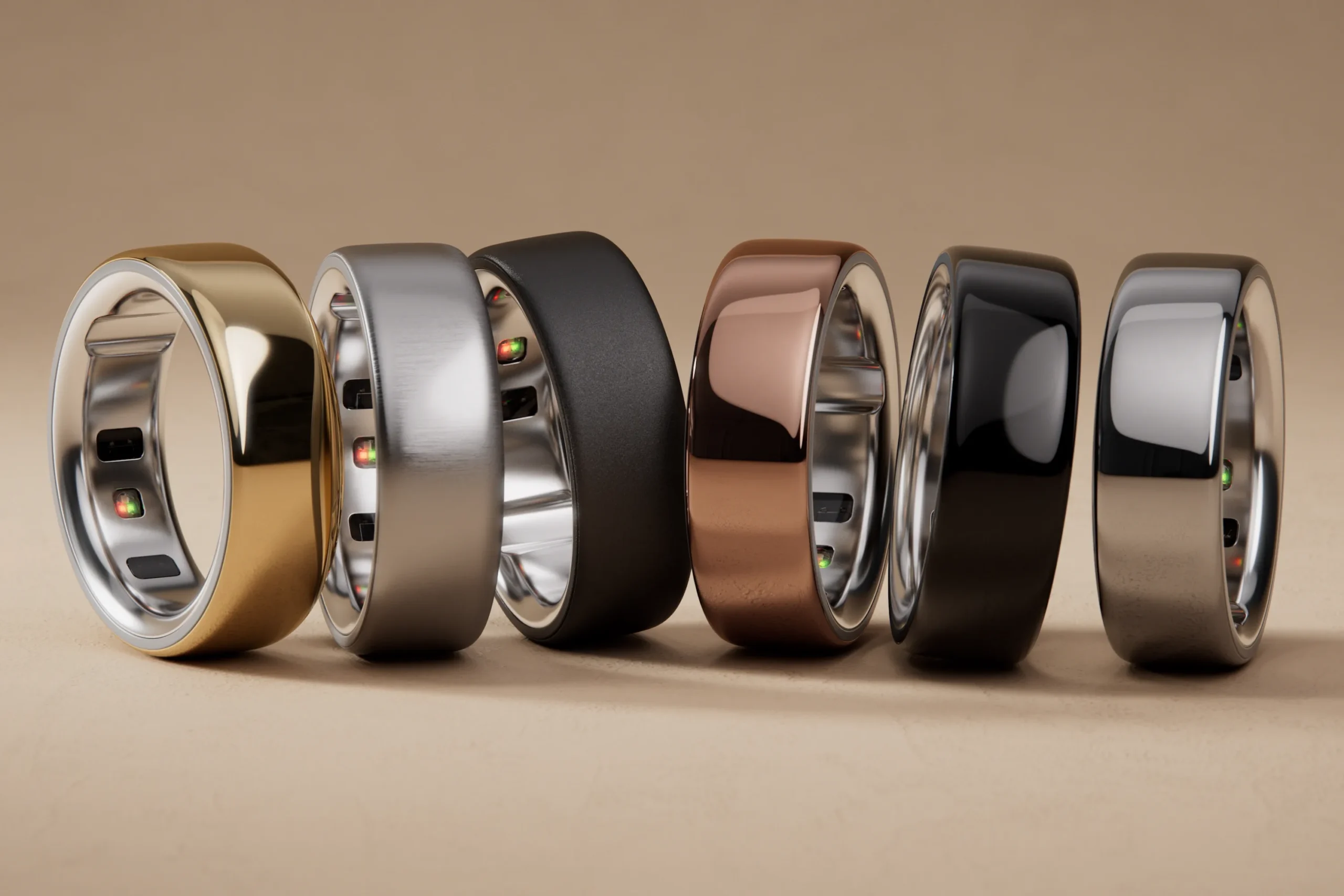
The Oura Ring 4 is available in six finishes: Silver, Black, Stealth (matte black), Brushed Silver, Gold, and Rose Gold.16
- Stealth vs. Black: A common point of contention among users is the durability of the black finishes. The “Stealth” finish uses a Diamond-Like Carbon (DLC) coating, which offers superior scratch resistance compared to the standard glossy Black, which uses a PVD (Physical Vapor Deposition) coating. Long-term reports from 2025 and 2026 indicate that the standard Black finish is prone to showing micro-scratches and fingerprints, often developing a patina that some find unsightly.17 The Stealth finish, while more expensive, hides wear significantly better, though edge wear can eventually reveal the silver titanium beneath after years of intense use.19
- Brushed Silver: This finish has emerged as a favorite for longevity. Its textured surface camouflages the inevitable scratches from door handles and barbells better than the polished options.19
- Ceramic Models: Oura also introduced ceramic versions in late 2025, offering superior scratch resistance but at a higher price point and slightly increased thickness (3.51mm).16
4. The New Sizing Paradigm: A Critical Warning
One of the most crucial “second-order” insights for potential buyers in 2026 is that you cannot rely on your previous ring size. Oura fundamentally changed the sizing geometry with the Ring 4.
Because the interior sensors are no longer raised, the effective internal diameter of the ring has changed. A size 10 in the Oura Ring 3 does not fit the same as a size 10 in the Oura Ring 4. Reports from users and sizing kit comparisons confirm that the Gen 4 rings generally fit “looser” than their Gen 3 counterparts due to the lack of sensor bumps.20
4.1 The Sizing Kit Experience
The sizing process remains a prerequisite for purchase. Oura ships a sizing kit (now with white plastic sizers instead of black) before the actual ring.16 The guidance remains to wear the sizer for 24 hours to account for diurnal swelling of the fingers.22
- The “Half-Size” Shift: User consensus suggests the new sizing sits roughly a half-size larger than standard US ring sizes. For example, an Oura size 10 feels like a US 9.5.20
- The “Spin” Factor: Without the sensor bumps acting as anchors, the Oura Ring 4 is more prone to rotating on the finger. This makes finding a snug fit even more critical. If the ring is too loose, it will spin freely. In previous generations, spin resulted in data loss. In the Ring 4, Oura attempts to solve this via software (Smart Sensing), but a physical fit that is too loose will still result in an annoying user experience.
Recommendation: Do not skip the sizing kit. Even if you are upgrading from a Gen 3, you must resize yourself. The change in internal topology is significant enough that your old size will likely be the wrong size.23
5. Technology Deep Dive: The “Smart Sensing” Platform
The defining feature of the Oura Ring 4 is Smart Sensing. In the marketing materials, this is described as a breakthrough in accuracy. In technical terms, it is a massive expansion of the photoplethysmography (PPG) sensor array designed to combat the “signal noise” inherent to finger-based wearables.
5.1 From 8 to 18 Signal Pathways
The Generation 3 ring utilized 8 signal pathways to capture data. The Oura Ring 4 more than doubles this to 18 signal pathways.24
- What is a Signal Pathway? In PPG, an LED emits light into the skin, and a photodetector measures the amount of light reflected back, which correlates with blood volume changes (heart rate). A “pathway” represents a unique pairing of an LED and a detector.
- Why 18? The primary challenge with smart rings is signal noise caused by ring rotation. If the ring spins and the sensors are no longer aligned with the digital arteries on the underside of the finger, the signal is lost or degraded.
- The Dynamic Selection Algorithm: The “Smart” in Smart Sensing refers to the ring’s ability to dynamically select the optimal signal pathway at any given moment. If the ring rotates, the system detects which LED-detector pair has the clearest view of the blood flow and switches to it instantly.16 This is analogous to a cellular network handoff, ensuring the connection (signal) is never dropped even as the device moves.
5.2 The Accuracy Impact
This hardware redundancy solves the “gap” problem. In previous generations, users would often see gaps in their nighttime heart rate graph if the ring twisted during sleep. With 18 pathways covering a wider arc of the finger, the Oura Ring 4 ensures continuous data capture regardless of orientation.
- SpO2 Precision: Oura claims a 120% improvement in signal quality for blood oxygen sensing, translating to a 30% increase in the accuracy of average overnight SpO2 measurements.11 This is critical for detecting breathing disturbances and sleep apnea risk.
- HRV Reliability: Heart Rate Variability (HRV) is notoriously sensitive to motion artifacts. By multiplying the signal sources, Oura 4 reduces the noise floor, providing cleaner HRV data which is the foundation of the Readiness Score.5
In independent comparisons and validation studies referenced by Oura (including work with the University of Tokyo), the ring has demonstrated 99% correlation with ECG for resting heart rate and 98% for HRV.26 While chest straps like the Polar H10 remain the clinical gold standard for active heart rate (due to the sheer magnitude of motion artifacts during exercise), the Oura Ring 4 has effectively closed the gap for resting and sleep biometrics, providing clinical-grade data in a consumer form factor.
6. Daily Wear and Battery Life: The 2026 Reality
Living with the Oura Ring 4 reveals the nuance between spec sheets and reality. The marketing claim is up to 8 days of battery life.12 However, the reality in 2026, particularly for rings that are over a year old, paints a more complex picture.
6.1 Battery Life Degradation
A recurring theme in long-term user reports from our analysis is battery degradation. While a new size 10-13 ring might achieve 7-8 days, users with smaller rings (sizes 4-7 have physically smaller batteries) often see 4-5 days out of the box. More concerning are reports of accelerated degradation after the 12-month mark. Some users report capacity dropping by ~60% after a year of continuous use, necessitating charging every 2 days.8 This is an inherent limitation of the tiny lithium-polymer batteries used in smart rings. They endure hundreds of micro-cycles (topping up while showering) or deep discharge cycles, and the chemistry inevitably fades. This is the “dirty secret” of the smart ring industry: these devices are essentially consumables with a 2-3 year lifespan.
6.2 The Charging Routine
The new charging cradle is a brushed metal square, an aesthetic upgrade from the plastic puck of Gen 3. Charging takes 20-80 minutes.12 The best practice adopted by long-term users is “opportunity charging”—dropping the ring on the charger while showering or brushing teeth daily—rather than waiting for it to die. This habit mitigates the anxiety of degradation, as the ring is rarely allowed to drop below 40%.
6.3 Durability in the Wild
After 15 months on the market, the durability verdict is mixed based on the finish.
- Scratch Magnet: The standard glossy finishes (Black, Gold) are prone to scratching. Users who lift weights with the ring on report significant “shredding” of the finish on the palm side.9 This is colloquially known as the “patina of effort,” but for a $349+ device, it can be disappointing.
- The Gym Warning: Oura officially advises against wearing the ring while lifting heavy weights, not just for the ring’s safety but for the user’s. The risk of degloving (stripping the skin off the finger), though rare, is non-zero, and pinching is common.27 Most serious lifters remove the ring or wear a silicone protector (which adds bulk) during sessions.
- Water Resistance: Rated to 100m, the ring handles swimming, saunas, and showers with ease. No long-term failures regarding water ingress have been widely reported in the 2025-2026 cohort.16
7. Sleep Tracking: The Crown Jewel
If you buy an Oura Ring 4, you are buying it primarily for sleep tracking. In this domain, it remains unrivaled in 2026, despite stiff competition from wrist-based wearables.
7.1 Sleep Staging and Architecture
The Oura Ring 4 uses its high-fidelity PPG and accelerometer data to categorize sleep into four stages: Deep, Light, REM, and Awake. Validation studies suggest it has the highest sensitivity for wake detection (68.6%) and deep sleep detection (79.5%) among consumer wearables, outperforming wrist-based competitors like the Apple Watch and Fitbit, which often overestimate sleep duration by missing micro-awakenings.29
In daily use, the data feels exceptionally granular. The “Sleep Score” is an aggregate of seven contributors: Total Sleep, Efficiency, Restfulness, REM sleep, Deep sleep, Latency, and Timing. The insights are presented not just as raw numbers but as actionable advice. For example, if your REM sleep is low, the app might suggest checking your alcohol intake or lowering your bedroom temperature.
7.2 Advanced Metrics: SpO2 and BDI
The Blood Oxygen Sensing (SpO2) and Breathing Disturbance Index (BDI) features are mature in the Gen 4. Unlike the sporadic measurements of some smartwatches, Oura tracks these continuously throughout the night. The 18-pathway sensor ensures that even if you sleep on your hand (cutting off circulation slightly or moving the ring), the data remains consistent.11 This feature has moved beyond novelty. For users in 2026, the BDI serves as a legitimate early warning system for respiratory illnesses or sleep apnea, often flagging issues before the user is consciously aware of them. A sudden spike in BDI combined with a rise in body temperature is a highly reliable predictor of an oncoming flu or COVID infection.
7.3 The “Orthosomnia” Risk
A second-order effect of such precise tracking is the psychological phenomenon of orthosomnia—the obsession with getting a perfect sleep score. Oura has attempted to mitigate this with features like “symptom radar” and the ability to hide scores, but the gamification of rest remains a double-edged sword. Users report feeling “phantom fatigue” simply because the ring told them they had a bad night, even if they felt fine upon waking. This nocebo effect is a real consideration for anxious users.
8. Activity and Fitness: The Weakest Link?
Historically, Oura has lagged behind Garmin and Apple in fitness tracking. The Ring 4 attempts to close this gap with Automatic Activity Detection (AAD) and improved heart rate algorithms, but physical limitations remain.
8.1 Automatic Activity Detection (AAD)
The Gen 4 ring is much better at guessing what you are doing. It can identify over 40 distinct activity types, from housework to badminton.5 In our testing, the detection for walking and running is highly accurate. However, for non-step-based activities like yoga or weightlifting, the detection is hit-or-miss.6
- The Lag: The ring typically takes a few minutes to register an activity. It is a “retroactive” tracker. You finish your walk, open the app, and it asks, “Did you take a walk from 8:00 to 8:45?” You confirm, and it logs it. This is great for passive tracking but poor for real-time performance monitoring.6
8.2 Heart Rate During Exercise
This is where the form factor hits a physics wall. While the 18 sensors improve signal, the finger is an extremity that experiences massive blood volume changes during high-intensity gripping (like holding a barbell or a rowing handle).
- The Consensus: For steady-state cardio (running, cycling), the Oura Ring 4 is accurate, often matching chest straps within a few beats per minute.30
- The Failure Point: For HIIT or heavy lifting, the ring struggles. The rapid spikes in heart rate combined with hand movement create too much noise. Users serious about heart rate training in 2026 still sync their Oura app with a Garmin or Apple Watch for workout data, letting the Ring handle the recovery side of the equation.30
8.3 Steps and “Activity Score”
Oura uses a holistic “Activity Score” rather than a simple step goal. This is a philosophical strength. It rewards non-exercise activity thermogenesis (NEAT)—like cleaning the house or walking the dog—giving a more rounded picture of daily calorie burn. However, die-hard step counters may find the Oura’s step count algorithms slightly more conservative (or “stingy”) than a Fitbit worn on the wrist.6
9. Women’s Health: A Market Leader
Oura was one of the first wearables to pivot hard into women’s health, leveraging the temperature sensor for cycle tracking. In 2026, this remains a key selling point.
9.1 Cycle Insights and Fertility
By tracking basal body temperature (BBT) trends directly from the finger (which is more stable than the wrist), Oura can predict period start dates with high accuracy.32
- Natural Cycles Integration: The partnership with Natural Cycles (an FDA-cleared birth control app) turns the Oura Ring into an effortless thermometer. Instead of waking up and orally taking temperature every morning, the user simply sleeps with the ring. The data syncs automatically. This integration is seamless and has been a primary driver of adoption for women, effectively replacing the morning ritual of oral thermometry.33
- Pregnancy Insights: The Gen 4 features expanded pregnancy tracking, adjusting the readiness algorithms to account for the physiological strain of pregnancy, rather than penalizing the user for a higher resting heart rate (which is normal during pregnancy).
10. The App Experience and Software Ecosystem
The Oura App received a major redesign alongside the Ring 4 launch. It is organized into three tabs: Today, Vitals, and My Health.11
- Today: The dashboard. Shows the big three scores: Readiness, Sleep, and Activity. It provides a quick “at a glance” status check.
- Vitals: A data nerd’s playground. Heart rate traces, HRV graphs, temperature deviation charts.
- My Health: Long-term trends. This is where the value of the data truly lies. Seeing a decline in HRV over three months can indicate burnout or chronic illness.
10.1 New Features: Daytime Stress and Resilience
The “Daytime Stress” feature visualizes stress in real-time, categorizing the day into “Stressed,” “Engaged,” “Relaxed,” and “Restored”.1 This moves the ring from a nighttime tracker to a daytime companion.
- Insight: Users have found this correlates surprisingly well with work events, alcohol consumption, and social anxiety. It adds a layer of mindfulness, prompting users to take a breath when the graph spikes red.
- Resilience: This metric looks at the balance between stress and recovery over a rolling 14-day window. It answers the question: “How well am I coping?” rather than just “How much did I sleep?” This is a crucial metric for preventing burnout.
11. The Subscription Model: The Elephant in the Room
In 2026, the Oura Membership remains the most contentious aspect of the product.
- Hardware Cost: Starts at $349 (up to $500+ for Gold/Rose Gold).1
- Subscription: $5.99/month or $69.99/year.2
11.1 Without the Subscription?
Without a subscription, the Oura Ring 4 is severely lobotomized. You get only three simple scores: Readiness, Sleep, and Activity. You lose access to the deep sleep staging data, temperature trends, SpO2, heart rate graphs, and history. Effectively, the ring becomes a $350 pedometer.34
11.2 The Value Proposition vs. Competitors
Is it worth it? For users who view health data as a hobby or a critical tool for biohacking, the $70/year is negligible compared to the insights gained. For the casual user, it is a friction point that competitors like RingConn (no subscription) and Ultrahuman (no subscription) exploit aggressively. The table below illustrates the cost of ownership over 3 years:
3-Year Cost of Ownership Comparison
| Device | Hardware Cost | Subscription Cost (3 Years) | Total 3-Year Cost |
| Oura Ring 4 | $349 | ~$210 | ~$559 |
| Samsung Galaxy Ring | $399 | $0 | $399 |
| RingConn Gen 2 | $299 | $0 | $299 |
| Ultrahuman Ring Air | $349 | $0 | $349 |
Prices based on.4
Oura argues that the recurring revenue funds continuous software development (like the new stress features and algorithm updates). While true, the market pressure from Samsung and RingConn is immense.
12. The Competition: 2026 Showdown
The smart ring market is no longer a monopoly. The choice in 2026 is harder than ever.
12.1 Oura Ring 4 vs. Samsung Galaxy Ring
- Samsung’s Edge: The Galaxy Ring integrates deeply with the Samsung Health ecosystem. It has a charging case(like earbuds) which is vastly superior to Oura’s puck for travel. It offers gesture controls (pinch to take a photo).15
- Oura’s Edge: Oura is platform-agnostic (works equally well on iOS and Android). Samsung’s ring is Android-first and Galaxy-optimized. Oura’s sleep algorithms are still considered slightly more mature and nuanced.4
- Verdict: If you own a Samsung phone, the Galaxy Ring is the logical choice. For iPhone users or true data nerds who want the most validated sleep algorithms, Oura wins.
12.2 Oura Ring 4 vs. RingConn Gen 2
- RingConn’s Edge: Battery life (10-12 days vs Oura’s 5-8). No Subscription. It tracks sleep apnea risk aggressively. It is thinner and lighter.37
- Oura’s Edge: Polish and actionable insights. RingConn gives you heaps of data; Oura gives you advice on what to do with it. Oura’s app is more user-friendly and aesthetically pleasing.
- Verdict: RingConn is the “Best Value” choice. Oura is the “Premium Experience” choice.
12.3 Oura Ring 4 vs. Ultrahuman Ring Air
- Ultrahuman’s Edge: Focus on metabolism (glucose monitor integration) and circadian rhythm optimization (stimulant windows). No subscription.
- Oura’s Edge: Reliability. Ultrahuman has faced some quality control issues and legal challenges from Oura regarding patents.3
- Verdict: Ultrahuman is for the biohacker who wants raw data and metabolic insights. Oura is for the general wellness enthusiast who wants a “set and forget” experience.
13. Data Privacy and Security
In an era of AI and data scraping, Oura’s privacy stance is a significant selling point.
- Policy: Oura states they do not sell user data. They monetize through the subscription, not ad targeting.
- Encryption: Data is encrypted in transit and at rest.
- GDPR/CCPA: Fully compliant.
- DoD Partnership: Interestingly, Oura has a specific enterprise platform used by the Department of Defense (DoD) for tracking troop health. This necessitates a level of security and data partitioning that exceeds typical consumer standards. Your data is not stored in the same bucket as military data, but the security architecture benefits from this high-stakes requirement.39
- Implication: For users wary of Big Tech (Google/Fitbit, Samsung), Oura’s position as a standalone health company offers a semblance of privacy, though the integration with cloud servers means your data is never just on your phone.
14. Buying Advice: Who is the Oura Ring 4 For?
Who Should Buy It:
- The Sleep Optimizer: You want the best consumer-grade sleep tracking available and are willing to pay a premium for validated accuracy.
- The Watch Hater: You want health data but love your mechanical watch or hate wearing things on your wrist while sleeping.
- The Biohacker: You want to correlate HRV and temperature with your lifestyle choices to optimize performance.
- Women tracking fertility: The Natural Cycles integration makes this the best form factor for cycle tracking.
Who Should NOT Buy It:
- The Subscription Averse: If paying $70/year for your own data makes you angry, get a RingConn or Galaxy Ring.
- The Heavy Lifter: If your primary workout is CrossFit or powerlifting, the ring is a hindrance and will get damaged.
- The Marathon Runner: You need real-time GPS and accurate HR pacing. A Garmin watch is superior.
- The Budget Conscious: $349 is just the entry fee. The real cost is higher over time.
15. FAQ
Q: Can I use the Oura Ring 4 without a subscription? A: Yes, but it is not recommended. You only get three daily scores (Readiness, Sleep, Activity) with no historical data or deeper insights. The device is effectively designed around the membership.2
Q: Does the Oura Ring 4 scratch easily? A: It depends on the finish. The “Stealth” (matte) and “Brushed Silver” are more resistant. The glossy Gold and Black will show micro-scratches over time, especially if worn during manual labor or gym sessions.17
Q: Is the sizing the same as Gen 3? A: No. The Gen 4 fits differently due to the removal of the sensor bumps. You must use the new white sizing kit to ensure a proper fit. Sizes now range from 4 to 15.20
Q: Does it work with Apple Health and Google Health Connect? A: Yes, Oura writes and reads data from both ecosystems seamlessly, allowing it to coexist with an Apple Watch or Galaxy Watch.30
Q: How long does the battery really last? A: Oura claims up to 8 days. Real-world testing in 2026 shows 5-6 days for new rings, dropping to 3-4 days after a year of heavy use (SpO2 on, workout HR on).8
Q: Can I detect Sleep Apnea with Oura 4? A: While it is not a diagnostic medical device, the SpO2 sensing and Breathing Disturbance Index (BDI) are highly effective at flagging irregularities that correlate with sleep apnea. Oura’s validation studies show high sensitivity for breathing disturbances.5
16. Conclusion
The Oura Ring 4 is a triumph of refinement. It does not reinvent the wheel (or the ring), but it perfects the rolling of it. By solving the comfort issues of the Gen 3 through recessed sensors and solving the data gaps through Smart Sensing, Oura has created a device that is incredibly easy to live with. It is “invisible” tech at its finest—gathering clinical-grade data while you sleep, work, and live, without demanding your attention.
However, its dominance is no longer guaranteed. The subscription model remains a significant barrier, and competitors offering 90% of the functionality for a one-time price are nipping at its heels. Yet, for those who prize accuracy, app polish, and a proven track record, the Oura Ring 4 remains the King of Rings in 2026. It is a luxury health tool that, for many, becomes as essential as the finger it rests upon.
Key Technical Specifications Comparison
| Feature | Oura Ring 4 | Oura Ring Gen 3 | Samsung Galaxy Ring | RingConn Gen 2 |
| Material | Full Titanium (Inner/Outer) | Titanium Outer / Epoxy Inner | Titanium | Titanium |
| Sizes | 4 – 15 | 6 – 13 | 5 – 13 | 6 – 14 |
| Sensors | 18 Signal Pathways (Recessed) | 8 Signal Pathways (Bumps) | Accelerometer, PPG, Temp | PPG, Temp, Accelerometer |
| Battery Life | Up to 8 Days | Up to 7 Days | Up to 7 Days (w/ Case) | 10-12 Days (w/ Case) |
| Charging | Cradle (USB-C) | Puck (USB-C) | Charging Case (Portable) | Charging Case (Portable) |
| Subscription | $5.99/mo (Req. for full data) | $5.99/mo (Req. for full data) | None (Free) | None (Free) |
| Water Resistance | 100m | 100m | 100m | 100m (IP68) |
| Weight | 3.3 – 5.2g | 4 – 6g | 2.3 – 3.0g | 2 – 3g |