Sony A7 V Review – The Best Hybrid Camera of 2026?
Check the latest price, confirm compatibility with your setup, and then read our full hands-on review.
Quick verdict on the Sony A7 V Review – The Best Hybrid Camera of 2026?
Quick summary
The Sony Alpha 7 V marks the next evolution in Sony’s full-frame mirrorless line — a hybrid camera designed to serve both serious photographers and content creators. With a partially-stacked 33-megapixel full-frame sensor, strong autofocus powered by a new processor with AI-based tracking, improved image stabilization, and robust video specs (4K 60 p from oversampled 7K), the 7 V aims to deliver balance: high-quality stills, versatile video, and everyday usability…
The Sony Alpha 7 V marks the next evolution in Sony’s full-frame mirrorless line — a hybrid camera designed to serve both serious photographers and content creators. With a partially-stacked 33-megapixel full-frame sensor, strong autofocus powered by a new processor with AI-based tracking, improved image stabilization, and robust video specs (4K 60 p from oversampled 7K), the 7 V aims to deliver balance: high-quality stills, versatile video, and everyday usability — without the flagship-level price tag.
For creators who want one camera body that can handle landscape, portrait, street, documentary, and video work — the Alpha 7 V promises to be a “do-everything” full-frame shooter.
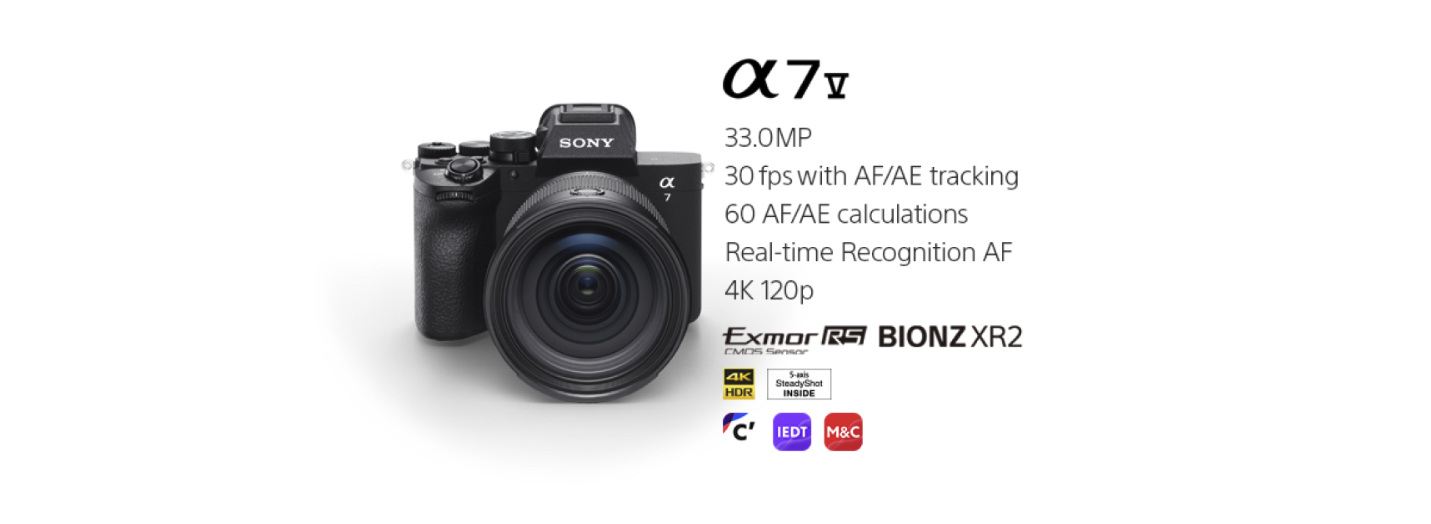
Full Specifications
Here’s a breakdown of the main specs based on official Sony announcements and early press coverage.
Sensor & Image Capture
- Sensor: 33 MP full-frame, partially stacked BSI CMOS
- Dynamic range: Sony claims high dynamic range — effectively retaining ~16 stops in RAW (per Sony press)
- Shutter / Burst:
- Electronic shutter: up to 30 fps, 14-bit RAW, blackout-free, with pre-capture buffer.
- Mechanical shutter: ~11 fps (with possible firmware expansion to 15 fps) per leaks/rumors.
- Image Stabilization: 5-axis IBIS (in-body image stabilization), improved vs prior gen — rated for up to ~7.5 stops stabilization.
Autofocus & Processing
- Processor: New BIONZ XR2 (or Sony’s next-gen processing engine), with dedicated AI chip for subject detection/tracking.
- Autofocus: Advanced real-time tracking, subject recognition (human, animals, likely more — depending on firmware), rapid AF performance.
- Pre-capture mode: Buffers ~0.5 seconds before shutter press, capturing decisive moments even before you press the button.
Video Capabilities
- 4K video: Full-frame 4K 60p (oversampled from ~7K), minimal crop — a big step up from many prior hybrid bodies.
- Slow motion / high frame rate: Rumored support for 4K 120p (with crop) — details not yet fully confirmed.
- Workflow friendly: Dual card slots, modern connectivity (USB-C, likely fast transfers), full-frame video flexibility per Sony leak coverage.
Body, Ergonomics & Usability
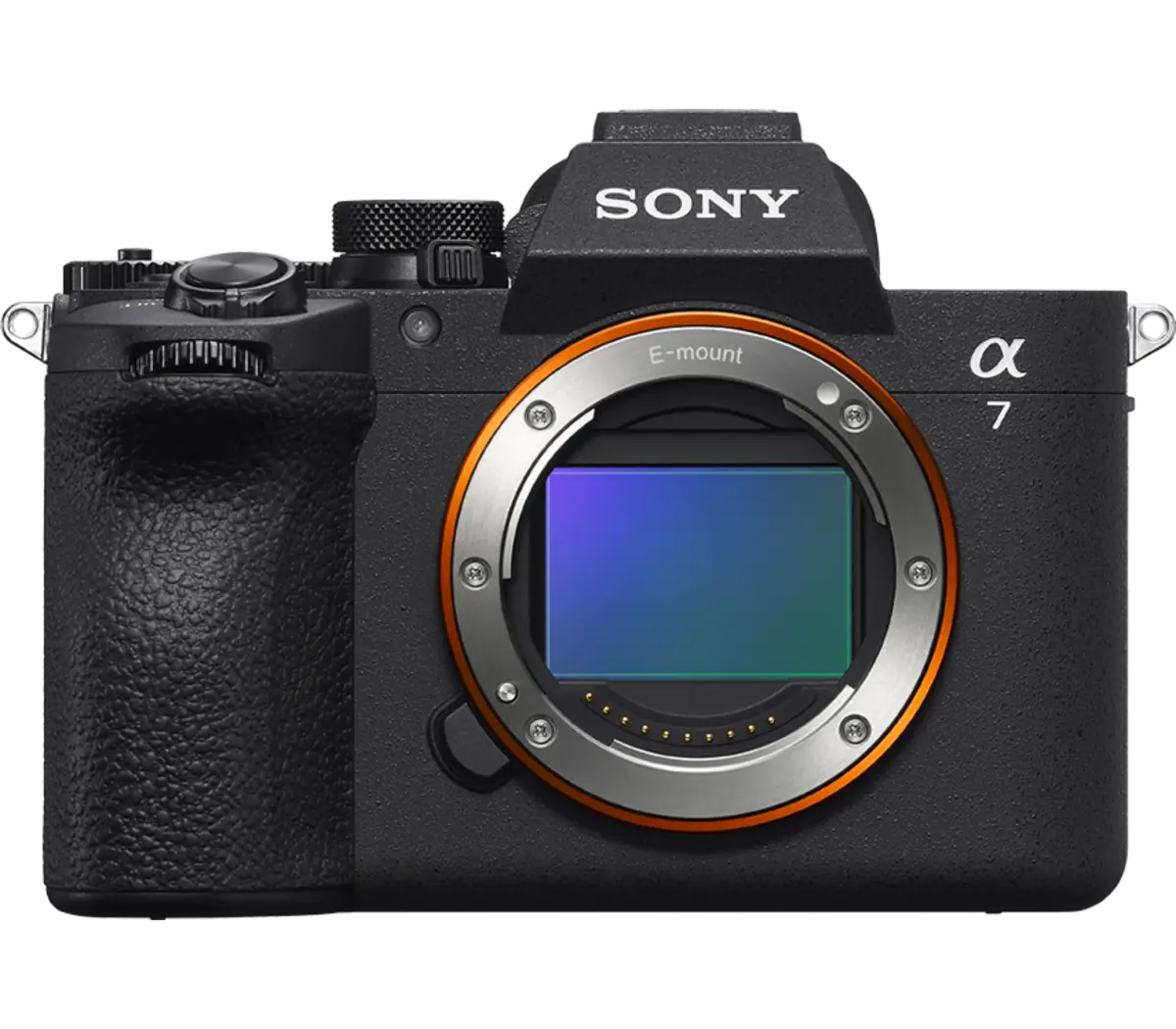
- Body: Full-frame mirrorless, Sony E-mount, weather-sealed (dust & moisture resistant per Sony’s usual build quality).
- Battery: Uses Sony’s NP-FZ100 (or equivalent), with battery life comparable or slightly improved over prior gen (earlier leaks suggest ~530 shots CIPA, but real-world may vary).
- Viewfinder & Screen: Improved EVF refresh/viewfinder-lcd switching speed, redesigned tilt/flip screen (per recent official info), helpful for mixed stills/video shooting.
- Connectivity: Likely dual card slots (SD + CFexpress or dual SD/SDHC), modern USB-C, Wi-Fi, etc. (as expected from 2025 Sony bodies) — good for hybrid shooters and video workflows.
Positioning & Price
- MSRP (body-only): ~ $2,899 USD per Sony’s latest announcement.
- Kit price (when lens bundle becomes available): rumored ~$2,999, though lens bundle availability may lag.
- Market positioning: Between enthusiast-level full-frame bodies and flagship-level (without going full flagship price), making it one of the best value “do everything” full-frame hybrid cameras in 2025.
Performance & Real-World Use
Based on early coverage and likely performance (given Sony’s track record), here’s what you can expect — along with informed caveats.
Stills Photography
- Dynamic range & JPEG/RAW flexibility: The new 33 MP sensor and updated processor should deliver plenty of dynamic range, especially for landscapes, travel, and portrait work. The higher resolution balances well between detail and manageable file sizes (compared to 60+ MP beasts).
- Silent shooting & 30 fps bursts: With a stacked sensor + electronic shutter, the A7 V becomes ideal for environments where you want discretion — street, events, wildlife — combined with a high-speed burst buffer to capture decisive moments.
- Subject tracking & autofocus reliability: The AI-based autofocus should make tracking fast-moving subjects (people, animals, events) more reliable — helpful for wedding, documentary, travel, or street shooters.
- Stabilization & handheld versatility: 5-axis IBIS + 7.5 stops claimed stabilization makes handheld shooting in low light or with slower lenses more practical — useful when you don’t always have a tripod.
Video / Hybrid Use
- 4K 60p from oversampled 7K: Offers high-quality, sharp video — useful for creators who need cinematic-looking 4K without external recorders. Oversampled 4K often gives better detail and noise performance vs pixel-binning.
- High frame-rate potential (4K 120p): If future firmware supports it, this would make A7 V a strong candidate for slow-motion work. Even if slightly cropped, the performance would rival many dedicated video-centric bodies.
- Flexible workflow: Dual media slots, modern connectivity, and Sony’s anticipated robust video metadata + stabilization make the A7 V well-suited for hybrid shooters, vloggers, and indie filmmakers.
Usability & Everyday Shooting
- Compact mirrorless body: For a full-frame camera with this capability, portability remains reasonable — a benefit for travel, street, or walk-around shooting.
- Battery life & reliability: With proven Sony battery systems and efficient processing, expect dependable day-long shooting sessions under most conditions.
- EVF & screen improvements: Faster EVF-to-LCD switching and updated screen make the body more responsive and pleasant to use than older generations. Good for run-and-gun, travel, and mixed-stills/video workflows.
What It’s Not — and Where You Might Feel Trade-offs
- Not ultra-high resolution (e.g. 60 MP+): For photographers whose primary goal is maximum crop/tight post-crop detail (e.g. landscape large-format print shooters), 33 MP may feel modest compared to high-res 45–60+ MP bodies.
- Not a flagship sports shooter (yet): While 30 fps electronic burst is excellent, some ultra-high-end bodies still deliver better continuous AF + mechanical shutter performance for very demanding sports or wildlife.
- Video feature set still emerging: Some features (e.g. 4K 120p) are rumored or early-reported; final behavior, heat management, and long-term reliability remain to be seen.
- Lens ecosystem exposure: As always with full-frame mirrorless, image quality and versatility depend heavily on lens selection — cheap glass will limit performance.

Pros & Cons
✅ Pros
- Balanced full-frame sensor (33 MP) — detail + manageable file size
- Partially-stacked sensor + 30 fps electronic burst = powerful silent shooting mode
- AI-assisted autofocus and subject tracking — reliable for mixed use cases
- 5-axis IBIS (up to ~7.5 stops) enables handheld low-light work
- Strong video capability: 4K 60p (oversampled), potential high-frame video
- Compact, travel-friendly full-frame mirrorless body
- Sony’s mature lens ecosystem + E-mount flexibility
- Dual card slots and modern connectivity — workflow-friendly for creatives
⚠️ Cons / Trade-offs
- 33 MP is lower than high-res 45–60 MP cameras — less ideal for extreme cropping or large prints
- As a hybrid “do-it-all” body, it may not beat dedicated flagship sport shooters or dedicated medium-res landscape cameras in specialized niches
- Video features (like high-frame slow motion) may depend on firmware or have trade-offs (crop, heat) — not yet fully tested
- As always, lens quality becomes critical — poor lenses will limit potential

Who the Sony Alpha 7 V Is Best For
The A7 V will resonate most with:
- Hybrid shooters / creatives who want one full-frame camera for stills and video (travel, documentary, YouTube, social content, occasional professional work)
- Street, event, travel photographers who value silent shooting, compactness, flexibility, and quick burst performance
- Landscape / portrait photographers looking for a balanced full-frame sensor with good dynamic range but manageable file sizes
- Content creators / indie filmmakers who want solid in-body stabilization + strong video feature set without investing in cinema-level gear
- Enthusiasts upgrading from APS-C or older full-frame bodies who want modern autofocus, stabilization, and video capabilities in a versatile all-rounder
It is less ideal for:
- Highly specialized users requiring ultra-high resolution for large-format prints or heavy cropping
- Sports or wildlife photographers needing ultra-fast mechanical shutter bursts with top-tier continuous autofocus (dedicated sports bodies still excel there)
- Videographers needing all flagship-grade video specs (8K, unlimited high-frame slow motion, dual XLR, etc.) — they may still look toward cinema-grade or higher-end bodies
Recommendations — Setup & Use Tips
If you get the A7 V, here’s how I’d set it up and use it for different workflows:
- Travel / street: Pair with a compact prime (35mm f/1.8 or 50mm f/1.8) — use electronic shutter for stealth, IBIS for handheld, burst mode for decisive moments.
- Landscape: Use raw + low ISO, bracket exposures if needed, take advantage of dynamic range; pair with quality wide-angle lens.
- Video / hybrid content: Use a sturdy cine-style lens (e.g., Sony’s ƒ/2.8 zooms), leverage IBIS + oversampled 4K 60p for handheld cinematics, consider external recorder or backup for long sessions.
- Portraits / events: Use autofocus tracking and burst mode for quick sessions; IBIS helps with low-light ambient shots; lens choice (e.g. 85mm ƒ/1.4 or 50mm ƒ/1.2) matters heavily.
- Backup workflow: Use dual-card slots for RAW + JPEG or video + backup, leverage Wi-Fi/USB-C for quick transfers on the go.
Final Verdict — Should You Buy the Sony Alpha 7 V (ILCE-7M5MB)?
Yes — for most creators I know, the Sony Alpha 7 V represents one of the best full-frame “do-it-all” cameras on the market in 2025. It strikes an impressive balance between stills and video, portability and full-frame quality, features and price.
If you want a single camera body that will serve for travel, content creation, portrait work, street, landscapes — and handle both high-quality stills and video without compromise — the A7 V is an excellent investment.
On the flip side, if you’re a high-end commercial shooter needing ultra-high resolution, or a wildlife/sports shooter needing extreme speed, you might still want a more specialized body.
For the broad majority of photographers and creators — especially those upgrading from APS-C or entry-level full-frame — the Sony Alpha 7 V offers compelling versatility, modern features, and future-proof performance.
Short Comparison Table – A7 V vs A7 IV vs Canon R6 II vs Nikon Z6 III
High-level view of how the A7 V stacks up to its predecessor and two key hybrid competitors in the same class.
| Camera | Sensor & Resolution | Burst & AF | Video Headline | IBIS Rating | Approx. Body Price (USD) | Best For |
|---|---|---|---|---|---|---|
| Sony Alpha 7 V | 33MP full-frame, partially stacked BSI CMOS | Up to 30 fps e-shutter (blackout-free) with AI subject tracking; ~10 fps mech | Full-frame 4K 60p oversampled from 7K, minimal crop at 4K 120p | Up to 7.5–8 stopsclaimed IBIS | $2,899 body; $3,099.99with 28–70mm kit (ILCE-7M5MB) | Serious hybrid shooters who want one do-everything body with stacked-like speed, strong video, and excellent AF. |
| Sony Alpha 7 IV | 33MP full-frame BSI CMOS (non-stacked) | Up to 10 fps mech; strong but older-gen AF tracking | 4K 60p only in Super 35 crop, 4K 30p full-frame oversampled from 7K | ~5.5 stops IBIS (rated lower than A7 V) | ≈$2,499 body (MSRP; often lower on sale) | Enthusiasts who want a capable hybrid at a lower price, don’t need 30 fps or the latest AI AF. |
| Canon EOS R6 Mark II | 24.2MP full-frame CMOS | Up to 40 fps e-shutter with RAW burst/pre-shoot; ~12 fps mech; excellent subject detection | 6K oversampled 4K 60p, strong 10-bit video; no 6K/RAW internal | Up to 8 stops with IBIS + lens IS | ~$1,999 body 1 | Fast-action hybrid shooters who prioritize AF speed, burst rate, and Canon color; less resolution than Sony but killer all-rounder. |
| Nikon Z6 III | 24.5MP full-frame, partially stackedCMOS | Up to 120 fps with pre-release capture in some modes; excellent tracking AF | Internal 6K 60p N-RAW + oversampled 4K 60/120; very strong video feature set | Up to 8 stops IBIS reported in reviews | ≈$2,499–2,699 body (varies by retailer) | Hybrid shooters leaning heavily into video (6K/4K120), who like Nikon ergonomics and color and don’t need 30+ MP stills. |
Frequently asked questions about the Sony A7 V Review – The Best Hybrid Camera of 2026?
Should you buy the Sony A7 V Review – The Best Hybrid Camera of 2026??
If this review helped you decide, using our link is the easiest way to support future testing and keep the site running.