Bone-conducting headphones have become one of the most popular audio categories for runners, cyclists, swimmers, commuters, and anyone who wants to hear their surroundings while still listening to music, podcasts, or taking calls.
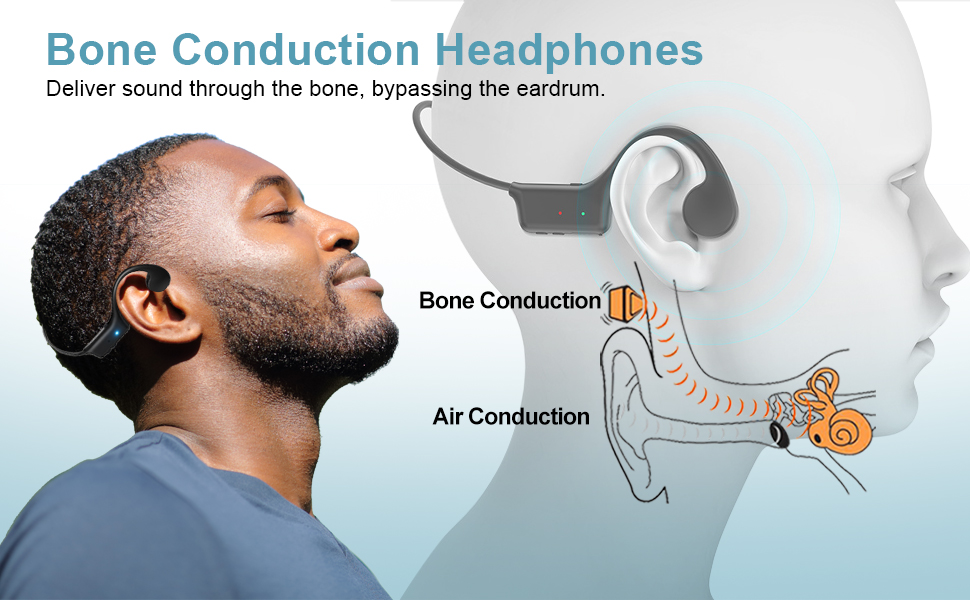
Instead of sending sound through your ear canal like traditional earbuds or over-ears, bone-conduction headsets use vibration transducers that rest on your cheekbones/temples to deliver sound to your inner ear—while keeping your ears open.
Quick Pick: If you want one “do-it-all” bone-conduction headset for running, walking calls, and everyday outdoor use, start here:
SHOKZ OpenRun Pro 2 (Check price on Amazon)
Quick Navigation
- 1) Technology overview
- 2) Pros and cons
- 3) Frequently asked questions
- 4) Bone-conducting vs other headphones
- 5) Best by use case
- 6) Buyer’s guide (comparison table + summaries + tips)
- Who should NOT buy bone conduction
- Fit, maintenance, and longevity
- Editor’s verdict
Technology overview: how bone-conducting headphones work
Most headphones rely on air conduction: a driver moves air, sound travels down your ear canal, vibrates your eardrum, and then the inner ear processes those vibrations as sound.
Bone-conducting headphones use a different pathway. Instead of pushing sound waves through your ear canal, they use vibration transducers that contact the bones near your ear (commonly your cheekbones/temporal bone area). Those vibrations travel through bone and tissue to stimulate the cochlea (inner ear), letting you perceive sound while your ear canal stays open.
What’s inside a bone-conduction headset?
- Vibration transducers: Convert audio signals into mechanical vibrations
- Lightweight frame/band: Keeps consistent contact pressure during movement
- Bluetooth + controls: Wireless connection plus buttons for volume/track/calls
- Microphones + DSP: Call pickup and voice processing (quality varies by model)
- Battery + charging: Often strong battery life; some include quick-charge
- Water resistance / waterproofing: From sweat-proof to swim-capable designs
Bone conduction vs “open-ear” (important distinction)
Open-ear is the category. Bone conduction is one way to do it. Another is open-ear air conduction, where small speakers hover near your ear canal without sealing it. Both preserve awareness; they just use different physics and have different strengths.
Want maximum awareness + no earbuds? Bone conduction is usually the most “ears-free” option.
SHOKZ OpenRun (solid all-around value) | SHOKZ OpenMove (best budget starter)
Pros and cons
Pros
- Situational awareness: You can hear traffic, people, and announcements while listening
- No ear canal fatigue: No tips, seals, or “plugged ear” feeling
- Great for outdoor training: Popular for running and cycling where awareness matters
- Comfort with glasses/helmets (usually): Many wraparound designs play nicely with gear
- Weather and sweat friendly: Many models are built for rain and heavy sweat
Cons
- Sound quality isn’t “audiophile”: Bass and isolation won’t match sealed earbuds/over-ears
- Loud environments are tough: Open ears mean open to noise (subways, planes, busy gyms)
- Sound leakage: People nearby may hear your audio at higher volumes
- Fit/pressure matters: Small shifts in contact point can change perceived clarity/bass
- Call quality varies: Some do great; others struggle with wind and street noise
Runner / walker / outdoor calls? These are the top “safe bet” picks that most people love:
SHOKZ OpenRun Pro 2 | SHOKZ OpenRun
Frequently asked questions (FAQ)
Are bone-conducting headphones safer for your hearing?
They can be—if they help you avoid blasting volume to overcome noise. But they’re not automatically “safe.” If you turn them up high in a loud environment, you can still expose yourself to unhealthy sound levels.
Can other people hear what I’m listening to?
Sometimes, yes. Because your ears remain open, sound leakage can happen—especially at higher volumes or in quiet rooms.
Do bone-conducting headphones work for swimming?
Swimming requires a waterproof model that also supports onboard MP3. Bluetooth is unreliable underwater, so MP3 mode is typically the right choice for the pool.
Are they good for work calls and meetings?
They can be excellent for walking calls in quiet areas. In wind or heavy traffic, mic performance depends heavily on the specific model.
Can I wear earplugs with bone conduction?
Yes—and many people do. Earplugs reduce ambient noise while bone conduction still delivers audio through vibration. Results vary, but it can be a great setup in loud environments.
Swimming? Don’t guess—pick a swim-capable model with MP3:
SHOKZ OpenSwim Pro (Bluetooth + MP3)
Bone-conducting headphones vs. other headphones
Bone conduction is not a universal replacement for earbuds or over-ears. It’s a specialist tool that shines when awareness and comfort matter more than isolation and “immersive” sound.
| Category | How sound reaches you | Awareness | Isolation | Best for | Main tradeoffs |
|---|---|---|---|---|---|
| Bone conduction (open-ear) | Vibrations to inner ear via bone/tissue | High | Low | Running/cycling safety, outdoor walks, comfort | Less bass/detail; noisy places are tough; leakage |
| Open-ear air conduction | Speakers near ear canal (no seal) | High | Low | Casual listening with awareness | Leakage; stability varies in hard workouts |
| In-ear earbuds (sealed) | Driver pushes air into sealed canal | Low–Med (w/ transparency) | Med–High | Daily listening, commuting, travel | Ear fatigue for some; occlusion/hygiene |
| In-ear w/ ANC | Seal + active noise cancellation | Low | High | Flights, trains, focus, loud offices | Less awareness; pressure sensation; battery drain |
| Over-ear closed-back | Large drivers around ear | Low | Med–High | Best audio quality, desk work, travel | Bulk/heat; less situational awareness |
Quick decision: If you primarily listen in loud environments (commute/plane), consider ANC earbuds for that use case—and keep bone conduction for outdoor training.
For awareness-first training, these are the two safest picks:
Best bone-conducting headphones by use case
- Best for Running & Cycling: SHOKZ OpenRun Pro 2
- Best for Swimming: SHOKZ OpenSwim Pro
- Best Budget Starter: SHOKZ OpenMove
- Best for Long Endurance / Adventure: SUUNTO Wing 2
- Best Alternative to Shokz: mojawa Run Plus
Pick based on your primary activity:
Swimming (OpenSwim Pro) | Running (OpenRun Pro 2) | Budget (OpenMove)
Buyer’s guide: top-rated bone-conducting headphones
Below are leading bone-conduction models with a mix of premium running options, budget picks, swim-capable sets, and rugged “adventure” headsets. Prices on Amazon fluctuate constantly, so use the links to check current deals.
6.1 Product comparison table
| Model | Typical Price | Battery Life | Key Features | Pros | Cons | Amazon Link |
|---|---|---|---|---|---|---|
| SHOKZ OpenRun Pro 2 | $150–$200 | Up to 12h | Premium sport fit, quick charge, improved tuning | Best all-around running pick; strong battery | Still open-ear; not ideal in loud commutes | SHOKZ OpenRun Pro 2 |
| SHOKZ OpenRun | $90–$140 | Up to 8h | Lightweight classic bone conduction | Reliable, simple, great awareness | Less bass/fullness than newest premium models | SHOKZ OpenRun |
| SHOKZ OpenMove | $60–$90 | Up to 6h | Entry-level value, sport-friendly design | Best budget starter; great for short workouts | Fewer premium extras; less power/bass | SHOKZ OpenMove |
| SHOKZ OpenSwim Pro | $130–$180 | 9h BT / 6h MP3 | Waterproof; Bluetooth + MP3 for swim sessions | Best for swimming + training crossover | Bluetooth not ideal underwater (use MP3) | SHOKZ OpenSwim Pro |
| SUUNTO Wing 2 | $150–$220 | Up to 12h (+ powerbank) | Adventure-focused design; extended endurance kit | Great for long outings and travel | More “gear” to manage; still open-ear limits | SUUNTO Wing 2 |
| mojawa Run Plus | $90–$140 | Varies (check listing) | Feature-heavy sport positioning | Strong value alternative to the mainstream picks | Specs can vary by listing/version | mojawa Run Plus |
| H2O Audio TRI 2 PRO | $150–$200 | Check listing | Multi-sport + swim crossover focus | Good for triathletes and mixed training | Availability/offers can fluctuate | H2O Audio TRI 2 PRO |
| Philips A6606 | $70–$130 | Check listing | Brand alternative in the category | Good option if you want a non-Shokz pick | Listing variants may be renewed/region-specific | Philips A6606 |
My “most people should buy this” recommendation:
Best overall balance of comfort, battery, stability, and “as-good-as-bone-conduction-gets” sound for runners and outdoor listeners.
6.2 Individual product summaries
SHOKZ OpenRun Pro 2 — best overall for running + everyday outdoor use
If you want one bone-conduction headset that feels premium, stays stable during workouts, and holds up for walking calls and day-to-day use, OpenRun Pro 2 is the safest top pick. It’s tuned for a fuller sound than older generations while preserving the main reason you buy bone conduction: awareness.
CTA: See current price and color options:
SHOKZ OpenRun — the “classic” bone-conduction choice
OpenRun is a go-to recommendation because it nails the core experience: lightweight comfort, stable fit, and reliable open-ear awareness. If you’re buying your first set and want a proven option, this is a smart choice.
CTA: Check today’s price:
SHOKZ OpenMove — best budget starter
OpenMove is the value pick for people who want the awareness and comfort benefits of bone conduction without premium pricing. It’s ideal for walks, short runs, and casual daily listening.
CTA: Great entry-level option:
SHOKZ OpenSwim Pro — best for swimmers (Bluetooth + MP3)
If swimming is your primary reason for buying bone conduction, don’t compromise: you want waterproofing plus onboard MP3 playback. That combination makes pool listening realistic because Bluetooth is unreliable underwater. OpenSwim Pro is built specifically for that swim + training crossover.
CTA: The best swim-ready pick:
SUUNTO Wing 2 — endurance and “adventure” focus
Wing 2 is a strong pick for long outings and travel where extended endurance matters. If you’re a “gear person” who likes rugged systems and longer runtimes, it’s worth a look.
CTA: Check availability and bundles:
mojawa Run Plus — feature-heavy alternative
If you want a Shokz alternative with a strong feature pitch, Run Plus is a popular option. Just confirm the exact listing details (versions can vary) and prioritize seller/return policy.
CTA: Check current price:
H2O Audio TRI 2 PRO — multisport + swim crossover
This is built for people whose training spans running, cycling, and swimming. If you’re a triathlete and want one open-ear system for mixed training blocks, it’s a compelling niche option.
CTA: Check offers (availability can fluctuate):
Philips A6606 — brand-name alternative
If you want a recognizable brand outside the usual bone-conduction picks, Philips A6606 is worth checking. Confirm whether the listing is new vs renewed and validate seller ratings.
CTA: See current listing status:
6.3 Buyer tips (how to choose the right model)
- Pick based on where you listen: Bone conduction is best outdoors; ANC is better for loud commutes.
- Swimming requires MP3: For underwater use, prioritize waterproof + MP3 support.
- Fit matters more than specs: Small placement shifts can change bass and clarity.
- Don’t overbuy waterproofing: Sweat/rain users can usually stick with water-resistant models.
- Keep volume conservative: Open-ear listening can tempt you to increase volume in noisy places.
Still unsure? If you want one safe choice for most people, go premium. If you’re testing the category, go budget:
Premium: OpenRun Pro 2 | Budget: OpenMove
Who should NOT buy bone-conducting headphones?
Bone conduction is awesome—but it’s not for everyone. You might want to skip it (or treat it as a secondary headset) if:
- You commute in loud environments daily: ANC earbuds/over-ears will be dramatically better.
- You want deep bass or “club” sound: Open-ear designs can’t compete with sealed drivers.
- You need max privacy in an office: Sound leakage can be an issue at higher volumes.
- You expect perfect call quality in wind/traffic: Some models do fine, but it’s not guaranteed.
Fit, maintenance, and longevity (the stuff most guides skip)
How to get better sound (especially bass)
- Make sure the transducers sit on a stable, bony area (usually cheekbones/temples)
- Adjust placement slightly forward/back until vocals sound “centered”
- If your model supports EQ presets, try the speech/podcast preset for clarity
Cleaning tips
- Wipe down after sweaty workouts to prevent salt build-up
- For swim models, rinse with fresh water after pool/ocean sessions and dry fully
- Avoid harsh solvents—use mild soap/water or a damp cloth
Battery lifespan expectations
Like all wireless audio gear, battery capacity will slowly degrade over time. If you train daily, expect that after a few years you may notice shorter runtimes. Buying a model with strong baseline battery life helps future-proof the purchase.
Editor’s verdict: are bone-conducting headphones worth it in 2026?
Bone-conducting headphones aren’t here to replace your best noise-canceling headphones. They’re here to do something traditional headphones can’t: let you listen while staying aware and comfortable.
If you run, cycle, walk outdoors, or take a lot of walking calls, bone conduction is absolutely worth owning—either as your main outdoor headset or as the perfect second pair alongside ANC earbuds for travel.
Ready to buy? Start with the top pick, then choose swim/budget based on your use case: